
Matkaopas: El Salvador. Olennaiset matkatiedot — hätänumerot, turvallisuus, valuutta, viisumit, tavat ja liikkuminen.
Hätänumerot
Kuinka turvallinen El Salvador on?
- Erittäin turvallinen
- Yleisesti turvallinen
- Varovaisuutta noudatettava
- Korkea riski
- Vaarallinen
El Salvador's security situation has changed dramatically. Long one of the most violent countries in the hemisphere, it has seen homicide rates plummet since the 2022 'state of exception' (a sustained anti-gang crackdown), and popular tourist areas — San Salvador's nicer districts, Suchitoto, Ruta de las Flores, El Tunco and the Pacific surf coast, and major beaches — are now generally considered safe for travelers who take normal precautions. That said, petty crime (pickpocketing, theft, scams) persists, gang influence has not fully vanished in some marginalized urban neighborhoods, and the ongoing state of exception means heightened police/military presence and the possibility of arbitrary detention. Most travel advisories rate the country at a moderate 'exercise increased caution' level. Use ride-hailing or trusted transport, avoid isolated areas and travel after dark outside well-lit tourist zones, don't flash valuables, and keep copies of your documents.
Matkatiedotteet (8)
Huijaukset
- Taxi overcharging: many street taxis are unmetered. Agree on the fare before getting in, or use ride-hailing apps (Uber, InDrive) where the price is fixed in advance.
- ATM and card fraud: use ATMs inside banks, malls, or hotels during the day, shield your PIN, and watch for skimming devices. Card cloning has occurred at some gas stations and small shops — prefer cash or use a card you can monitor.
- Distraction and 'helpful stranger' theft: be wary of people who point out a 'stain' on your clothes, create commotion, or crowd you in markets and on buses — common setups for pickpocketing or bag-snatching.
- Fake police or unofficial 'guides': verify credentials, don't hand over your passport to anyone on the street, and book tours through reputable, established operators rather than freelancers who approach you.
Varoitukset
- A nationwide 'state of exception' has been in force since March 2022, suspending some constitutional rights (including the right to be informed of charges and access to a lawyer for up to 15 days). Carry ID, comply with police/military checkpoints, and be aware that mass arrests have occurred.
- Avoid certain marginalized urban neighborhoods and unfamiliar areas, particularly in Greater San Salvador and Soyapango, especially after dark, where residual gang activity and violent crime risk remain higher.
- Do not travel at night between cities or on rural roads; poor lighting, livestock, and the risk of robbery make night driving hazardous.
- Riptides are strong along the Pacific coast and surf beaches; swim only where locals do, heed warnings, and be cautious as lifeguards are scarce.
Käytännön tietoa
Valuutta
United States Dollar (USD)
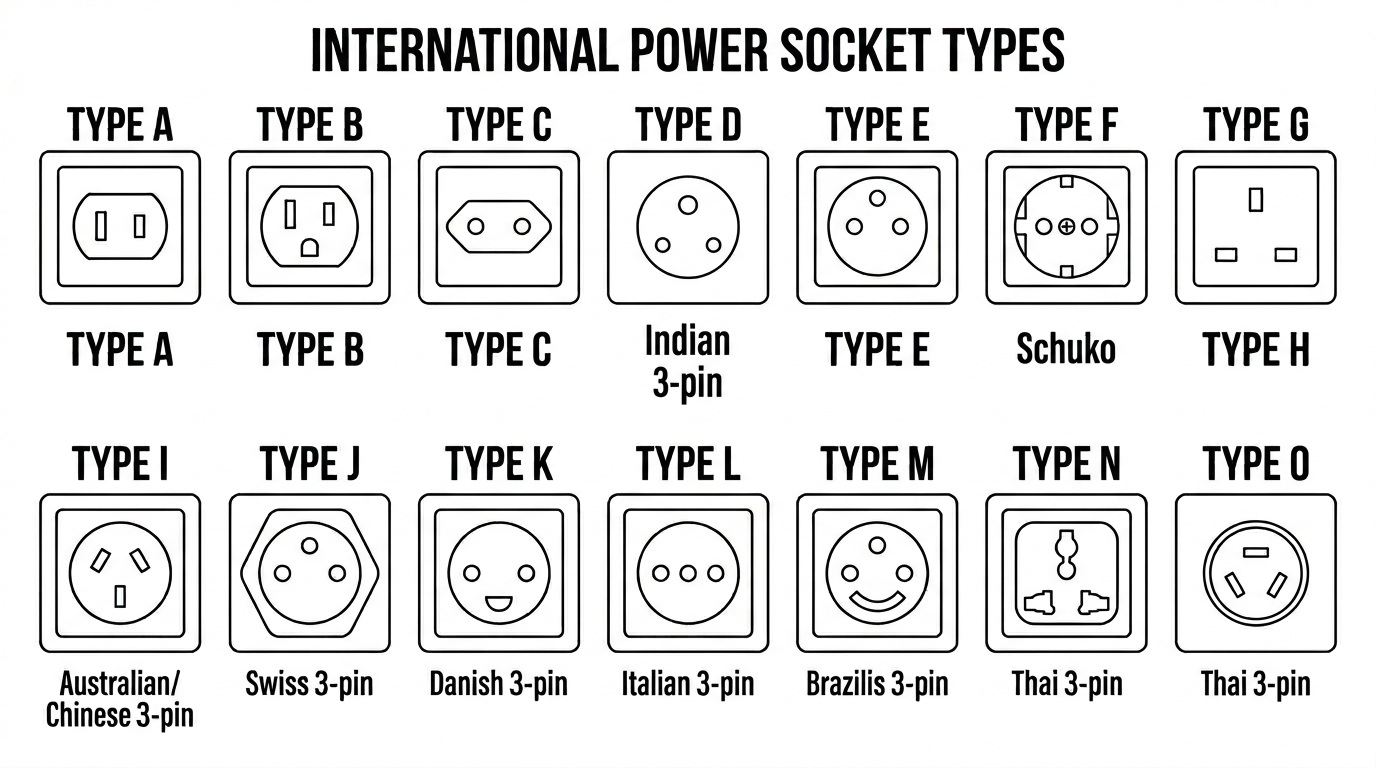
Pistoke
Tyyppi A ja B
Plug types A and B (flat blades, same as the US/Canada); 115V at 60Hz. US-style devices work without an adapter; European/UK devices need a plug adapter and possibly a voltage converter.
Katso pistorasiat
Juomaraha
A 10% service charge ('propina') is often already added to restaurant bills — check before adding more; if not included, 10% is a fair tip. Rounding up for taxis is appreciated but not required. Small tips for hotel porters and tour guides are customary. Note: Bitcoin was legal tender from 2021 but lost that mandatory status in early 2025; the US dollar is the everyday currency and cash is essential outside cities.
SIM / Data
Local SIMs from Tigo and Claro are cheap and offer good 4G/LTE coverage in cities and main towns; bring an unlocked phone and your passport to register the SIM. Prepaid top-ups are sold widely in shops and pharmacies. eSIM services (e.g., Airalo, Holafly) are a convenient alternative. Coverage thins in remote mountains and parts of the coast.
Viisumi
El Salvador is part of the CA-4 agreement (with Guatemala, Honduras, and Nicaragua), allowing combined visa-free stays of up to 90 days across the four countries. Most visitors from the US, Canada, the EU/Schengen, the UK, and Australia do not need a visa for tourism; some nationalities purchase a Tourist Card on arrival for about US$12. A passport valid for at least six months is recommended. Always confirm current requirements with an official El Salvador embassy or consulate before travel, as rules change.
Ajopuoli
Right
Miten El Salvador kierretään?
Julkinen liikenne
Cities rely on buses and microbuses, which are very cheap (fares around US$0.25-0.35) but can be confusing, crowded, and not tourist-friendly. San Salvador has the SITRAMSS bus rapid-transit corridor on some routes. For safety and convenience, most visitors use ride-hailing apps or hotel-arranged transport rather than figuring out local bus lines. Avoid buses after dark.
Kyytipalvelut
- Uber
- InDrive
- Cabify
Kaukoliikenne
Intercity 'camionetas' (recycled, often colorfully painted US school buses) link most towns cheaply but are slow, crowded, and a target for pickpockets; keep bags on your lap. More comfortable direct microbuses and a few coach lines serve major routes. International coaches (Tica Bus, King Quality, Pullmantur) connect San Salvador to Guatemala, Honduras, and Nicaragua. Distances are short — the country is small — so most destinations are within a few hours of the capital. Renting a car gives the most freedom; roads to main destinations are decent but drive only in daylight.
Kulttuuri ja tavat
Tavat
- Salvadorans are warm and family-oriented; greetings matter. A handshake is standard when meeting someone, and among friends or women an air-kiss on the right cheek is common.
- Use 'usted' (the formal 'you') with elders, officials, and people you've just met; switch to 'vos' or 'tú' only once a relationship is established. Vos is the dominant informal form in everyday Salvadoran speech.
- Pupusas are a national institution. They're traditionally eaten by hand, not with cutlery, and are usually served with curtido (pickled cabbage slaw) and tomato salsa. Refusing offered food can be seen as impolite.
- Punctuality is relaxed socially ('la hora salvadoreña'), so arriving 15-30 minutes late to a casual gathering is normal, but be on time for business meetings and bus departures.
- Machismo and conservative social norms persist, especially outside San Salvador. Dress and behave modestly in small towns and rural areas, and avoid public displays of strong emotion or confrontation.
- Tipping, photographing strangers without asking, and discussing the civil war or gangs casually can all cause discomfort. Always ask before photographing people, and let locals raise sensitive political topics first.
Pukukoodi
Casual and lightweight for the tropical climate, but Salvadorans dress neatly and notice sloppiness. Beach and surf towns (El Tunco, El Zonte) are relaxed, with swimwear fine at the coast but not in town centers. For churches and rural villages, cover shoulders and knees. Smart-casual is expected for nicer restaurants, business, and government offices. Avoid flashy jewelry or expensive watches in public to reduce theft risk.
Uskonnollinen käytäytyminen
El Salvador is predominantly Christian, historically Roman Catholic but with a large and growing evangelical Protestant population. Religion is taken seriously and woven into daily life and festivals. When visiting churches, dress modestly (cover shoulders and knees), remove hats, keep your voice low, and avoid walking in front of people who are praying. Ask permission before photographing services or religious processions. Óscar Romero, the archbishop assassinated in 1980 and canonized as a saint in 2018, is deeply revered; treat his memory and his shrine at the San Salvador cathedral with respect.
Yleisiä ilmauksia
- Buenos díasGood morning
- ¿Cómo estás? / ¿Cómo está usted?How are you? (informal / formal)
- Gracias / De nadaThank you / You're welcome
- ¿Cuánto cuesta?How much does it cost?
- ¡Qué chivo!How cool! / Awesome! (Salvadoran slang)
- ¿Dónde está el baño?Where is the bathroom?
Nähtävyydet
Urheilu & vapaa-aika
Football (soccer)
Football is the national passion. La Selecta (the national team) draws fervent support, and league matches — historically dominated by clubs like Alianza, FAS, and Águila — fill stadiums with passionate fans. The country's proudest sporting moments include qualifying for the 1970 and 1982 FIFA World Cups; pickup games are played on streets, beaches, and dusty fields everywhere. Beyond football, El Salvador is a world-class surfing destination — its consistent Pacific point breaks at El Tunco, El Sunzal, El Zonte ('Bitcoin Beach'), and Punta Roca near La Libertad host international competitions, including World Surf League events. Baseball, basketball, and cycling also have followings.
Kansalliset juhlapäivät
- First week of August (around August 1-6)
Fiestas Agostinas (Festival of El Salvador del Mundo)
The country's biggest holiday, honoring the patron 'Divine Savior of the World.' San Salvador erupts with religious processions, the colorful 'bajada' procession of the Christ statue, fairs, parades, food stalls, and amusement rides; many businesses close for the week.
- November 1-2
Día de los Difuntos (Day of the Dead)
Families gather in cemeteries to clean and decorate graves with flowers, candles, and offerings, remembering deceased loved ones. The town of Tonacatepeque is known for its lively, costumed 'La Calabiuza' celebration on November 1.
- Movable, March or April (Holy Week)
Semana Santa
Easter Week features dramatic processions and the famous colorful sawdust and salt 'alfombras' (carpets) laid in the streets, especially in Sonsonate and Izalco. Beaches and lake resorts fill with vacationing Salvadorans.
- November 5
Día del Prócer / First Cry of Independence
Commemorates the 1811 first call for independence from Spain, an important patriotic date marked with civic ceremonies; the broader independence celebrations across Central America peak on September 15.
El Salvador mielessä?
Kokeile ensin valmista matkaa.
Avaa demomatka ilman rekisteröitymistä: Barcelona yksin tai Rooma, Firenze ja Venetsia porukalla. Suunnittele sitten oma matkasi omalla tavallasi – kohteena El Salvador.