
Reseguide till Senegal. Viktig reseinformation — nödnummer, säkerhet, valuta, visum, seder och att ta sig runt.
Nödnummer
Hur säkert är Senegal?
- Mycket säkert
- Generellt säkert
- Var försiktig
- Hög risk
- Farligt
Senegal is one of West Africa's most stable and welcoming countries, with a long democratic tradition and a strong tourism infrastructure, and most visits are trouble-free. Petty crime, pickpocketing, bag-snatching, and aggressive touts are the main concerns, concentrated in Dakar (especially the Plateau, markets, and beaches) and busy transport hubs. Violent crime against tourists is relatively uncommon but not unknown; stay alert at night and avoid displaying valuables. The principal regional risk is the southern Casamance area, where a low-level separatist insurgency and residual landmines have affected some rural zones, though the main towns and the Cap Skirring resort area are generally calm. Occasional political demonstrations in Dakar can turn disruptive, so avoid large gatherings.
Reseaviseringar (8)
Bedrägerier
- Persistent 'guides', touts, and self-appointed helpers, especially around Dakar's markets, the ferry to Gorée Island, and tourist sites, will attach themselves to you and then demand payment. Politely but firmly decline; agree on any price in advance if you do want help.
- The 'friendly local' or fake-friend scam: someone strikes up a warm conversation, claims to remember you from your hotel or to be a student/artist, then steers you to a shop, a 'cultural association' donation, or an inflated tea/meal bill. Be courteous but cautious of unsolicited friendliness that leads to a transaction.
- Street vendors and craft sellers (notably around Soumbedioune and Sandaga markets) start with very high prices; haggling is expected, so expect to pay a fraction of the opening quote. Watch for short-changing and inflated taxi fares, especially from the airport.
- ATM and card-skimming risks exist; use machines inside banks where possible, shield your PIN, and prefer cash for small purchases. Carry small denominations, as vendors and taxis often claim to have no change.
Varningar
- Exercise increased caution in the Casamance region (south of The Gambia): a long-running separatist conflict has left some rural areas with residual landmines and sporadic banditry. Stick to main roads, travel by day, and heed local advice; the Ziguinchor-Cap Skirring corridor is usually fine.
- Border regions with Mali and Mauritania, and the wider Sahel, carry a heightened risk of terrorism, kidnapping, and cross-border crime; many governments advise against non-essential travel close to these frontiers.
- Political demonstrations and strikes can occur in Dakar and other cities, occasionally with road closures or clashes; monitor local news and avoid protests.
- Road travel can be hazardous due to poor road conditions, erratic driving, and unlit vehicles at night; avoid driving after dark and use reputable transport.
Praktisk info
Valuta
West African CFA franc (XOF)
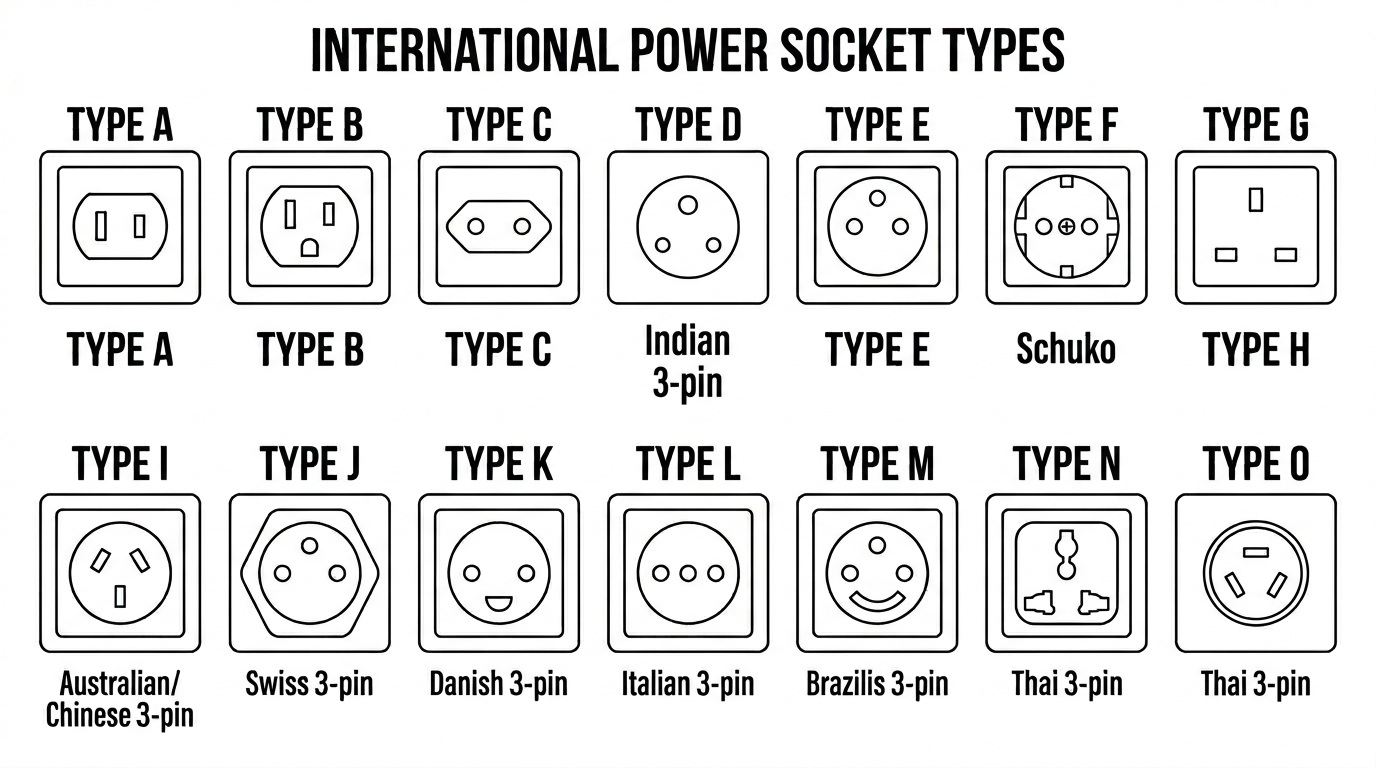
Eluttag
Typ C, D och E
Types C, D, E, and K; 230V, 50Hz
Se eluttagen
Dricks
Tipping is not deeply ingrained but is appreciated and increasingly expected in tourist areas. In restaurants, rounding up or leaving 5-10% is generous; check whether a service charge ('service compris') is already included. Tip guides, drivers, and hotel staff modestly. Small tips for helpful service and bargaining at markets are part of everyday life.
SIM / Data
Buy a local SIM from Orange (Sonatel), Free (formerly Tigo), or Expresso. Orange has the widest 4G coverage. SIMs are cheap and sold at airport kiosks and branded shops; bring your passport, as registration is required. Data bundles ('pass internet') are affordable and topped up with scratch cards or via the operator's app. Coverage is good in Dakar and major towns but patchy in remote rural and eastern regions.
Visum
Many nationalities, including citizens of the EU, US, UK, and Canada, do not need a visa for stays of up to 90 days as tourists; you receive an entry stamp on arrival. A passport valid for at least six months beyond entry is required. Always confirm current requirements with a Senegalese embassy before travel, as rules change. Proof of yellow fever vaccination is required if arriving from or transiting a country with yellow fever risk, and is strongly recommended for all travelers.
Körfält
Right
Hur tar man sig runt i Senegal?
Kollektivtrafik
Within Dakar, transport is a colorful mix of crowded buses (Dakar Dem Dikk), privately run 'cars rapides' and 'Ndiaga Ndiaye' minibuses, and shared yellow-black taxis. Taxis are plentiful and metered fares are rare, so always negotiate the price before getting in. The BRT (Bus Rapid Transit) and TER train have modernized commuting in the capital. Service can be chaotic and slow in traffic, so allow plenty of time.
Taxitjänster
- Yango
- Heetch
Intercity
Intercity travel is dominated by 'sept-places' (shared seven-seater Peugeot station wagons) and larger minibuses departing from gares routieres (bus stations) when full, plus more comfortable air-conditioned coaches on major routes. A modern toll highway links Dakar with Diamniadio, AIBD airport, and beyond. The Dakar-Diamniadio TER commuter train serves the capital region. For longer hops, domestic flights and a ferry (the Aline Sitoe Diatta) connect Dakar with Ziguinchor in Casamance, a popular alternative to the long overland route through The Gambia.
Kultur och seder
Seder
- Greetings are essential and never rushed. Senegalese exchange lengthy greetings asking about family, health, and work before any business. Skipping this is considered rude. In Wolof, expect a back-and-forth of 'Nanga def?' / 'Maa ngi fi rekk.'
- Eat with the right hand only. Meals like the national dish thieboudienne are often shared from a communal platter, and the host or elders may push the best pieces of fish or meat toward guests as a sign of hospitality.
- Teranga, the Wolof concept of hospitality and generosity, is the cornerstone of social life. Guests are warmly welcomed, fed, and looked after; refusing offered food or tea can cause offense.
- Attaya, the ritual of brewing and sharing strong sweet mint green tea in three rounds, is a social institution. Each of the three glasses has meaning (bitter like death, mild like life, sweet like love) and the process is meant to be unhurried.
- Respect for elders and religious figures (marabouts) runs deep. Use both hands or the right hand when giving or receiving, lower your gaze slightly with elders, and avoid public displays of affection.
- Always ask permission before photographing people, especially women, the elderly, and at religious sites. Some may request a small fee, and many devout Muslims prefer not to be photographed.
Klädkod
Senegal is a majority-Muslim country with a relatively relaxed but modest dress culture, especially outside Dakar's cosmopolitan zones. Cover shoulders and knees; women should avoid very short or tight clothing in rural areas and when visiting mosques (a headscarf and covered arms/legs are required to enter, and non-Muslims often cannot enter the prayer hall). Lightweight, breathable fabrics suit the hot climate. Senegalese themselves often dress strikingly well in colorful boubous and tailored outfits; looking neat is appreciated. Beachwear is fine at resorts and tourist beaches but should not be worn in towns.
Religiös etikett
Senegal is roughly 95% Muslim, with influential Sufi brotherhoods (notably the Mouride and Tijaniyya) and a respected Christian minority (about 5%); the country is known for its religious tolerance and coexistence. Dress modestly near mosques and remove shoes before entering; non-Muslims are often not permitted into the prayer halls of working mosques (though the Grande Mosquée de Touba and others may permit respectful, covered visitors at certain times). During Ramadan, avoid eating, drinking, or smoking in public during daylight out of respect. Do not touch the Quran or interrupt people at prayer, and treat marabouts and religious gatherings such as the Grand Magal with deference.
Vanliga uttryck
- Nanga def?How are you? (Wolof)
- Maa ngi fi (rekk)I'm fine / I'm here (the standard reply)
- JërëjëfThank you
- Salaam aleekumPeace be upon you (common greeting)
- Ñaata la?How much is it?
- Ba beneen yoonGoodbye / until next time
Höjdpunkter
Sport & fritid
Football (soccer) and traditional wrestling (laamb)
Football is hugely popular: the national team, the Lions of Teranga, are continental heavyweights who won the Africa Cup of Nations in 2022, and stars like Sadio Mane are national heroes. Equally central to Senegalese identity is laamb, traditional wrestling, which rivals or surpasses football as the most-watched spectacle. Bouts blend athletic combat with mystical pre-fight rituals, drumming, and griot praise-singing, and top wrestlers like the legendary champions of Dakar's arenas are celebrities who command huge purses. Matches at the Arene Nationale draw passionate crowds. Basketball is also rising fast, with Senegal a force in African competition and a host nation for the NBA-backed Basketball Africa League.
Nationella högtider
- May (annually)
Saint-Louis International Jazz Festival
West Africa's premier jazz festival, held in the atmospheric colonial island city of Saint-Louis. For several days the streets, clubs, and squares fill with Senegalese and international jazz musicians, drawing crowds from across the world.
- Varies by Islamic lunar calendar (often August/September)
Grand Magal de Touba
One of the largest religious gatherings in West Africa, when millions of Mouride pilgrims converge on the holy city of Touba to commemorate the exile of the brotherhood's founder, Cheikh Amadou Bamba. A profound display of faith, devotion, and Senegalese Sufi culture.
- April 4
Independence Day
Marks Senegal's independence from France in 1960, celebrated with a grand military and civic parade in Dakar, flag ceremonies, and festivities nationwide.
- Varies (Islamic calendar)
Tabaski (Eid al-Adha)
The most important family festival of the year, when households sacrifice a ram, share feasts, wear new tailored outfits, and visit relatives. The whole country mobilizes for the celebration, and travel and markets are intensely busy beforehand.
Ska du till Senegal?
Prova en färdig resa först.
Öppna demoresan utan att registrera dig: Barcelona på egen hand, eller Rom, Florens och Venedig i grupp. Planera sedan Senegal på ditt eget sätt.