
Rejseguide til Gabon. Vigtig rejseinformation — alarmnumre, sikkerhed, valuta, visum, skikke og transport.
Nødnumre
Hvor sikkert er Gabon?
- Meget sikkert
- Generelt sikkert
- Udvis forsigtighed
- Høj risiko
- Farligt
Gabon is one of Central Africa's wealthier and historically more stable countries, and most visits are trouble-free, but it sits at a "exercise increased caution" level on major government advisories. The main risks are opportunistic crime in Libreville and Port-Gentil (robbery, burglary, vehicle break-ins), the possibility of sudden demonstrations, and limited medical facilities, especially outside the capital. The 2023 military takeover that ended the Bongo era and the 2025 transition to elected rule passed relatively peacefully, but the political environment can shift, so stay informed and avoid crowds and protests.
Rejsevejledninger (9)
Svindel
- Fake or overzealous "officials": be alert to people in or out of uniform demanding to see documents or money. Carry a certified copy of your passport, keep the original secure, and ask to deal with matters at a proper police station if pressured for an on-the-spot "fine."
- Taxi overcharging: meters aren't used, so always negotiate and agree the fare before getting in. Drivers may quote inflated prices to obvious tourists, especially from the airport.
- Street and ATM crime in Libreville and Port-Gentil: pickpocketing, bag-snatching, and card skimming occur. Use ATMs inside banks during the day, stay aware in crowded markets, and avoid displaying cash, phones, or jewelry.
- Online and advance-fee (419-style) scams: be wary of unsolicited business deals, romance contacts, or "emergency" requests for wire transfers that claim a Gabon connection; these are a known fraud channel.
Advarsler
- Avoid all political demonstrations and large gatherings, which can occur with little warning and turn disruptive; security forces may respond forcefully.
- Medical care is limited and below international standards, particularly outside Libreville; carry comprehensive travel insurance with medical evacuation cover and any needed medications.
- Yellow fever vaccination is required for entry, and malaria is present nationwide year-round; take prophylaxis and mosquito-bite precautions.
- Petty and violent crime is more frequent after dark; avoid walking alone at night, secure valuables, and use trusted transport.
- Monitor official travel advisories before and during your trip, as entry rules and the security situation can change at short notice following the recent political transition.
Praktisk info
Valuta
Central African CFA Franc (XAF)
Stikprop
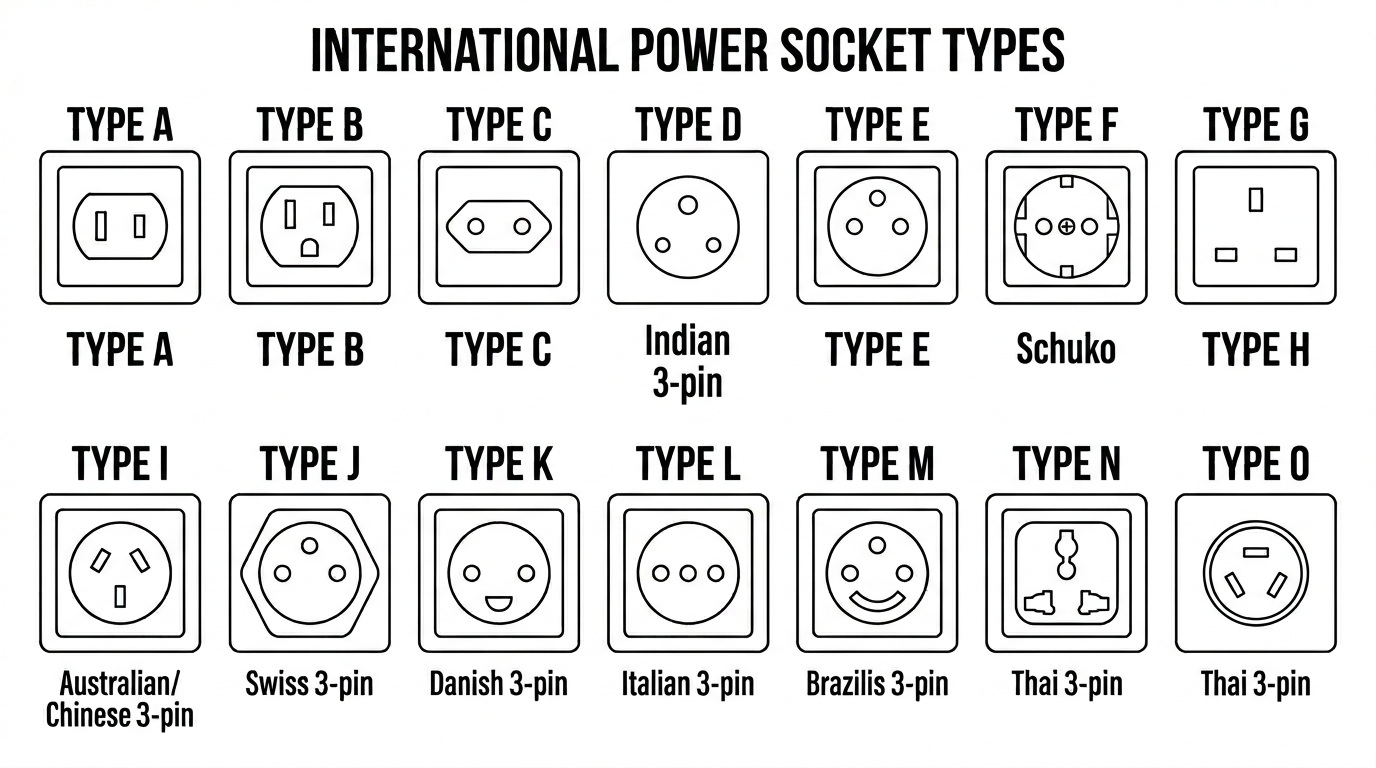
Type C og E
Types C and E, 220V, 50Hz
Se stikkontakterne
Drikkepenge
Tipping is not obligatory and is not deeply ingrained, but it is appreciated. In upscale restaurants and hotels, rounding up or leaving roughly 5–10% is a kind gesture if service was good and a service charge isn't already included. Small tips for porters, guides, and drivers are welcomed. Agree taxi fares in advance rather than tipping.
SIM / Data
Local SIMs are cheap and the simplest way to get online. Main operators are Airtel Gabon and Moov Africa (Gabon Telecom); buy a prepaid SIM at the airport or an official shop and bring your passport, as registration is required. Coverage and 4G are good in Libreville, Port-Gentil and along main corridors but thin or absent in remote parks and forest areas, so download offline maps before heading inland.
Visum
Most visitors need a visa. Gabon offers an eVisa, with the entry visa typically finalized on arrival at Libreville's Léon-Mba International Airport; some nationalities can apply for an eVisa online in advance. A passport valid at least six months with blank pages is required, and applicants are often asked for hotel bookings, an itinerary, proof of funds, and yellow fever vaccination. Entry rules change with the political situation, so confirm current requirements with an official Gabonese mission before travel. Note: as of early 2026 Gabon suspended visa issuance to U.S. citizens in a reciprocity measure, so Americans should verify their status carefully.
Køreretning
Right
Hvordan kommer man rundt i Gabon?
Offentlig transport
Public transport is informal. Cities like Libreville rely on shared minibuses ("clandos" / "taxis-bus") running fixed routes, plus shared and private taxis. Shared taxis follow set routes for a low flat fare; for a private ride, negotiate and agree the price before getting in, as meters are not used. There is no metro or formal urban rail.
Taxitjenester
- Yango
- Heetch
Intercity
Distances are long and roads are mixed quality. The Trans-Gabon Railway (Transgabonais) links Libreville's Owendo port area to Franceville in the southeast via Lopé and Booué, and is a scenic, popular way to reach the national parks. Shared "taxis-brousse" (bush taxis) and minibuses connect towns but can be crowded and poorly maintained; travel by day. Domestic flights (e.g. Afrijet) link Libreville with Port-Gentil, which has no road connection and is reached only by air or boat. Heavy rains can wash out unpaved roads, so check conditions in the wet season.
Kultur og skikke
Skikke
- Greetings are essential and never skipped. Always open with "Bonjour" (or "Bonsoir" in the evening) and a handshake before asking a question, making a purchase, or starting any transaction. Diving straight into business without greeting is considered rude.
- Gabonese society is built on extended family and community. Elders command deep respect; greet the oldest person in a room first, and avoid contradicting or speaking over older people in public.
- Hospitality is a point of pride. If invited to a home you may be offered food or palm wine; accepting at least a little is polite. Bringing a small gift, such as fruit, bread, or something for the children, is appreciated.
- Use your right hand for giving, receiving, and eating, especially in more traditional or rural settings, as the left hand is considered unclean.
- Ask permission before photographing people, and never photograph soldiers, police, the presidential palace, ports, airports, or other government and military sites, where photography can lead to detention.
- Public discussion of politics, the 2023 military takeover, or the Bongo family is best avoided with people you do not know well; keep conversations light and respectful in public.
Påklædningskode
Dress is generally modest and, in cities like Libreville, surprisingly stylish and put-together. Lightweight clothing suits the hot, humid equatorial climate, but very revealing outfits draw unwanted attention. Smart-casual is expected for restaurants, offices, and government buildings; beachwear belongs only at the beach. When visiting churches or rural villages, cover shoulders and knees.
Religiøs etikette
Gabon is majority Christian (largely Roman Catholic and Protestant) with a Muslim minority and a strong, openly practiced thread of indigenous beliefs, most famously the Bwiti spiritual tradition. Religious tolerance is the norm. Dress modestly in churches and mosques, remove shoes where indicated, and ask before entering or photographing places of worship. Bwiti and other ancestral ceremonies are sacred and often private; never attend, photograph, or treat them as tourist spectacle without an explicit invitation and a local guide.
Almindelige udtryk
- BonjourHello / Good day
- BonsoirGood evening
- Merci (beaucoup)Thank you (very much)
- S'il vous plaîtPlease
- Comment allez-vous ?How are you? (polite)
- MboloHello (a greeting in the Fang language)
Højdepunkter
Sport & fritid
Football (soccer)
Football is by far the national passion. Gabonese fans follow the men's national team, Les Panthères (the Panthers), with intense pride, and the country produced its biggest star in striker Pierre-Emerick Aubameyang. Gabon co-hosted the 2012 Africa Cup of Nations and hosted the 2017 edition, and matches, whether the national side or European leagues, draw crowds to bars and TV screens nationwide. Beyond football, Gabon's real recreational draw is its extraordinary nature: with around 13 national parks (notably Loango, famous for forest elephants, gorillas, and "surfing hippos," plus Lopé and Ivindo), the country is a magnet for ecotourism, wildlife watching, fishing, and beach trips along the Atlantic coast.
Nationale helligdage
- August 17
Independence Day (Fête de l'Indépendance)
Gabon's biggest national celebration, marking independence from France in 1960. Expect military and civic parades, official speeches, drumming, traditional dance, and fireworks, with families sharing dishes like poulet nyembwe.
- April 17
Women's Day (Journée de la Femme Gabonaise)
A public holiday honoring Gabonese women, marked with events, gatherings, and recognition of women's contributions to society and the family.
- December 25
Christmas (Noël)
Widely celebrated in this majority-Christian country with church services, family feasts, and festive gatherings blending Christian tradition with local customs.
- Variable (after Ramadan)
Eid al-Fitr (Aïd el-Fitr)
Observed by Gabon's Muslim minority and recognized as a public holiday, marking the end of Ramadan with communal prayers, feasting, and family visits.
Planlægger du Gabon?
Prøv en færdig rejse først.
Åbn demorejsen uden tilmelding: Barcelona på egen hånd eller Rom, Firenze og Venedig som gruppe. Planlæg derefter Gabon på din måde.