
Matkaopas: Kap Verde. Olennaiset matkatiedot — hätänumerot, turvallisuus, valuutta, viisumit, tavat ja liikkuminen.
Hätänumerot
Kuinka turvallinen Kap Verde on?
- Erittäin turvallinen
- Yleisesti turvallinen
- Varovaisuutta noudatettava
- Korkea riski
- Vaarallinen
Cape Verde is one of the safest and most politically stable countries in Africa, with a strong democratic tradition and low rates of violent crime against tourists. The main risks are opportunistic petty crime — pickpocketing, bag-snatching, and theft from hire cars or unattended belongings on beaches — which is more noticeable in the larger urban centres of Praia (Santiago) and Mindelo (São Vicente) and after dark. Most visits to the tourist islands of Sal and Boa Vista are trouble-free. Use normal precautions: avoid displaying valuables, don't walk alone on unlit beaches or backstreets at night, and secure your belongings. The Atlantic surf can be powerful with strong rip currents on some beaches, so heed local warnings and swim where it is supervised.
Matkatiedotteet (7)
Huijaukset
- Unofficial 'guides' and beach hustlers (sometimes called 'rabidantes') on Sal and Boa Vista may attach themselves to you offering tours, excursions, or to 'watch your stuff,' then demand payment. Politely but firmly decline and book through reputable operators or your hotel.
- Taxi overcharging is common, especially from the airports and in tourist zones. Fares are usually unmetered — agree on the price in escudos before getting in, and be aware that night fares are legitimately higher.
- Timeshare and 'free gift / scratch-card winner' touts operate around resort areas, pressuring tourists into long sales presentations. Walk away; legitimate vendors do not ambush you on the street.
- Currency and change tricks: confirm whether prices are quoted in escudos (CVE) or euros (widely accepted), check your change carefully, and use ATMs attached to banks rather than money changers offering 'better' street rates.
Varoitukset
- Strong ocean currents and high surf on many Atlantic-facing beaches cause drownings each year; swim only at supervised or sheltered beaches and respect warning flags.
- Petty theft and occasional muggings occur after dark in Praia (especially the Plateau and Sucupira market areas) and parts of Mindelo — stay alert and avoid quiet streets at night.
- Inter-island ferries can be delayed or cancelled by sea conditions and are not always reliable; build buffer time and verify the operator's safety reputation. Medical facilities are limited, so comprehensive travel insurance covering evacuation is strongly advised.
Käytännön tietoa
Valuutta
Cape Verdean escudo (CVE)
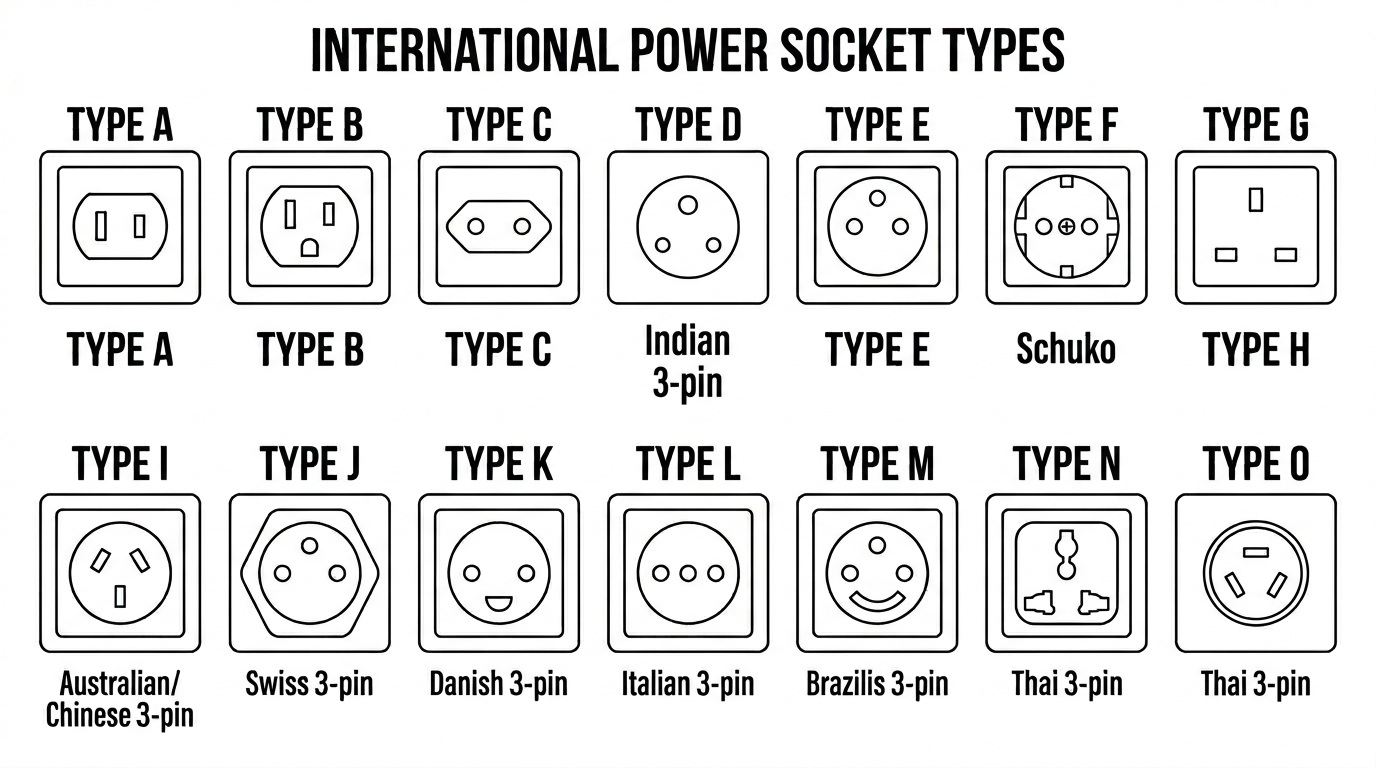
Pistoke
Tyyppi C ja F
Types C and F (the round two-pin European plugs); voltage is 220V at 50Hz
Katso pistorasiat
Juomaraha
Tipping is appreciated but not obligatory. In restaurants, rounding up or leaving around 5-10% for good service is common where a service charge isn't already included. A small tip for hotel staff, drivers, and guides is welcomed. In casual settings, simply rounding up the bill is fine.
SIM / Data
The two main mobile operators are CVMovel (Movel) and Unitel T+. Buy a local prepaid SIM with a data bundle at the airport or an operator shop in town (bring your passport for registration) — it is far cheaper than roaming. Coverage is good on the populated tourist islands (Sal, Boa Vista, Santiago, São Vicente) but patchy in remote highland and rural areas. 4G is available in main centres. Many hotels and cafes offer Wi-Fi, though speeds can be modest.
Viisumi
Many nationalities (including most EU citizens, the UK, US, and Canada) can enter Cape Verde visa-free for short stays of up to 30 days. Most other short-stay visitors do not need a visa but MUST register and pay the TSA (Taxa de Segurança Aeroportuária / Airport Security Tax) online via the official EASE platform (ease.gov.cv) before arrival — it is around 950 CVE (~8.5 EUR) per person. Always confirm current requirements with an official Cape Verdean source or your airline before travel, as rules vary by nationality and change.
Ajopuoli
Right
Miten Kap Verde kierretään?
Julkinen liikenne
Within towns, shared minibuses called 'aluguers' (or 'hiaces') are the cheap local workhorse — they run fixed routes and leave when full, with fares paid in escudos. Taxis are widely available in Praia, Mindelo, and on Sal/Boa Vista; they are unmetered, so always agree the fare before setting off. There is no rail network. On the small flat island of Sal, many tourists also get around the resort strip of Santa Maria on foot, by bike, or by quad/buggy.
Kyytipalvelut
- No widely-used international ride-hailing app (Uber/Bolt are not available); rely on local taxis and aluguers booked by phone or hailed in the street
Kaukoliikenne
Cape Verde is an archipelago of ten islands, so travel between islands is by domestic flight or ferry. Domestic flights (operated by carriers such as Bestfly/Cabo Verde Airlines and others) connect the main islands quickly but can be pricey and subject to schedule changes. Inter-island ferries (e.g. CV Interilhas) are cheaper and serve routes like Praia–Fogo–Brava and São Vicente–Santo Antão, but crossings can be rough, delayed, or cancelled in bad weather. On individual islands, hiring a car or 4x4 (or chartering an aluguer for the day) is the most flexible way to explore; roads on Santiago, Santo Antão, and São Nicolau can be steep, winding, and cobbled.
Kulttuuri ja tavat
Tavat
- Greet people warmly with a handshake and direct eye contact; among friends, cheek kisses (two, starting on the right) are common between women and between men and women. Take time for pleasantries before getting to business — Cape Verdeans value unhurried, personal interaction.
- Embrace 'morabeza,' the uniquely Cape Verdean concept of warm, open-hearted hospitality and easygoing friendliness. Reciprocating this warmth and patience is the surest way to connect with locals.
- Music is the soul of the islands. If you hear morna or coladeira playing in a bar, it is polite to listen attentively; spontaneous dancing is welcomed, and showing genuine appreciation for the music of Cesaria Evora and others endears you to people.
- Adopt 'no stress' island time. Punctuality is loose and life moves at an unhurried pace; pushing for speed or showing impatience is considered rude. Things happen 'sem stress.'
- Dress neatly in towns. While beach attire is fine at the coast, Cape Verdeans tend to dress with care and pride, so cover up swimwear when walking through villages, shops, or restaurants.
- When invited to a home, bringing a small gift (sweets, fruit, or wine) is appreciated, and you should expect generous hospitality even from those with modest means; refusing offered food or drink outright can cause offense.
Pukukoodi
Casual and relaxed, suited to a warm tropical climate. Lightweight clothing, sandals, and swimwear are fine at beaches and resorts (Sal and Boa Vista are very beach-oriented). In towns, villages, and when dining out, dress a little more modestly and neatly — cover swimwear and avoid going shirtless away from the beach. Cape Verde is predominantly Catholic but tolerant; modest attire is appreciated when visiting churches.
Uskonnollinen käytäytyminen
Cape Verde is overwhelmingly Roman Catholic (around 75-80% of the population), a legacy of Portuguese colonization, with a Protestant minority (notably the Church of the Nazarene) and small other communities. Society is relaxed and tolerant. When visiting churches, dress modestly (cover shoulders and knees), keep your voice down, and avoid wandering or photographing during Mass. Religious feast days and saints' days are widely celebrated and often blend Catholic ritual with music and street processions — observe respectfully and follow locals' lead.
Yleisiä ilmauksia
- Bon diaGood morning / Good day (Portuguese, the official language)
- Obrigadu / ObrigadaThank you (said by men / by women, in Cape Verdean Creole)
- Tudo bom? / Tudo dreto?Is everything good? / All right? (a common Creole greeting)
- MorabezaThe Cape Verdean spirit of warmth, hospitality, and kindness
- Kumo ki bu sta?How are you? (in Creole)
- Sem stress / No stressNo worries / take it easy — the island motto
Nähtävyydet
Urheilu & vapaa-aika
Football (soccer)
Football is by far the most popular sport, played on dusty pitches and beaches across every island and followed passionately — many Cape Verdeans also support Portuguese clubs, and the national team, the 'Tubarões Azuis' (Blue Sharks), is a huge source of pride, having reached the Africa Cup of Nations and produced players in top European leagues. Given the islands' setting, watersports are central to the recreation scene: Sal and Boa Vista are world-class destinations for windsurfing, kitesurfing, and surfing thanks to reliable Atlantic trade winds, and there is excellent diving, snorkelling, big-game fishing, and seasonal whale and turtle watching (loggerhead turtles nest on Boa Vista's beaches). Hiking is the draw on the mountainous islands of Santo Antão and Fogo, the latter home to an active volcano you can climb.
Kansalliset juhlapäivät
- February / March (dates vary, before Lent)
Carnival (Carnaval)
Cape Verde's most spectacular celebration, with the town of Mindelo on São Vicente hosting a famously vibrant, Brazilian-style carnival of costumes, samba-influenced parades, music, and street parties; São Nicolau also holds notable celebrations.
- Around 18-21 May
Gamboa Music Festival (Praia)
One of the largest free music festivals in the country, held on Gamboa beach in the capital Praia, showcasing leading Cape Verdean and African artists across genres like morna, funaná, and coladeira over several nights.
- Mid-August (around 15 August)
Baía das Gatas Music Festival
A legendary open-air music festival held by the light of the full moon on the beach of Baía das Gatas near Mindelo, São Vicente, drawing huge crowds for nights of live Cape Verdean and international music.
- 5 July
Independence Day
National holiday marking Cape Verde's independence from Portugal in 1975, celebrated across the islands with official ceremonies, music, and festivities.
Kap Verde mielessä?
Kokeile ensin valmista matkaa.
Avaa demomatka ilman rekisteröitymistä: Barcelona yksin tai Rooma, Firenze ja Venetsia porukalla. Suunnittele sitten oma matkasi omalla tavallasi – kohteena Kap Verde.