
I Ghana betalar man med Ghanaian cedi, eluttagen är av typ G och nödnumret är 112. Ghana is one of West Africa's most stable and welcoming countries, with a strong democratic tradition and a generally low risk of violent crime against tourists.
Nödnummer
Hur säkert är Ghana?
- Mycket säkert
- Generellt säkert
- Var försiktig
- Hög risk
- Farligt
Ghana is one of West Africa's most stable and welcoming countries, with a strong democratic tradition and a generally low risk of violent crime against tourists. Most visits are trouble-free. The main concerns are opportunistic petty crime (pickpocketing, bag-snatching, theft from vehicles) in crowded markets and parts of Accra and Kumasi, road-traffic safety, and seasonal health risks like malaria. Exercise normal precautions, with heightened caution after dark and in isolated areas.
Reseaviseringar (8)
Bedrägerier
- Romance and advance-fee (so-called '419' or 'sakawa') scams are well known; be wary of online relationships or business deals that lead to requests for money, gold, or 'release fees'.
- Fake tour guides, charity/orphanage-volunteer schemes, and 'festival donation' collectors may pressure you for cash; verify operators and donate only through reputable organisations.
- Taxi and tro-tro drivers may quote inflated 'obroni prices'; always agree a fare before getting in, as meters are rarely used.
- ATM card-skimming and currency-exchange short-changing occur; use ATMs at reputable banks, count cash carefully, and avoid unlicensed street money changers.
Varningar
- Many governments advise increased caution in the far north near the borders with Burkina Faso and the Sahel due to a heightened, though still low, risk of kidnapping and spillover from regional terrorism; check current advisories before travelling there.
- Avoid the immediate land-border areas with Togo and Côte d'Ivoire after dark, and be alert to occasional localised chieftaincy or land disputes (e.g. parts of the Bawku area in the Upper East) that can flare into violence.
- Road travel, especially at night and on intercity highways, carries real risk from poor lighting, livestock, and unsafe overtaking; avoid night driving where possible.
- Malaria is present year-round nationwide; take antimalarial prophylaxis and prevent mosquito bites. A yellow fever vaccination certificate is required for entry.
Praktisk info
Valuta
Ghanaian cedi (GHS)
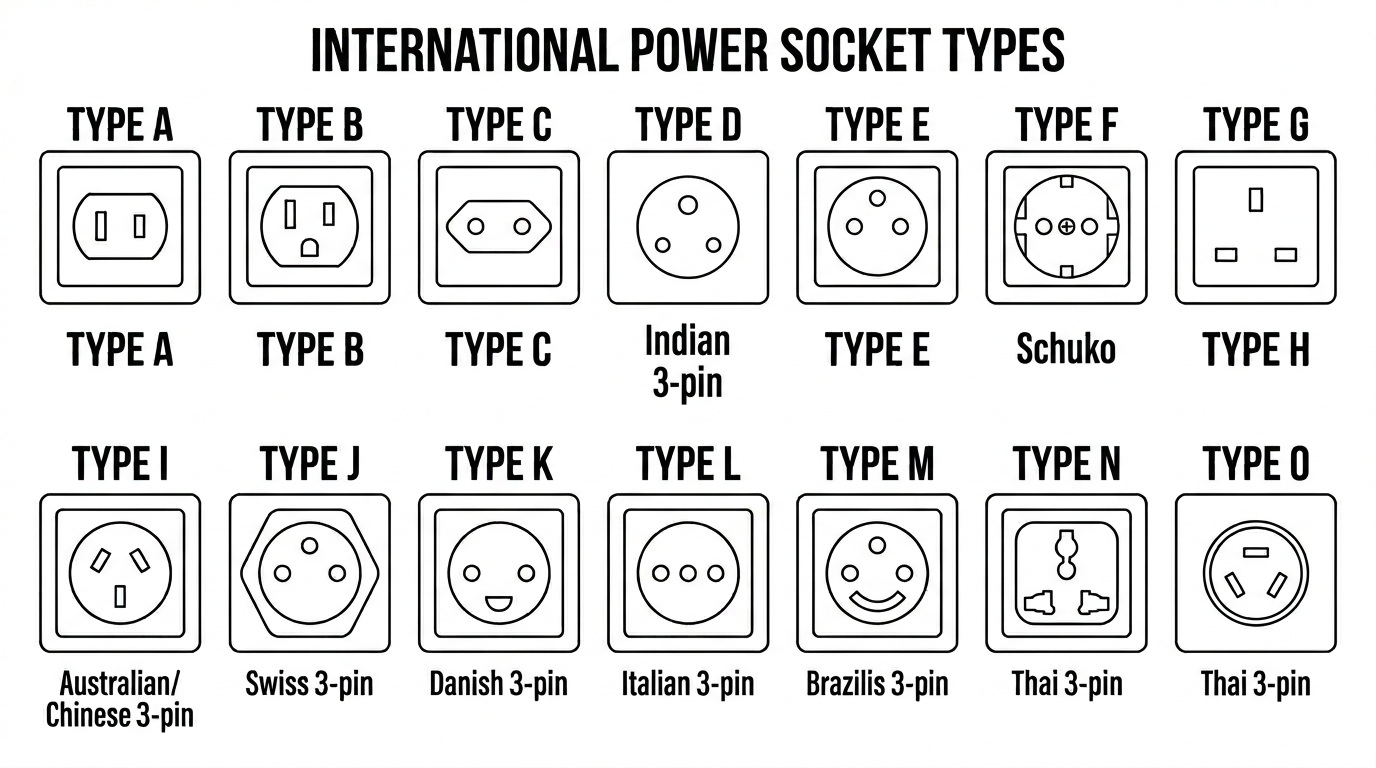
Eluttag
Typ G
Type G (three rectangular pins, UK-style), 230V, 50Hz
Se eluttagen
Dricks
Tipping is not obligatory but is appreciated and increasingly expected in tourist-facing settings. Many restaurants add a 10% service charge; if not, rounding up or leaving around 10% is generous. Small tips for hotel porters, guides, and drivers are welcomed. Mobile money (especially MTN MoMo) is extremely widely used for payments and transfers.
SIM / Data
Local SIMs from MTN (the largest network), Telecel (formerly Vodafone), and AirtelTigo are cheap and offer good 4G in cities and most towns; coverage thins in remote rural and northern areas. Registration with your passport is required at purchase. Buy from official branded shops or the airport rather than street vendors to ensure proper registration. eSIMs are available from some providers.
Visum
Most non-ECOWAS visitors need a visa to enter Ghana, typically obtained in advance from a Ghanaian embassy or, for many nationalities, via an e-visa or visa-on-arrival arrangement (which usually requires prior approval). A passport valid for at least six months and proof of a yellow fever vaccination are mandatory. ECOWAS nationals can generally enter visa-free. Always confirm the latest requirements with the Ghana Immigration Service before travelling.
Körfält
Right
Hur tar man sig runt i Ghana?
Kollektivtrafik
Within cities, the ubiquitous tro-tro (shared minibus) is the cheapest way to move, running fixed routes with a 'mate' calling out destinations, though they can be crowded and confusing for newcomers. Shared and private taxis are everywhere; agree the fare before boarding. Accra has limited formal bus services. There is no metro or tram system anywhere in the country.
Taxitjänster
- Uber
- Bolt
- Yango
Intercity
Long-distance buses are the backbone of intercity travel. Reputable lines such as STC (State Transport Company), VIP, and OA Travel run scheduled, more comfortable coaches between major cities like Accra, Kumasi, Takoradi, and Tamale; book ahead at the terminal. Shared tro-tros and 'bush taxis' cover shorter and rural routes cheaply but informally. Domestic flights connect Accra with Kumasi, Takoradi, and Tamale (operators include Africa World Airlines and Passion Air), saving long road hours. Night road travel is best avoided.
Kultur och seder
Seder
- Use your right hand for eating, giving, and receiving items. The left hand is considered unclean, and offering or accepting something with it (or pointing with it) is seen as rude.
- Greetings are essential and never skipped. When greeting a group, especially seated elders, move from right to left. A handshake ending in a finger-snap is a friendly local custom.
- Show deep respect to elders and chiefs. Do not initiate a handshake with a chief; wait to be addressed, and avoid sitting with your legs crossed or feet pointed at people of status.
- Ghanaians are warm and hospitable; visitors are often called 'obroni' (foreigner/white person), which is generally affectionate rather than offensive.
- Dress modestly when visiting rural areas, religious sites, and chiefs' palaces. Funerals are major, often colourful public events, and red and black are the customary mourning colours.
- Always ask permission before photographing people, military or government buildings, and at the former slave castles, where reflective behaviour is expected.
Klädkod
Lightweight, breathable clothing for a hot, humid tropical climate. Modest dress is appreciated, especially in the more Muslim north and at religious or traditional sites; cover shoulders and knees there. Vibrant Ghanaian wax-print and kente fabrics are widely worn and welcomed on visitors. Bring a hat, sunscreen, and a light rain layer for the wet seasons.
Religiös etikett
Ghana is predominantly Christian, with a significant Muslim minority (strongest in the north) and enduring traditional beliefs. Both Sundays (church) and Fridays (mosque) shape daily rhythms. Dress modestly and remove shoes when entering mosques; women may be asked to cover their hair. Respect traditional shrines and sacred groves, where certain days or acts may be taboo. Ghanaians are generally devout and tolerant; showing reverence is always appreciated.
Vanliga uttryck
- AkwaabaWelcome
- Ɛte sɛn?How are you? (Twi)
- Me ho yɛI am fine (Twi)
- MedaaseThank you (Twi)
- Aane / DaabiYes / No (Twi)
- Ɛyɛ sɛn?How much is it? (Twi)
Höjdpunkter
Sport & fritid
Football (soccer)
Football is a national passion. The men's national team, the Black Stars, command enormous support, and World Cup runs (notably 2010) are remembered with pride; the women's team is the Black Queens. Local fans follow both the domestic Ghana Premier League (with historic clubs like Asante Kotoko and Hearts of Oak) and European leagues fervently, often gathering at viewing centres to watch matches. Boxing has a strong heritage too, especially in Accra's Bukom district, which has produced world champions. Athletics and, increasingly, basketball also have followings.
Nationella högtider
- March 6
Independence Day
Commemorates Ghana's independence from Britain in 1957 as the first sub-Saharan African nation to gain freedom from colonial rule. Marked by parades, military and school marches at Black Star Square in Accra, and patriotic celebrations nationwide.
- September (varies)
Oguaa Fetu Afahye
A vibrant traditional festival of the people of Cape Coast giving thanks and purifying the community, featuring a colourful durbar of chiefs in palanquins, drumming, dancing, and a grand procession through the historic coastal town.
- First Saturday of September
Homowo Festival
Celebrated by the Ga people of the Accra region to 'hoot at hunger', commemorating survival of a past famine. Highlights include the sprinkling of 'kpokpoi' (a traditional cornmeal dish), processions, drumming, and family reunions.
- December (Friday before Christmas)
Hogbetsotso Festival
Marks the migration of the Anlo Ewe people from their ancestral home of Notsie in Togo. Held in Anloga in the Volta Region, it features a ceremonial cleansing, a colourful durbar of chiefs, drumming, and dancing.
Ska du till Ghana?
Prova en färdig resa först.
Öppna demoresan utan att registrera dig: Barcelona på egen hand, eller Rom, Florens och Venedig i grupp. Planera sedan Ghana på ditt eget sätt.