
Reseguide till Mikronesien. Viktig reseinformation — nödnummer, säkerhet, valuta, visum, seder och att ta sig runt.
Nödnummer
Hur säkert är Mikronesien?
- Mycket säkert
- Generellt säkert
- Var försiktig
- Hög risk
- Farligt
The Federated States of Micronesia (FSM) is a generally peaceful, low-crime nation spread across four states (Yap, Chuuk, Pohnpei, Kosrae) in the western Pacific. Serious crime against tourists is rare, and visitors are usually met with warmth. The main risks are practical rather than violent: limited and expensive medical care (serious cases require costly medical evacuation to Guam, Hawaii, or the Philippines), unpredictable inter-island flights and ferries, strong ocean currents and reef hazards for divers and snorkelers, and exposure to typhoons during the wet season. Chuuk in particular has a reputation for occasional alcohol-fueled disturbances and petty theft, and walking alone at night anywhere is best avoided. Infrastructure is basic outside the main towns.
Reseaviseringar (8)
Bedrägerier
- Overcharging tourists for boat charters, dive trips, and 'guided' reef or wreck tours is common — agree on the full price and what it includes before setting off, as there is little recourse afterward.
- Informal taxi and transport arrangements may quote one price and demand more on arrival, especially from the airport; confirm the fare and currency (USD) up front.
- On Yap and outer islands, photographing people, villages, sacred sites, or 'stone money' without permission can lead to demands for payment; always ask first, and expect that access to certain land or beaches requires a customary permission fee.
- Some 'wreck dive' or fishing operators may lack proper safety equipment, insurance, or certification; verify credentials, emergency oxygen, and rescue plans before booking, particularly in Chuuk Lagoon.
Varningar
- Medical facilities are very limited; serious illness or a diving injury typically requires expensive air evacuation to Guam, Hawaii, or the Philippines, so comprehensive travel and dive insurance covering evacuation is essential.
- Typhoons and heavy storms can occur, particularly during the wetter months, disrupting the already infrequent inter-island flights and ferries — build buffer days into any tight itinerary.
- Chuuk Lagoon wreck diving is world-class but involves deep, sometimes technical dives; only dive within your certification and with reputable operators carrying emergency oxygen.
- Strong currents, sharp reefs, and limited rescue services make caution essential when swimming, snorkeling, or boating, especially around outer islands.
Praktisk info
Valuta
United States dollar (USD)
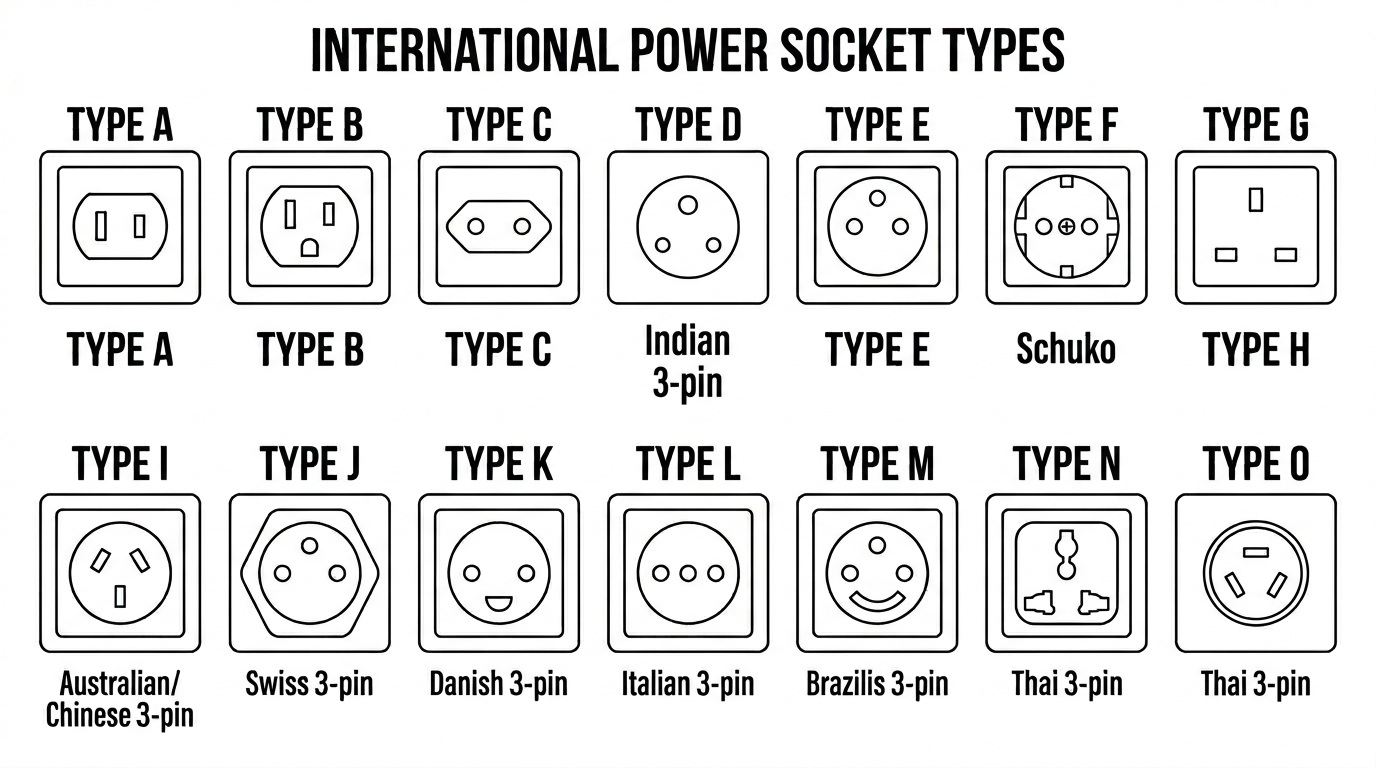
Eluttag
Typ A och B
Type A and Type B plugs, 120V, 60Hz (same as the United States)
Se eluttagen
Dricks
Tipping is not a strong local custom and is not expected in most everyday situations. At tourist-oriented hotels, dive operations, and restaurants, modest tipping for good service is appreciated but not obligatory — rounding up, leaving around 10% for excellent service, or tipping dive guides and boat crews a few dollars is a kind gesture rather than a requirement.
SIM / Data
FSM Telecom is the main provider; buy a local prepaid SIM and data package on arrival (the airport or a Telecom office in Pohnpei, Chuuk, Kosrae, or Yap). Coverage and speeds are limited and can be slow or unreliable, especially on outer islands where there may be no signal at all. Wi-Fi exists at some hotels and resorts but is often slow and metered, so don't count on heavy data use; download maps and essentials in advance.
Visum
The Federated States of Micronesia is a sovereign nation in free association with the United States under the Compact of Free Association. U.S. citizens can enter and reside without a visa under the Compact. Many other visitors are granted a visa-free entry permit for tourism on arrival (commonly up to 30 days), provided they hold a passport valid for the duration of stay (six months' validity is the safe standard), proof of onward or return travel, and sufficient funds. Requirements vary by nationality and can change, so confirm current rules with FSM immigration or the nearest FSM mission before traveling.
Körfält
Right
Hur tar man sig runt i Mikronesien?
Kollektivtrafik
There is no formal public transport system like buses or trains. Within the main islands you get around by taxi, shared taxi, rental car, or hotel transfers. Taxis in Pohnpei and the other state centers are cheap and often shared (they pick up other passengers along the way); agree the fare in USD before riding. Roads are limited — the main ones circle or cross each island — and conditions vary from paved to rough. Renting a car or arranging a driver is the most practical way to explore independently.
Taxitjänster
- No ride-hailing apps operate in Micronesia; use local taxis (often shared) or arrange transport through your hotel
Intercity
The four states (Yap, Chuuk, Pohnpei, Kosrae) are far apart across the ocean, so inter-island travel is essentially by air. United Airlines operates the famous 'Island Hopper' route linking Guam, Yap, Chuuk, Pohnpei, Kosrae, and the Marshall Islands/Honolulu, and this is the backbone of getting between states. Flights are infrequent (often only a few times a week) and subject to weather delays, so book well ahead and allow buffer days. Slow government and cargo ships connect the main islands to remote outer atolls on irregular schedules, used mainly by locals; these are adventurous and uncomfortable but offer a glimpse of outer-island life.
Kultur och seder
Seder
- Respect for elders and traditional chiefs is central; each of the four states has its own languages, customs, and chiefly systems, so what is acceptable in Pohnpei may differ from Yap or Chuuk.
- Modest dress is the norm, especially for women — covering the thighs is important, and on Yap and many outer islands the traditional emphasis is on covering the thighs rather than the chest; follow local community standards.
- On Yap, 'stone money' (rai) — large stone discs — remains culturally significant and is often communally owned; never touch, sit on, lean against, or photograph it without permission.
- Chewing betel nut (commonly mixed with lime and tobacco) is widespread, especially on Yap; you'll see red stains and people spitting — it's a social ritual, and being offered some is a friendly gesture.
- Sakau (kava) in Pohnpei is a culturally important relaxant drink prepared and shared in a ceremonial setting; accepting it respectfully is a sign of goodwill.
- Land, beaches, lagoons, and reefs are almost always privately or community-owned under custom; always ask permission before crossing land or entering a beach, and expect to pay a small customary access fee in many places.
- A relaxed, indirect communication style prevails — avoid confrontation, public anger, or rushing people; patience and a friendly, low-key manner go a long way ('island time' is real).
Klädkod
Casual, modest, and lightweight tropical clothing is appropriate. Beachwear and swimsuits are fine at resorts and in the water but should not be worn in towns, villages, or churches. Women should keep thighs covered in public, particularly on Yap and outer islands where this is a strong customary expectation; covering shoulders for church and village visits is respectful. Men generally wear shorts or trousers and T-shirts. Lightweight, breathable fabrics, a sun hat, and water shoes for reefs are practical.
Religiös etikett
Christianity is the dominant religion, with strong Roman Catholic and Protestant (Congregational) communities, and faith is deeply woven into daily and community life. Sundays are widely observed as a day of rest and worship — many businesses close, and noisy or commercial activity is frowned upon. Dress modestly when visiting churches (cover shoulders and knees), remove hats, and be quiet and respectful during services, which visitors are usually welcome to attend. Saying grace before meals is common, and it is polite to wait. Avoid loud behavior near churches on Sundays.
Vanliga uttryck
- KaselehlieHello (Pohnpeian greeting, widely understood)
- KalahnganThank you (Pohnpeian)
- MwahuGood / fine (Pohnpeian)
- Ran annimHello / good day (Chuukese)
- KinisouThank you (Chuukese)
- MogethinHello (Yapese)
Höjdpunkter
Sport & fritid
Baseball
Reflecting the islands' history of American and earlier Japanese influence, baseball is hugely popular and among the most widely followed and played sports across the FSM, with village and community teams and lively local games. Basketball and volleyball are also commonly played. Beyond organized sport, the ocean defines recreation: traditional outrigger canoeing and sailing, fishing, spearfishing, and especially world-renowned scuba diving — Chuuk Lagoon's WWII shipwrecks draw divers globally, while Yap is famous for manta ray encounters. Micronesian athletes compete regionally in events like the Micronesian Games and the Pacific Games.
Nationella högtider
- November 3
FSM Independence Day
The national day marks the Federated States of Micronesia's 1986 implementation of the Compact of Free Association. Celebrated nationwide with flag ceremonies, parades, traditional dancing, feasts, canoe races, and cultural competitions across the four states.
- May 10
FSM Constitution Day
A national holiday commemorating the adoption of the FSM Constitution in 1979. Marked with official ceremonies, speeches, and community gatherings celebrating Micronesian self-governance and unity.
- Early March (typically March 1–2)
Yap Day
Yap's signature cultural festival, where villages gather to perform traditional standing, sitting, and bamboo dances in full customary dress, alongside displays of weaving, navigation, and stone-money heritage — one of the most authentic cultural celebrations in the Pacific.
- September 11
Pohnpei Liberation Day
A Pohnpei state holiday commemorating the end of WWII Japanese occupation, observed with ceremonies, community feasting, and remembrance events on the island.
Ska du till Mikronesien?
Prova en färdig resa först.
Öppna demoresan utan att registrera dig: Barcelona på egen hand, eller Rom, Florens och Venedig i grupp. Planera sedan Mikronesien på ditt eget sätt.