
Reseguide till Tadzjikistan. Viktig reseinformation — nödnummer, säkerhet, valuta, visum, seder och att ta sig runt.
Nödnummer
Hur säkert är Tadzjikistan?
- Mycket säkert
- Generellt säkert
- Var försiktig
- Hög risk
- Farligt
Tajikistan is generally safe for travelers and violent crime against tourists is uncommon; petty theft and pickpocketing can occur in crowded markets and transport hubs. The main concerns are not crime but the country's challenging terrain (high-altitude mountain roads, landslides, and avalanches), border-region instability, and limited rural infrastructure and medical care. Most travel-advisory agencies recommend increased caution overall, with heightened warnings for specific border zones.
Reseaviseringar (8)
Bedrägerier
- Police and checkpoint officials occasionally solicit bribes from foreigners by alleging document or registration problems. Carry copies of your passport, visa, and GBAO permit, stay polite, and insist on dealing at a station if pressured.
- Taxi drivers, especially at the airport and bus stations, may quote inflated fares to foreigners. Agree on the price before getting in, or use a ride-hailing app (Yandex Go, InDrive) to fix the fare.
- Money-changing scams and counterfeit notes exist; change money only at banks or licensed exchange offices, count your somoni carefully, and avoid street money-changers.
- Overcharging at bazaars and on souvenirs is common — bargaining is expected, so settle a price before agreeing to buy.
Varningar
- Exercise heightened caution near the border with Afghanistan, which runs along much of the country's south and the Pamir region; the situation can be volatile and some governments advise against non-essential travel to parts of this frontier.
- The Gorno-Badakhshan Autonomous Region (GBAO) has seen periodic unrest, security operations, and travel restrictions; check current conditions, carry your GBAO permit, and confirm access before traveling the Pamir Highway.
- Mountain roads (notably the Pamir Highway and routes to Khorog) are subject to rockfalls, landslides, avalanches, and harsh weather; travel can become impassable and rescue/medical services are very limited.
- Altitude sickness is a real risk above 3,000m on the Pamir Plateau — acclimatize gradually and carry appropriate supplies. Landmines remain a residual hazard in a few remote border areas; do not stray off marked paths near frontiers.
Praktisk info
Valuta
Tajikistani somoni (TJS)
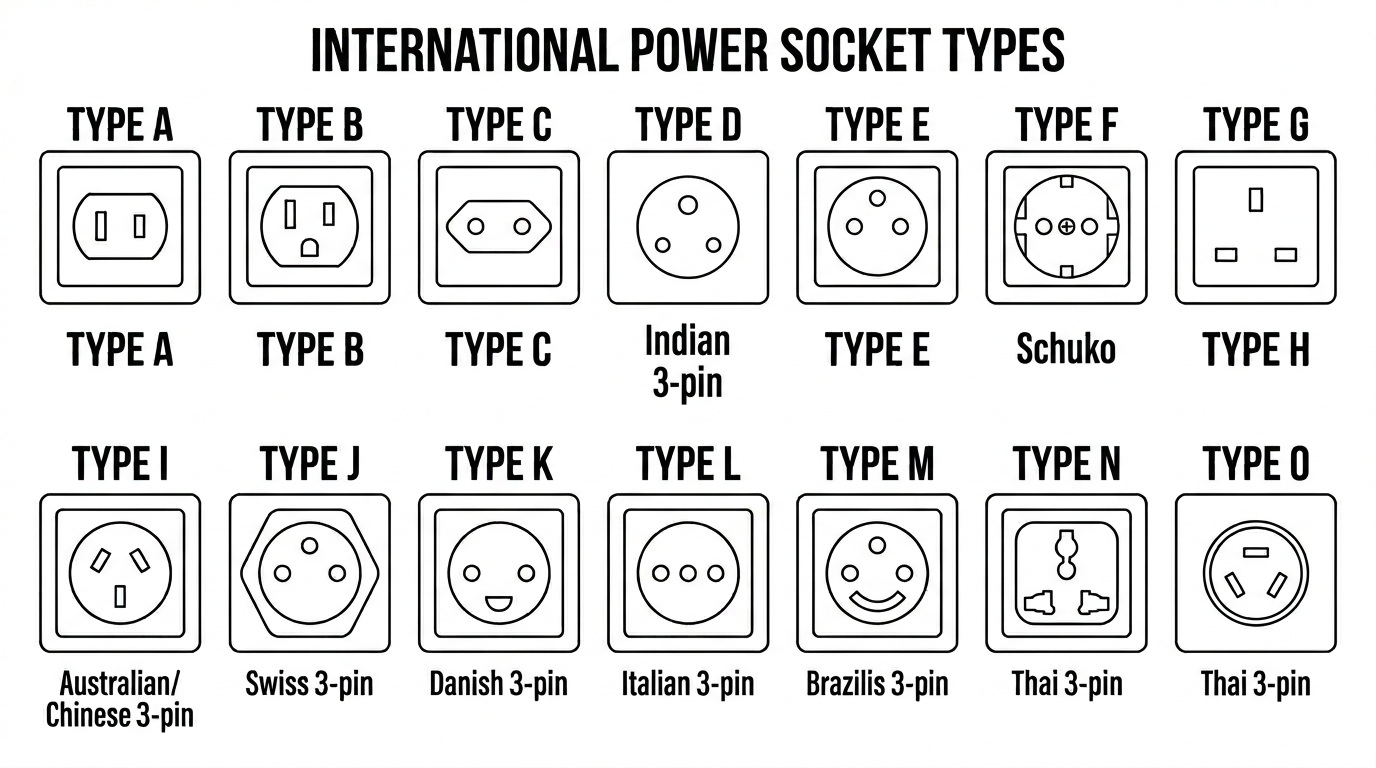
Eluttag
Typ C och F
Types C and F (and sometimes I), 220V, 50Hz
Se eluttagen
Dricks
Tipping is not deeply ingrained but is appreciated. Upscale restaurants in Dushanbe may add a service charge; otherwise rounding up or leaving about 5-10% is generous. Tip drivers and trekking guides for good service; small tips for hotel staff are welcome.
SIM / Data
Local SIM cards from providers like Tcell, Megafon Tajikistan, and Babilon-Mobile are cheap and give the most reliable mobile data; buy at official shops in Dushanbe or Khujand and bring your passport to register. Coverage is good in cities but sparse to nonexistent in the high Pamirs and remote valleys, so download offline maps (Maps.me) and routes in advance.
Visum
Many nationalities can use Tajikistan's convenient online e-Visa system, which is typically valid for stays of up to 45-60 days. Travelers to the Gorno-Badakhshan Autonomous Region (GBAO) — including the Pamir Highway, Khorog, and the Wakhan Valley — require an additional GBAO permit, which can be requested as an add-on to the e-Visa. Some neighboring-country and CIS nationals enter visa-free. Always confirm current requirements with an official Tajik government source before travel, as rules change.
Körfält
Right
Hur tar man sig runt i Tadzjikistan?
Kollektivtrafik
Within cities, Dushanbe has buses, trolleybuses, and shared marshrutka minibuses, plus cheap metered or negotiated taxis. There is no metro/subway. Fares are inexpensive; carry small somoni notes as drivers rarely have change.
Taxitjänster
- Yandex Go
- Maxim
- InDrive
Intercity
Shared taxis and marshrutka minibuses are the backbone of intercity travel, departing from city bus stations when full rather than on a schedule. The Dushanbe–Khujand route is the busiest. The legendary Pamir Highway (M41) to Khorog and Murghab usually requires a hired 4x4 with driver, often arranged in Khorog or Osh (Kyrgyzstan). Domestic flights (Somon Air, Tajik Air) connect Dushanbe with Khujand and the weather-dependent, scenic Dushanbe–Khorog flight. Rail service is very limited.
Kultur och seder
Seder
- Greetings are warm and important: men shake hands, often with the left hand placed over the heart as a sign of sincerity. Close friends may exchange a brief embrace. Take time for pleasantries before getting to business.
- Hospitality is central to Tajik culture. If invited into a home, expect generous food and tea. Remove your shoes at the door, and accept tea (choi) when offered — refusing outright can seem rude.
- Bread (non) is sacred. Never place it upside down, never set it on the ground, and do not throw it away or waste it. Tear pieces by hand rather than cutting with a knife.
- Meals are often eaten seated on cushions around a low table or a raised platform (tapchan/takht), frequently covered with a decorative cloth (dastarkhan). Use your right hand for eating and passing food.
- Modesty is valued, especially outside Dushanbe and in the conservative Pamirs and rural south. Dress conservatively and ask permission before photographing people, particularly women.
- Elders are shown great respect: greet them first, offer them the best seat, and avoid contradicting them publicly. Pointing the soles of your feet at someone is considered impolite.
Klädkod
Modest, conservative dress is expected, particularly for women and outside the capital. Women should cover shoulders and knees; a headscarf is useful for mosques and shrines though not required on the street. In Dushanbe, dress is somewhat more relaxed and Western, but note that the government discourages overtly foreign-style or heavy Islamic veiling. Men should avoid shorts in towns and at religious sites. In the high Pamirs, pack warm layers regardless of season.
Religiös etikett
Tajikistan is predominantly Sunni Muslim (with a Shia Ismaili community in the Pamirs/Gorno-Badakhshan). Although the state is officially secular and the government actively regulates public religious expression, visitors should respect Islamic norms. Remove shoes and dress modestly (women cover hair) when entering mosques or shrines (mazars); avoid entering during prayer unless invited. During Ramadan, refrain from eating, drinking, or smoking in public during daylight out of courtesy. Always ask before photographing inside religious sites.
Vanliga uttryck
- SalomHello
- RahmatThank you
- Ha / Не (Не)Yes / No
- LutfanPlease
- Chand pul ast?How much is it?
- KhayrGoodbye
Höjdpunkter
Sport & fritid
Football (soccer)
Football is the most popular spectator sport, with the national team and Dushanbe clubs drawing strong support. Wrestling (gushtigiri) and traditional horseback games — especially buzkashi, a fast, rugged contest in which riders compete over a goat carcass — are deeply rooted, particularly around Navruz festivities. Tajikistan also punches above its weight in judo, taekwondo, freestyle wrestling, and boxing, and its dramatic mountains make it a magnet for mountaineering and high-altitude trekking, including peaks once known as Communism Peak (now Ismoil Somoni Peak) and Lenin Peak.
Nationella högtider
- March 21-24
Navruz (Nowruz)
The Persian/Zoroastrian New Year and the biggest celebration of the year, marking the spring equinox. Expect public festivities, traditional foods like sumalak (a slow-cooked wheat-germ dish), music, dancing, buzkashi games, and decorated streets.
- September 9
Independence Day
Celebrates Tajikistan's 1991 independence from the Soviet Union with parades, concerts, fireworks, and patriotic events, especially in Dushanbe.
- Varies (lunar calendar)
Eid al-Fitr (Idi Ramazon)
Marks the end of Ramadan with family gatherings, feasting, charity, and visits to relatives. A major religious holiday across the country.
- Varies (lunar calendar)
Eid al-Adha (Idi Qurbon)
The Feast of Sacrifice, an important Islamic holiday featuring communal prayers, the ritual sharing of meat, and family celebrations.
Ska du till Tadzjikistan?
Prova en färdig resa först.
Öppna demoresan utan att registrera dig: Barcelona på egen hand, eller Rom, Florens och Venedig i grupp. Planera sedan Tadzjikistan på ditt eget sätt.