
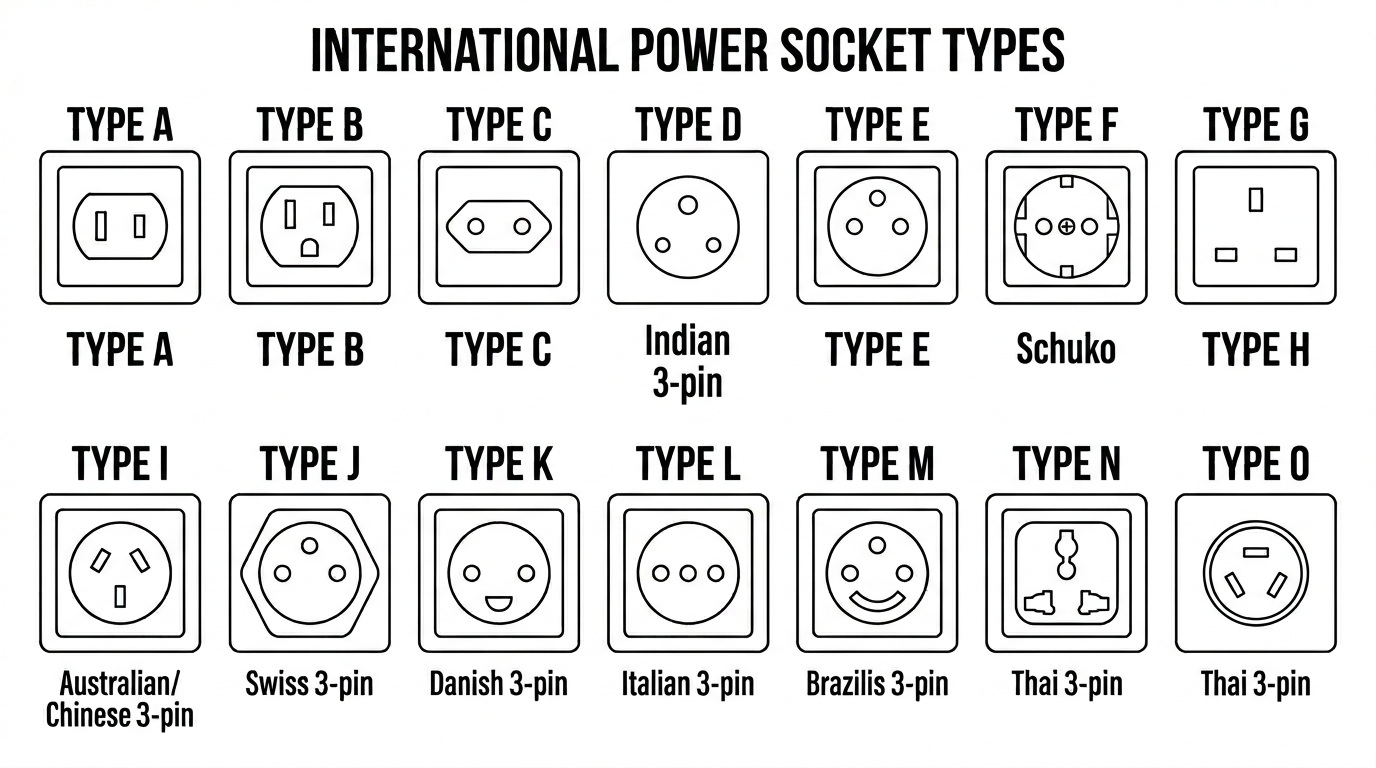
I Chile betalar man med Chilean peso, eluttagen är av typ C och L och nödnumret är 112. Chile is one of the safest and most stable countries in South America, with good infrastructure and a well-developed tourism sector.
Nödnummer
Hur säkert är Chile?
- Mycket säkert
- Generellt säkert
- Var försiktig
- Hög risk
- Farligt
Chile is one of the safest and most stable countries in South America, with good infrastructure and a well-developed tourism sector. The main risk for travelers is opportunistic crime, theft, pickpocketing, and occasional smash-and-grab from vehicles, concentrated in Santiago and Valparaiso. Violent crime against tourists is uncommon but has risen in some areas, so stay alert at night and avoid displaying valuables. Chile is also seismically very active; earthquakes and coastal tsunami risk are real, and the country has strict building codes and clear evacuation routes. Always learn the tsunami evacuation signage on the coast.
Reseaviseringar (7)
Bedrägerier
- Pickpocketing and bag-snatching are common in crowded areas of Santiago and Valparaiso, especially around Plaza de Armas, Cerro Santa Lucia, bus terminals, the metro at rush hour, and the funiculars and stairways of Valparaiso. Keep bags zipped and in front of you.
- Distraction scams: someone 'accidentally' spills a drink, ketchup, or mustard on you and an accomplice picks your pocket while 'helping' clean it off. Walk away firmly and keep your belongings secure.
- Taxi overcharging and rigged meters, especially at the airport and tourist zones. Use official airport transfer counters, agree on the fare in advance, or use ride-hailing apps; avoid unmarked 'taxis' touting at arrivals.
- Restaurant and ATM watchfulness: card skimming occurs, so prefer ATMs inside banks or malls, shield your PIN, and watch for inflated tourist menus or unrequested 'extras' added to bills.
Varningar
- Demonstrations and protests can occur, particularly in central Santiago (around Plaza Italia/Plaza Baquedano) and on politically sensitive anniversaries such as September 11; these can turn confrontational, so avoid large gatherings.
- The southern Araucania and Biobio regions occasionally see tension and isolated violent incidents linked to Mapuche land disputes; check local advice before traveling rural back roads there.
- Severe natural hazards: frequent earthquakes, active volcanoes, tsunami risk along the entire coast, and wildfires in central/southern Chile during the dry summer (Dec-Mar). Heed all official warnings and evacuation orders.
Praktisk info
Valuta
Chilean peso (CLP)
Eluttag
Typ C och L
Plug types C and L, 220V, 50Hz
Se eluttagen
Dricks
Tipping is customary but modest. In restaurants a 10% service charge (propina sugerida) is usually added or expected, and you can confirm or adjust it; 10% is the norm for good service. Round up taxi fares; tip tour guides, hotel porters and ski/airport staff a small amount. Tipping is appreciated rather than obligatory elsewhere.
SIM / Data
Prepaid SIM cards are cheap and easy from Entel, Movistar, Claro or WOM, sold at the airport, malls and corner stores; bring your passport to register the SIM. Coverage is excellent in cities and along the central corridor but patchy in remote Patagonia, the Atacama and the far south. eSIMs work on most networks and are convenient for short visits. 4G is widespread and 5G is available in major cities.
Visum
Many nationalities (including the US, UK, EU/Schengen, Canada, Australia and New Zealand) can enter Chile visa-free as tourists for up to 90 days. You receive a Tarjeta Unica Migratoria (entry record) on arrival; keep it, as it is needed for hotel tax exemption and on departure. A passport valid for the duration of stay is required. Always verify current requirements with a Chilean consulate before travel, as rules and reciprocity fees change.
Körfält
Right
Hur tar man sig runt i Chile?
Kollektivtrafik
Santiago has a clean, efficient and extensive metro (one of South America's best) plus buses, all paid with the rechargeable bip! card under the integrated Red Metropolitana de Movilidad (formerly Transantiago). Other cities rely on micros (buses) and colectivos (shared fixed-route taxis). Valparaiso's historic ascensores (funiculars) are a tourist attraction in themselves.
Taxitjänster
- Uber
- Cabify
- DiDi
- Beat
Intercity
Chile is extremely long (over 4,000 km), so distances are large. Long-distance buses are the backbone of intercity travel: comfortable, frequent and good value, with reclining 'cama' and 'semi-cama' seats on operators like Turbus and Pullman. For the vast distances (e.g., Santiago to the Atacama or Patagonia), domestic flights on LATAM, Sky Airline and JetSMART save days. Rail is limited, mainly regional services south of Santiago; ferries and cruises connect the fjords and islands of Patagonia (e.g., Navimag).
Kultur och seder
Seder
- Greetings matter: Chileans typically greet with a single kiss on the right cheek between women, and between a man and a woman; men usually shake hands, reserving a hug (abrazo) for close friends. Skipping the greeting entirely can seem cold.
- Onces is the beloved late-afternoon tea-and-bread ritual (around 5-8pm), with tea or coffee, marraqueta or hallulla bread, avocado (palta), cheese, ham and manjar (dulce de leche). Being invited to onces is a warm gesture.
- Chileans value personal warmth but also formality on first meeting: use usted and titles (Don/Doña, or professional titles) with elders and in business until invited to switch to the informal tu.
- Punctuality is relaxed socially; arriving 15-30 minutes late to a private dinner or asado (barbecue) is normal and expected, but business meetings run more on time.
- Food is rarely eaten with the hands here, even fries or pizza are often eaten with knife and fork. Keep both hands above the table during meals.
- National pride is strong and the politics of the Pinochet era remain sensitive; let Chileans raise the topic, and avoid lumping Chile in with the rest of Latin America, as locals are proud of their distinct identity.
Klädkod
Dress is generally smart-casual and neat; Santiago in particular is fashion-conscious and people dress more formally than in many neighboring countries. Beachwear stays at the beach. For the wildly varied climate, layering is essential: the Atacama is scorching by day and cold at night, Patagonia is windy and cold year-round, and central Chile has hot dry summers and cool wet winters. Churches expect modest dress (covered shoulders and knees).
Religiös etikett
Chile is historically Roman Catholic, though a large evangelical Protestant minority and a growing secular population also exist. Religion is treated respectfully but is largely a private matter. Dress modestly when entering churches, keep voices low, and ask before photographing services or worshippers. Indigenous Mapuche spiritual sites and ceremonies (such as the nguillatun) should be approached respectfully and only with permission.
Vanliga uttryck
- Hola, ¿cómo estás?Hello, how are you?
- Gracias / Por favorThank you / Please
- ¿Cuánto cuesta?How much does it cost?
- ¿Dónde está el baño?Where is the bathroom?
- La cuenta, por favorThe bill, please
- ¿Cachái?You know? / Get it? (very common Chilean slang)
Höjdpunkter
Sport & fritid
Football (soccer)
Football is the national passion; the biggest rivalry is the Superclasico between Colo-Colo and Universidad de Chile, and the national team (La Roja) won back-to-back Copa America titles in 2015 and 2016, a source of huge pride. Tennis is also revered thanks to stars like Marcelo Rios and Fernando Gonzalez, and rodeo is the official national sport, with the half-moon arena (medialuna) and huaso horsemen central to rural culture. Chile's geography makes it a world-class adventure-sports destination: skiing and snowboarding in the Andes (Valle Nevado, Portillo), trekking in Torres del Paine, surfing at Pichilemu, and climbing and stargazing in the Atacama.
Nationella högtider
- September 18-19
Fiestas Patrias (Dieciocho)
Chile's most important national holiday, marking the 1810 first government junta and independence. Celebrated nationwide with fondas and ramadas (festival tents), cueca dancing (the national dance), asados, empanadas, chicha and terremoto drinks, and military parades on the 19th (Day of the Glories of the Army).
- July 12-18 (peak around July 16)
Fiesta de La Tirana
A massive religious festival in the tiny northern village of La Tirana near Iquique, honoring the Virgen del Carmen. Tens of thousands of pilgrims gather, and dance troupes in elaborate diabladas (devil-costume dances) perform day and night, blending Catholic and Andean traditions.
- Late January to early February
Tapati Rapa Nui
A two-week cultural festival on Easter Island (Rapa Nui) celebrating Polynesian heritage with traditional sports, body-painting, the haka pei (sliding down a hillside on banana trunks), dance, music and the crowning of a festival queen.
- December 31 - January 1
Año Nuevo / New Year in Valparaiso
Valparaiso hosts one of South America's most famous New Year's Eve fireworks displays over the bay, drawing huge crowds to the hills overlooking the harbor for the multi-point pyrotechnic show.
Ska du till Chile?
Prova en färdig resa först.
Öppna demoresan utan att registrera dig: Barcelona på egen hand, eller Rom, Florens och Venedig i grupp. Planera sedan Chile på ditt eget sätt.