
I Fiji betalar man med Fijian dollar, eluttagen är av typ I och nödnumret är 911. Fiji is generally a safe and welcoming destination for travelers, and most visits to resort areas, the Mamanuca and Yasawa island groups, and the main tourist corridors of Viti Levu are trouble-free.
Nödnummer
Hur säkert är Fiji?
- Mycket säkert
- Generellt säkert
- Var försiktig
- Hög risk
- Farligt
Fiji is generally a safe and welcoming destination for travelers, and most visits to resort areas, the Mamanuca and Yasawa island groups, and the main tourist corridors of Viti Levu are trouble-free. The most common problems are petty theft and opportunistic crime rather than violence against tourists. Exercise normal-to-increased caution in Suva and Nadi after dark, avoid isolated beaches and unlit streets at night, and be mindful during the November-to-April cyclone season, when tropical storms can disrupt travel and cause flooding.
Reseaviseringar (7)
Bedrägerier
- The 'sword-seller' or 'wood-carver' scam in Suva and Nadi: a friendly man strikes up conversation, asks your name, then carves it into a wooden tiki or sword and demands a high price for the 'gift'. Politely decline to give your name and walk away.
- Inflated, unmetered taxi fares for tourists. Many Fijian taxis have meters but drivers often quote flat 'tourist' prices. Agree on the fare before getting in, or insist the meter is used for in-town trips.
- Overpriced or pushy 'kava ceremony' invitations near markets and in town, where you are led to a shop or home, served kava, and then pressured to buy carvings or handicrafts at marked-up prices.
- Fake or unlicensed tour and boat operators selling island day-trips or diving without proper safety equipment or insurance; book through your resort, a reputable agency, or licensed operators at the marina.
Varningar
- Tropical cyclone season runs roughly November to April; powerful cyclones can cause flooding, landslides, and major disruption to flights and inter-island ferries. Monitor the Fiji Meteorological Service and heed local warnings.
- Strong ocean currents, rip tides, and sharp coral exist around many reefs and passages; only swim and snorkel in supervised or recommended areas and never dive beyond your certification.
- Medical facilities are limited, especially on outer islands; serious cases often require evacuation to Australia or New Zealand, so comprehensive travel insurance covering medical evacuation is strongly advised.
Praktisk info
Valuta
Fijian dollar (FJD)
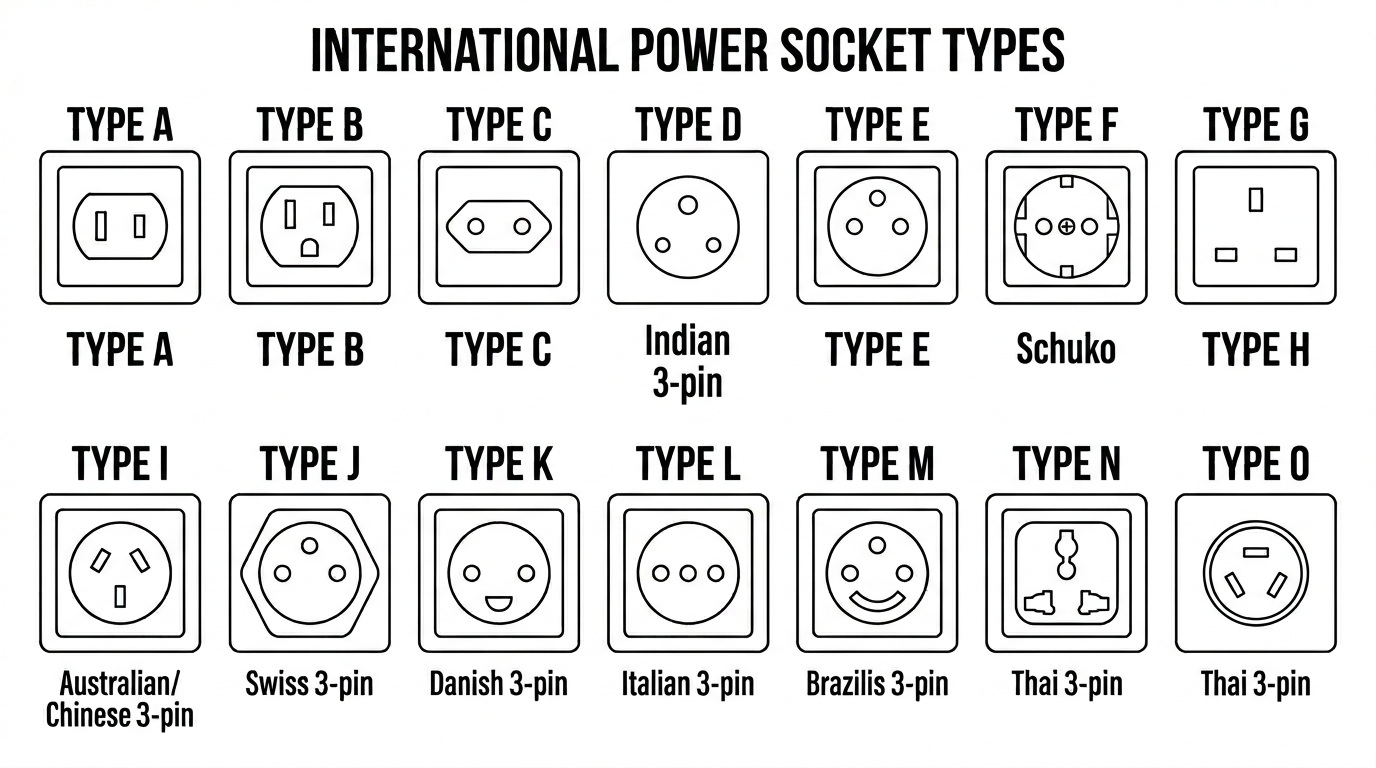
Eluttag
Typ I
Type I (three flat pins in a triangular pattern); 240V, 50Hz
Se eluttagen
Dricks
Tipping is not traditionally expected in Fiji and is not part of the local culture. Service is given freely as a matter of hospitality. Many resorts add a service charge or invite contributions to a shared 'Christmas fund' or staff fund that is split among all employees; this is the customary way to show appreciation. Small tips for exceptional personal service are welcome but never obligatory.
SIM / Data
Vodafone Fiji and Digicel are the two main mobile networks, with good coverage on the main islands and at most resorts. Buy a prepaid tourist SIM with a data bundle cheaply at Nadi International Airport on arrival or at provider shops in town; bring your passport for registration. Coverage on remote outer islands can be patchy. Many resorts offer Wi-Fi, sometimes for a fee.
Visum
Citizens of over 100 countries, including Australia, New Zealand, the US, Canada, the UK, the EU, Japan, and many others, can enter Fiji visa-free for tourism for up to four months. Your passport must be valid for at least six months beyond your departure date, and you should have proof of onward/return travel and sufficient funds. Always confirm current requirements with the Fiji Ministry of Immigration before travel.
Körfält
Left
Hur tar man sig runt i Fiji?
Kollektivtrafik
Local buses are the cheapest way to get around the main islands (Viti Levu and Vanua Levu), with frequent, inexpensive services connecting Nadi, Suva, Lautoka, and many villages; older buses often have open windows instead of glass. Taxis are widely available and affordable; agree on the fare in advance or insist on the meter for in-town trips. Minivans also operate as shared transport on busier routes.
Taxitjänster
- inDrive
- Yango
- GoGo Taxi
Intercity
Travel between islands is mainly by boat or air. Catamaran ferries such as the Awesome Adventures 'Yasawa Flyer' and South Sea Cruises serve the Mamanuca and Yasawa islands from Port Denarau, while larger ferries link Viti Levu with Vanua Levu, Taveuni, and Ovalau. Fiji Airways and its subsidiary Fiji Link run domestic flights to Nadi, Suva (Nausori), Labasa, Taveuni, and other airstrips. Small resorts are often reached by speedboat or seaplane transfer.
Kultur och seder
Seder
- When visiting a village, bring a gift of kava root (yaqona) to present to the village chief during the traditional sevusevu welcome ceremony; you should not wander into a village uninvited.
- Dress modestly away from the resorts and beaches, especially in villages and towns. Women should cover their shoulders and avoid short shorts, and everyone should remove hats and sunglasses when entering a village (touching someone's head is also considered disrespectful).
- Remove your shoes before entering a home, a bure (traditional thatched house), or many indoor village spaces.
- Participate respectfully in the kava (yaqona) ceremony: clap once before accepting the coconut-shell bowl (bilo), say 'bula', drink it in one go, then clap three times. Kava is central to Fijian social life.
- Sunday is widely observed as a day of rest and church in many communities; keep noise down, dress respectfully, and expect some shops and services to be closed.
- Fijians are famously warm and will greet you with a hearty 'Bula!'. It is polite to greet people, smile, and accept hospitality graciously; pointing, raising your voice, or public displays of anger are frowned upon.
Klädkod
Light, breathable tropical clothing suits the warm, humid climate. Beachwear and swimsuits are fine at resorts and on the beach, but cover up when leaving them. In villages, towns, and churches, dress modestly: women should cover shoulders and knees (a sulu or sarong is ideal), and both men and women should avoid revealing clothing. Remove hats and sunglasses in villages.
Religiös etikett
Fiji is religiously diverse: indigenous iTaukei Fijians are predominantly Christian (largely Methodist), while the large Indo-Fijian community is mainly Hindu and Muslim. Dress modestly and remove shoes when entering churches, temples, or mosques. Sundays are quietly observed in Christian communities, with many attending church. Always ask before photographing people during religious ceremonies, and respect the solemnity of services and rituals.
Vanliga uttryck
- Bula!Hello! / Welcome! (also means life and good health; the all-purpose Fijian greeting)
- VinakaThank you (say 'vinaka vakalevu' for thank you very much)
- Io / SegaYes / No
- MoceGoodbye (pronounced 'mo-thay')
- Ni sa yadraGood morning
- Vacava tiko?How are you?
Höjdpunkter
Sport & fritid
Rugby (Rugby Union and Rugby Sevens)
Rugby is a national obsession and a source of immense pride in Fiji. The men's national rugby sevens team is a global powerhouse and won Fiji's first-ever Olympic gold medal at Rio 2016, repeating gold at Tokyo 2020, sparking nationwide celebrations. Rugby is played everywhere, from manicured pitches to barefoot games on village fields and beaches. Beyond rugby, Fijians are passionate about football (soccer), netball is hugely popular among women, and the surrounding ocean makes diving, snorkeling, surfing, and game fishing major recreational draws.
Nationella högtider
- August (nine days)
Hibiscus Festival
Fiji's largest and longest-running festival, held in the capital Suva for over 50 years. The nine-day event features float parades, live music, food stalls, sporting events, talent and dance competitions, and culminates in the crowning of the Hibiscus Queen.
- July (around the second week)
Bula Festival
Nadi's flagship celebration on the western side of Viti Levu, packed with colorful floats, food, carnival rides, live entertainment, and a beauty pageant that ends with the crowning of Miss Bula. It is one of the country's most popular street festivals.
- Mid-September
Sugar Festival
Held in Lautoka, the 'Sugar City', this festival celebrates the region's sugarcane heritage with parades, food, cultural performances, rides, and an inclusive beauty competition, drawing crowds from across western Viti Levu.
- October or November (varies by lunar calendar)
Diwali (Festival of Lights)
An official national public holiday reflecting Fiji's large Indo-Fijian Hindu community. Homes, streets, and temples are decorated with clay lamps (diyas), candles, and colorful lights, with sweets, fireworks, and family gatherings celebrated across the country.
Ska du till Fiji?
Prova en färdig resa först.
Öppna demoresan utan att registrera dig: Barcelona på egen hand, eller Rom, Florens och Venedig i grupp. Planera sedan Fiji på ditt eget sätt.