
Reseguide till Marshallöarna. Viktig reseinformation — nödnummer, säkerhet, valuta, visum, seder och att ta sig runt.
Nödnummer
Hur säkert är Marshallöarna?
- Mycket säkert
- Generellt säkert
- Var försiktig
- Hög risk
- Farligt
The Marshall Islands is a peaceful, low-crime nation, but its remoteness and limited infrastructure warrant a step above the very safest destinations. Most travel advisories urge a degree of extra caution rather than 'normal precautions only.' Medical facilities are extremely basic — Majuro Hospital on Majuro and the hospital on Ebeye handle routine care, but serious cases require costly medevac to Honolulu or Guam, so comprehensive insurance covering aeromedical evacuation is essential. Petty theft, break-ins, and occasional alcohol-fueled assaults occur, mainly at night. Packs of feral dogs roam some areas and can be aggressive. Inter-atoll boat travel and small inter-island flights operate to lower safety standards than Western travelers may expect.
Reseaviseringar (8)
Bedrägerier
- Some inter-atoll boat and small-plane operators are informal, overbooked, or poorly maintained; verify the operator's reputation and don't pay large sums in advance for unconfirmed charter trips to outer atolls.
- Diving and fishing 'charters' arranged casually through hotels or beach contacts may lack insurance, working radios, or life jackets — confirm safety equipment and a registered operator before boarding.
- Outer-atoll handicrafts (woven mats, baskets, shell work) are sometimes sold to tourists at heavily inflated 'special foreigner' prices; the fixed prices at the Marshall Islands Handicraft shops in Majuro are a fair benchmark.
- Occasional overcharging by unmetered taxis and 'helpful' guides who quote a fare and then demand more on arrival; agree the price out loud before getting in.
Varningar
- Several northern atolls and islands affected by 1946–1958 US nuclear testing — including Bikini and Enewetak — remain restricted or require special permission; do not attempt independent travel to former test sites, and follow all local guidance on residual radiological hazards.
- Typhoon and heavy-storm season runs roughly July to November (peaking August–September), bringing storm surge, flooding, and king-tide inundation on low-lying atolls just a couple of metres above sea level.
- Medical capacity is minimal; any serious illness or injury likely means emergency evacuation to Hawaii or Guam at great expense — travel insurance with medevac coverage is effectively mandatory.
- Inter-atoll sea and small-aircraft travel can be hazardous and is frequently delayed or cancelled by weather; build flexibility into outer-island itineraries.
Praktisk info
Valuta
United States dollar (USD)
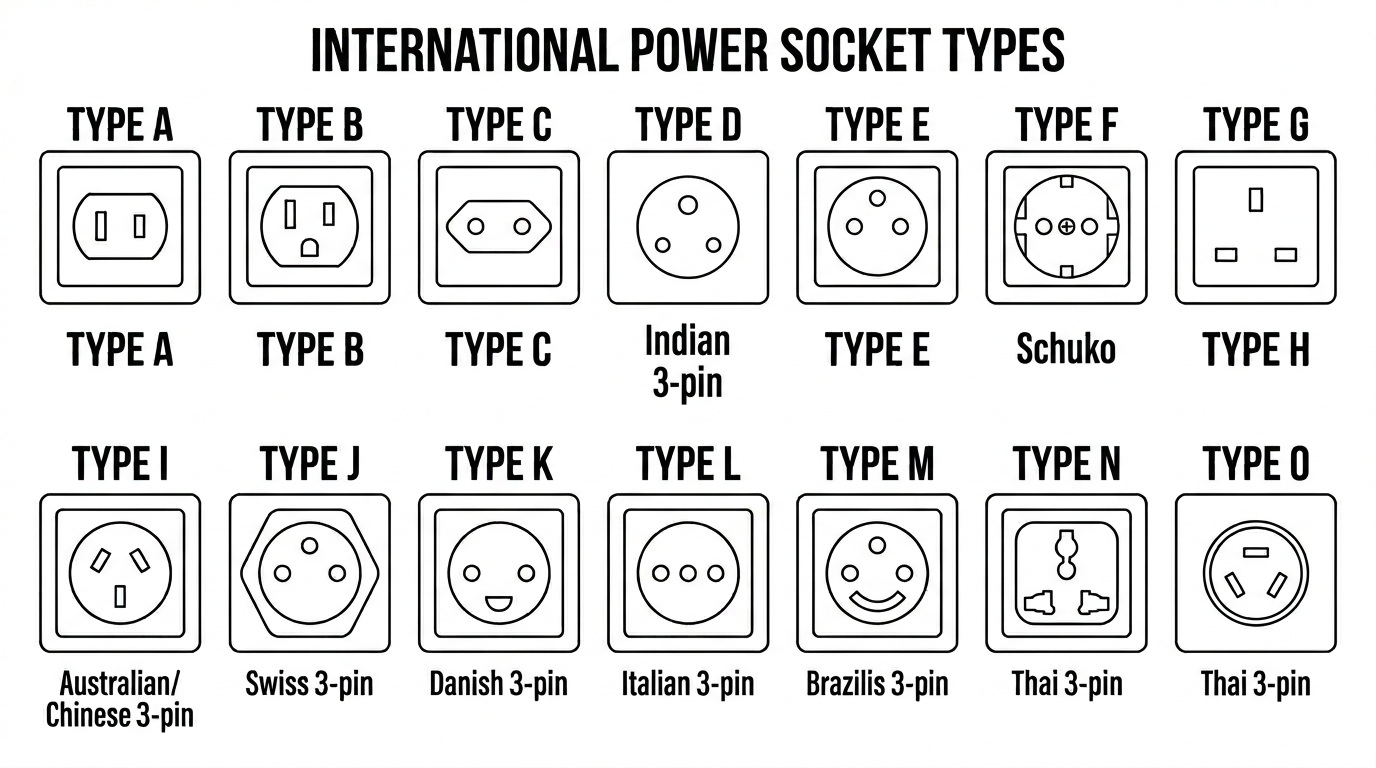
Eluttag
Typ A och B
Types A and B, 120 V, 60 Hz (same as the United States)
Se eluttagen
Dricks
Tipping is not a traditional part of Marshallese culture and is not expected in most settings. A small tip for excellent service at a tourist-oriented hotel, restaurant, or dive shop is appreciated but never obligatory; rounding up is plenty.
SIM / Data
The national carrier is the National Telecommunications Authority (NTA), which sells prepaid SIM cards and limited mobile data in Majuro and Ebeye; coverage and speeds are slow and patchy, and most outer atolls have little or no signal. Buy a SIM at the NTA office in Majuro on arrival, bring an unlocked phone, and don't count on reliable mobile data once you leave the main atolls. Many hotels offer Wi-Fi, but it is often slow and expensive.
Visum
Most visitors, including US, EU, UK, Australian, and Canadian citizens, can enter visa-free for tourism, typically for stays of up to 30 or 90 days depending on nationality (a visa-on-arrival/entry permit framework applies for some). A passport valid for at least six months beyond arrival, proof of onward or return travel, and proof of sufficient funds are required. US citizens enjoy special status under the Compact of Free Association and may enter, live, and work without a visa, though work permits/eligibility rules still apply. Always confirm current rules with the RMI authorities or your nearest embassy before travel.
Körfält
Right
Hur tar man sig runt i Marshallöarna?
Kollektivtrafik
There is no formal public bus network. On Majuro, transport is dominated by shared taxis — cheap sedans that follow the single main road and pick up multiple passengers along the way for a small flat fare; just flag one down. On crowded Ebeye, walking and shared taxis cover the tiny island. Renting a car or bicycle is possible on Majuro for more independence.
Taxitjänster
- No ride-hailing apps operate; use the abundant shared/street taxis insteadflag them down or call a local taxi company
Intercity
The Marshall Islands sprawl across vast ocean distances, so outer atolls are reached by air or sea. Air Marshall Islands operates small domestic flights from Majuro's Amata Kabua International Airport to outer atolls, but schedules are limited and prone to weather delays and cancellations. Government and private supply ships (field-trip vessels) serve remote atolls infrequently and slowly. International access is mainly via United Airlines' 'Island Hopper' route linking Majuro and Kwajalein with Honolulu and Guam.
Kultur och seder
Seder
- Marshallese society is built on extended family (bwij) and clan ties traced through the mother's line; land and identity pass matrilineally, and senior women and traditional chiefs (irooj) command deep respect.
- Modesty is valued, especially for women — when away from resort beaches and in villages, keep shoulders and thighs covered, and women commonly swim in shorts and a T-shirt rather than a bikini.
- Sharing is a core value: food, resources, and hospitality are freely given, and refusing an offer of food or a gift outright can cause offense — accept graciously, even just a little.
- Take off your shoes before entering a home, and lower your head or stoop slightly when passing in front of seated elders or chiefs as a sign of respect.
- Sundays are widely observed for church and rest in this strongly Christian (largely Protestant) nation; many businesses close, and loud or boisterous behaviour is frowned upon.
- Ask permission before photographing people, homes, or village ceremonies, and always ask a local landowner before walking onto or across private or outer-island land.
Klädkod
Lightweight, breathable clothing suits the hot, humid tropical climate year-round. Beachwear is fine at resorts and dive sites, but cover up in town, villages, and especially churches — modest dress (covered shoulders and knees) is expected, and women often wear long skirts or shorts over swimwear. Smart-casual is more than enough for restaurants and government offices.
Religiös etikett
The Marshall Islands is overwhelmingly Christian, mostly Protestant (with strong United Church of Christ and Assemblies of God communities) plus Catholic and other denominations. Faith is central to daily life: Sunday is for worship and rest, dress modestly if attending a service, and visitors are usually warmly welcomed at church — singing is a highlight. Avoid scheduling demanding activities or loud entertainment on Sundays, and treat conversations about religion with respect.
Vanliga uttryck
- IokweHello / welcome / love (the universal Marshallese greeting)
- Kommol tataThank you very much
- Emman ke am mour?How are you?
- EmmanI'm fine / good
- Kon joujYou're welcome / please
- Bar lo eokSee you again / goodbye
Höjdpunkter
Sport & fritid
Basketball and outrigger canoe sailing
Basketball and volleyball are hugely popular casual sports, played on courts across Majuro and Ebeye, and the islands field teams at Micronesian and Pacific Games. But the deepest sporting heritage is on the water: Marshallese are legendary navigators and canoe sailors, and the traditional outrigger canoe (walap and smaller proa) remains a point of cultural pride, celebrated in races and revival programs. Game fishing is a major draw — the Marshalls Billfish Club hosts tournaments in world-class waters — and the surrounding lagoons and reefs offer outstanding scuba diving, including famous WWII and nuclear-era wrecks in Bikini and Kwajalein lagoons.
Nationella högtider
- May 1
Constitution Day
The Marshall Islands' biggest national celebration, marking the 1979 signing of the constitution. Majuro fills with parades, marching bands, wreath-laying, cultural performances, and inter-school field-day competitions, capping a week of festivities.
- First Friday in July
Fishermen's Day
A national holiday honoring the islands' fishing heritage, anchored by the Marshalls Billfish Club tournament: boats head out at dawn for marlin, tuna, and sailfish and return at dusk to weigh their catches, with prizes and celebration on the docks.
- Last Friday in September
Manit Day (Custom Day)
A celebration of traditional Marshallese culture (manit), featuring canoe building and sailing, weaving, coconut-husking and other contests, traditional food, dance, song, and demonstrations of customary skills passed down through generations.
- First Friday in December
Gospel Day (Kurijmoj season)
Commemorates the arrival of Christianity to the islands, marked with church services and joyful singing. It opens the beloved Kurijmoj (Christmas) season, when communities form 'jepta' choir groups that compete in spirited gospel song-and-dance celebrations through December.
Ska du till Marshallöarna?
Prova en färdig resa först.
Öppna demoresan utan att registrera dig: Barcelona på egen hand, eller Rom, Florens och Venedig i grupp. Planera sedan Marshallöarna på ditt eget sätt.