
Reseguide till Kongo-Brazzaville. Viktig reseinformation — nödnummer, säkerhet, valuta, visum, seder och att ta sig runt.
Nödnummer
Hur säkert är Kongo-Brazzaville?
- Mycket säkert
- Generellt säkert
- Var försiktig
- Hög risk
- Farligt
The Republic of the Congo is generally calm in the main cities but carries real risks, and most governments advise increased caution. Petty crime such as pickpocketing, bag-snatching, and theft from vehicles occurs in Brazzaville and Pointe-Noire, especially in markets, around transport hubs, and after dark. Violent crime, including armed robbery, happens and rises at night, so avoid walking alone after dark and keep valuables out of sight. The country is politically stable day to day but demonstrations and a heavy security presence can flare around elections; avoid all protests. Infrastructure and medical facilities are limited, road conditions are poor, and overland travel carries hazards, so comprehensive travel and medical insurance with evacuation cover is essential.
Reseaviseringar (8)
Bedrägerier
- Police, gendarmes, and other officials at roadblocks and in cities may demand to see documents and then ask for an on-the-spot 'fine' or bribe. Carry certified copies of your passport and visa, stay calm and polite, and ask for official documentation; avoid handing over your only original passport.
- Fake or self-appointed 'guides', fixers, and officials at the airport, borders, and ferry terminals may offer to speed up paperwork or arrange transport for inflated fees. Use only arrangements made through your hotel or a reputable tour operator.
- Taxi drivers may quote inflated prices or claim the meter is broken; agree the fare before getting in, as most taxis are unmetered. Watch for short-changing when paying with large notes.
- Advance-fee and romance scams targeting foreigners (requests to wire money for visas, customs charges, or to 'help' a local contact) are common; never send money to people you have not met in person.
Varningar
- The Pool department (the region between Brazzaville and Pointe-Noire) has experienced past militia violence and unexploded ordnance; check current advice and avoid overland travel there if instability resumes.
- Roads are poorly maintained, poorly lit, and dangerous, particularly at night and in the rainy season; the rail line between Brazzaville and Pointe-Noire has a history of accidents. Travel in daylight and use reputable transport.
- Yellow fever vaccination is mandatory; malaria is present year-round nationwide, and outbreaks of other diseases occur, so consult a travel clinic well before departure.
- Borders, especially with the Democratic Republic of the Congo (across the river from Brazzaville) and other neighbors, can close or become tense at short notice; monitor local news and keep documents in order.
Praktisk info
Valuta
Central African CFA franc (XAF)
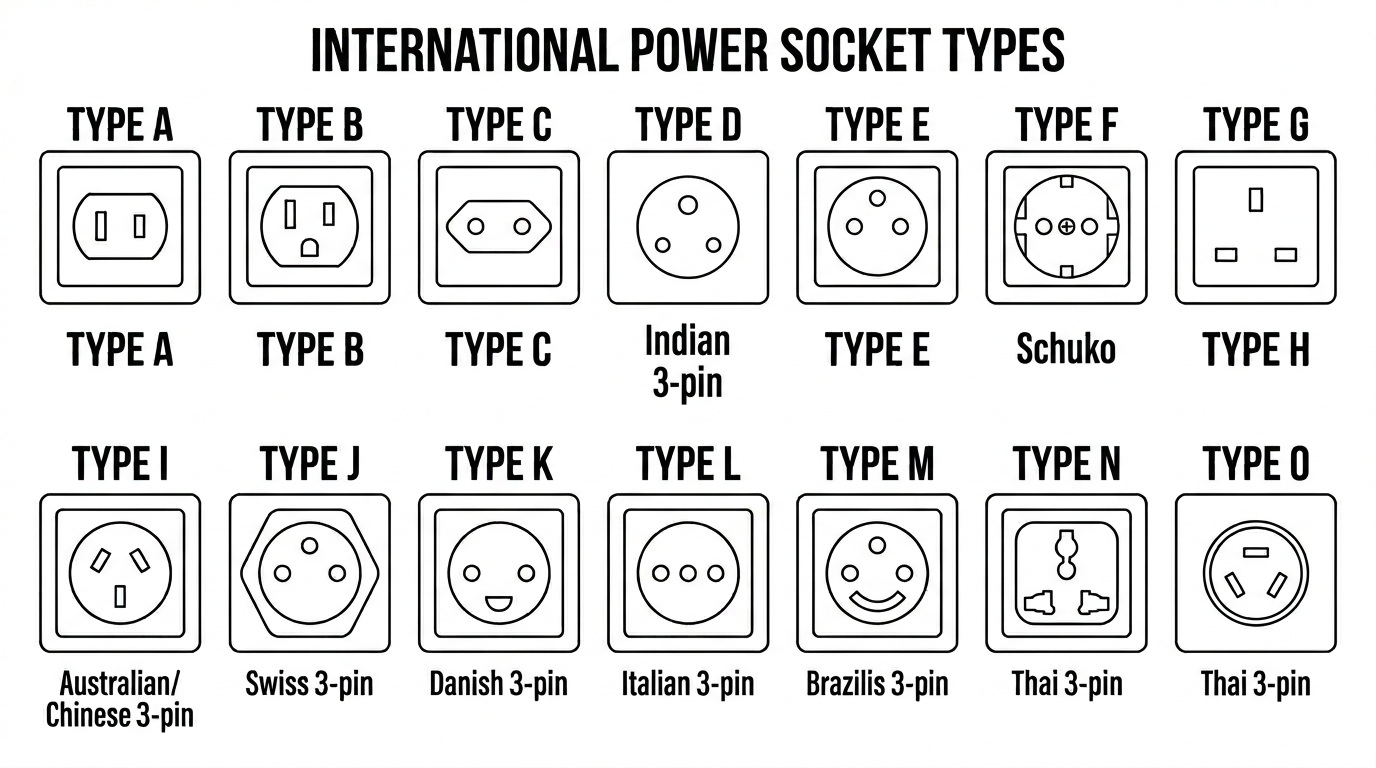
Eluttag
Typ C och E
Types C and E, 230V, 50Hz
Se eluttagen
Dricks
Tipping is not deeply ingrained but is appreciated. In better restaurants a service charge may be included; otherwise rounding up or leaving around 5-10% is generous. Small tips for hotel porters, guides, and drivers are welcomed. Tip in cash, ideally in local CFA francs.
SIM / Data
Local SIM cards are inexpensive and the most reliable way to get online. The main mobile operators are MTN Congo and Airtel Congo; coverage is good in Brazzaville and Pointe-Noire but patchy elsewhere. Bring an unlocked phone and your passport, as SIM registration is required. Buy SIMs from official operator shops rather than street vendors to ensure proper registration. Mobile data is the norm; fixed broadband is limited.
Visum
Most visitors require a visa to enter the Republic of the Congo, and a passport valid for at least six months is needed. An e-visa system is available for many nationalities and is often the most practical route; some travelers still obtain a visa in advance from a Congolese embassy or consulate. Proof of yellow fever vaccination is mandatory for all travelers and is checked on arrival. Confirm current requirements with an official Congolese mission before travel, as rules change.
Körfält
Right
Hur tar man sig runt i Kongo-Brazzaville?
Kollektivtrafik
Within cities, shared minibuses and collective taxis are the main public transport. In Brazzaville and Pointe-Noire, green-and-white taxis are ubiquitous; they are usually shared and unmetered, so agree the price before boarding or pay the standard shared-route fare. Minibuses are cheap but crowded and follow set routes. There is no metro or formal urban rail.
Taxitjänster
- No widely established international ride-hailing app (such as Uber or Bolt) operates reliably in the country; arrange taxis by phone through your hotel or use trusted local drivers
Intercity
Distances are large and overland options are limited. The CFCO railway links Brazzaville and Pointe-Noire via Dolisie, but service is intermittent and has a poor safety record. The RN1 road between the two main cities is paved but long, and other roads can be rough or impassable in the rains. Domestic flights connect Brazzaville (Maya-Maya Airport) and Pointe-Noire (Agostinho-Neto Airport) and are the fastest and safest way to cover long distances; book with established carriers. River transport along the Congo and Sangha rivers serves remote areas but is slow and basic.
Kultur och seder
Seder
- Greetings are important and expected before any conversation or transaction; a handshake is the standard greeting, and among friends a handshake may be followed by a snap of the fingers. Always greet shopkeepers, officials, and elders before getting to business.
- French is the official language and the language of administration, but Lingala (in the north and around Brazzaville) and Kituba/Munukutuba (in the south) are the most widely spoken everyday languages. A few words of Lingala go a long way.
- Respect for elders is deeply ingrained; defer to older people in conversation, let them be served first, and use the polite 'vous' form in French rather than 'tu' with strangers and elders.
- Extended family and community ties are central. Hospitality is generous even where means are modest, and it is polite to accept at least a little of what is offered. Sharing food and drink is a sign of friendship.
- Use the right hand (or both hands) for giving and receiving items, eating, and handshakes; the left hand alone is considered impolite.
- Photographing people without asking is resented, and photographing government buildings, military or police installations, the airport, ports, and bridges is prohibited and can lead to detention. Always ask permission before photographing individuals.
Klädkod
Dress is generally modest and people take pride in looking neat; scruffy or revealing clothing draws attention. Lightweight, breathable clothing suits the hot, humid equatorial climate. Cover shoulders and knees when visiting churches, mosques, villages, and government offices. Beachwear belongs only at the beach or pool. Smart-casual is expected for business and nicer restaurants in Brazzaville and Pointe-Noire.
Religiös etikett
The Republic of the Congo is majority Christian (Roman Catholic and Protestant), with a significant minority following Kimbanguism and other indigenous and syncretic beliefs, plus a small Muslim community. Religion is taken seriously; dress modestly and remove hats inside churches, and stay quiet and respectful during services. If invited to worship, you are welcome but follow the lead of those around you. Avoid disparaging local beliefs, including traditional and ancestral practices, which remain influential in rural areas.
Vanliga uttryck
- BonjourHello / Good day (French)
- MboteHello (Lingala)
- Merci / MatondoThank you (French / Lingala)
- Comment allez-vous ?How are you? (polite French)
- Combien ça coûte ?How much does it cost? (French)
- Ozali malamu?Are you well? / How are you? (Lingala)
Höjdpunkter
Sport & fritid
Football (soccer)
Football is by far the most popular sport. The national team, the Red Devils (Les Diables Rouges), commands passionate support, and matches against regional rivals draw large crowds and lively street celebrations. Congo has a proud football history, having won the Africa Cup of Nations in 1972. Local league games and informal pickup matches are played everywhere, and basketball and handball also have a following. The country has produced notable athletes, and sport is a major source of national pride and community life.
Nationella högtider
- August 15
Independence Day
Celebrates the Republic of the Congo's independence from France in 1960, marked by military parades, official ceremonies, music, and public festivities, especially in Brazzaville.
- Late December (biennial)
FESPAM (Pan-African Music Festival)
A major pan-African music festival hosted in Brazzaville celebrating African musical heritage with concerts, exhibitions, and a symposium; historically held every two years.
- December 25
Christmas
Widely celebrated in this majority-Christian country with church services, family gatherings, music, and festive meals.
- March/April (variable)
Easter
An important Christian holiday observed with church services and family celebrations; dates shift each year with the Western Christian calendar.
Ska du till Kongo-Brazzaville?
Prova en färdig resa först.
Öppna demoresan utan att registrera dig: Barcelona på egen hand, eller Rom, Florens och Venedig i grupp. Planera sedan Kongo-Brazzaville på ditt eget sätt.