
Equatorial Guinea Travel Guide. Essential travel information — emergency numbers, safety, currency, visas, customs and getting around.
Emergency Numbers
Emergency · Equatorial GuineaTap a number to call
Ambulance
Fire
General
No single nationwide emergency number; emergency response is unreliable and limited
No single nationwide emergency number; emergency response is unreliable and limited
How safe is Equatorial Guinea?
- Very Safe
- Generally Safe
- Exercise Caution
- High Risk
- Dangerous
Equatorial Guinea sits at a Level 2 'exercise increased caution' on the consensus of major travel advisories (US, Canada, Australia). It is not a war zone, but it is one of Africa's most tightly policed, opaque states, ruled by the same president since 1979. The practical risks are petty and opportunistic crime, an intrusive and often predatory security apparatus, and a near-total absence of reliable emergency medical care. Violent crime against foreigners is uncommon but armed robberies do occur, especially after dark in Malabo and Bata. The single biggest hazard for most visitors is not crime but the police and military themselves: checkpoints, document checks, and shakedowns are routine, and the line between an official 'fine' and a bribe is deliberately blurred. Travel is heavily controlled; independent tourism is rare and arouses suspicion.
Advisories (8)
Scams
- Police and soldiers at checkpoints (very common between Bata, Mongomo and Ebebiyin, and around Malabo) routinely invent 'fines' for invented infractions to extract small cash bribes. Outside Bata and Malabo, refuse to pay on the spot and instead ask for a written citation (multa) payable at a local court; in town, polite firmness and showing copies of documents usually defuses it.
- Photography is a documented extortion trap. Officials detain or 'fine' people for photographing the Presidential Palace, ministries, military or police, the airport, the port and bridges. Cameras and phones get confiscated; always ask before photographing anything official and never photograph security infrastructure.
- Online romance and advance-fee scams operating from or invoking Equatorial Guinea are widespread: a 'partner' or supposed local 'official' asks you to wire money for fees, fines or a stuck shipment. Never send money to someone you have not met in person.
- Taxi and money-changing overcharging targets newcomers. Agree the fare before getting in (taxis are unmetered), carry small CFA notes, and change money only at banks or hotels, not with street touts who short-change on the count.
Warnings
- Medical care is very limited and there is no reliable ambulance or trauma service; serious illness or injury usually requires costly medical evacuation. Carry comprehensive travel insurance with evacuation coverage and bring your own prescription medicines.
- Yellow fever is endemic and proof of vaccination is required for entry; malaria is present year-round across the country, so take antimalarials and use repellent and bed nets.
- Photographing government, military, police, airport or port facilities is illegal and can lead to detention. Avoid all political discussion, demonstrations and any criticism of the government, which can be treated as a serious offense.
- Carry your passport (or a certified copy) and any travel permits at all times for the frequent military and police checkpoints; travelers without documents, or who cannot explain their itinerary in Spanish, are routinely delayed or detained.
Practical Info
Currency
Central African CFA franc (franc CFA BEAC) (XAF)
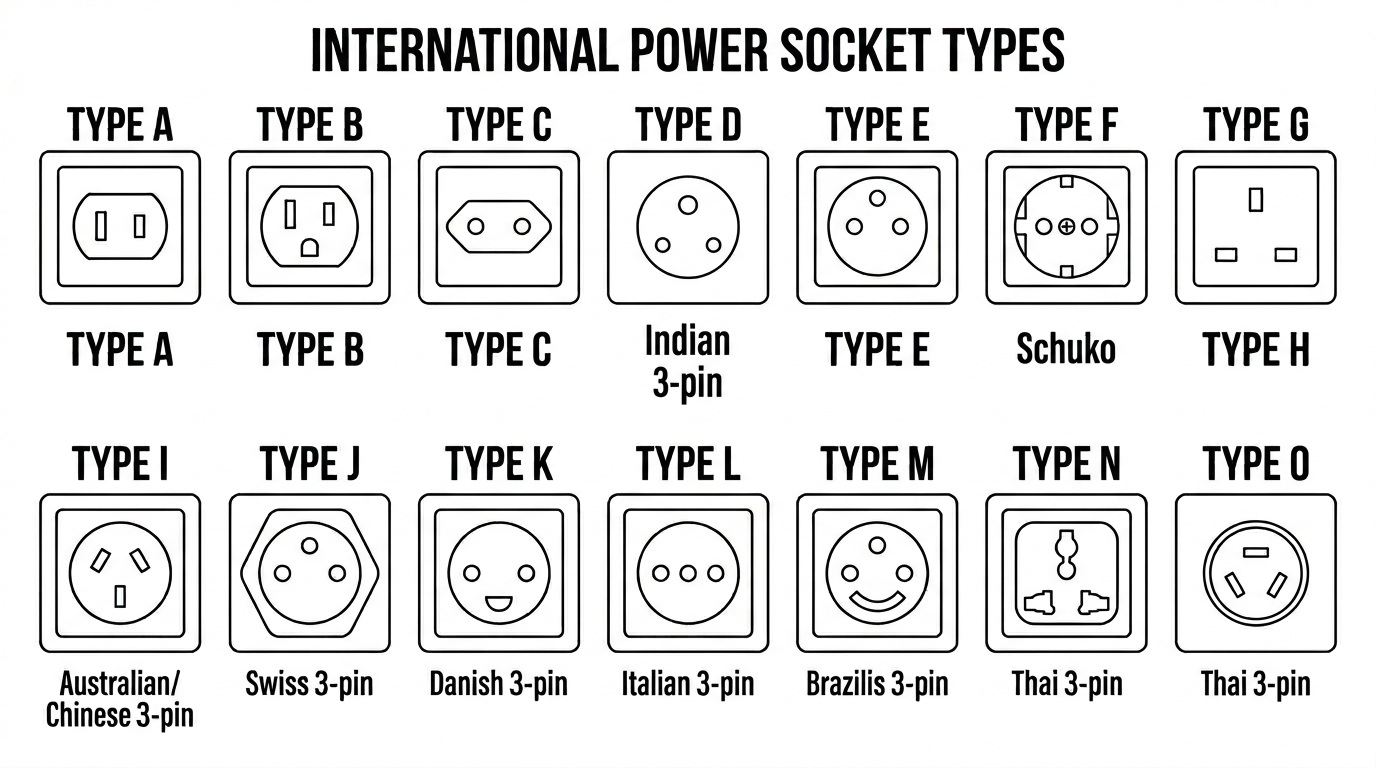
Power Plug
Type C and E
Types C and E, 220V, 50Hz
See the sockets
Tipping
Tipping is not obligatory but is appreciated. In restaurants a tip of around 5-10% of the bill is a generous norm where service isn't already included; round up for taxis and leave a little for hotel staff and guides. Locals tend to leave notes rather than coins.
SIM / Data
The main mobile operators are Muni (GETESA) and Orange Equatorial Guinea. Buy a local SIM at an official operator shop in Malabo or Bata and bring your passport, as registration is required. Coverage and mobile data are decent in the two cities but patchy elsewhere; speeds are modest and prices high by regional standards. Ensure your phone is unlocked. Public Wi-Fi is scarce and unreliable, so a local data SIM is the most dependable option.
Visa
Most visitors need a visa obtained in advance from an Equatorial Guinea embassy or consulate; there is no general visa-on-arrival or e-visa system for tourists. A passport valid at least six months with blank pages is required, along with a yellow fever vaccination certificate (mandatory for entry). Applications typically require an invitation/hotel booking and proof of funds, and processing runs roughly 2-15 working days with fees commonly around 100-200 USD/EUR depending on nationality. US citizens are a notable exception and can enter for up to 90 days without a visa; rules change, so confirm with the nearest embassy before travel.
Driving Side
Right
How do you get around Equatorial Guinea?
Public Transport
There is no formal public transit system, metro or organized city bus network. Within Malabo and Bata, shared and private taxis are the main way to get around; they are unmetered, so agree the fare (or whether it's a shared 'collective' run) before you set off. For longer trips, shared bush taxis and minibuses link towns. Carry small CFA notes and your passport, since checkpoints are common.
Intercity
Bioko Island and the mainland (Río Muni) are connected by domestic flights between Malabo and Bata (the quickest option) and by a long passenger ferry (roughly 12 hours, several classes). On the mainland, bush taxis run from Bata to Mongomo and Ebebiyin; on Bioko, they link Malabo with Luba and Riaba. Roads between major towns are surprisingly good thanks to oil money, but expect frequent military checkpoints where documents are checked.
Culture and customs
Customs
- Greetings are formal and unhurried. A firm handshake with direct eye contact and a warm smile is expected; take time for small talk and ask about family before getting to business. Skipping the greeting is seen as rude.
- Respect for status and age is deeply ingrained. The Spanish honorifics Don and Doña (plus a first name) are reserved for elders and people of standing; defer to older people and let them speak first.
- Spanish is the language of officialdom and cities, but most people are Fang and community and extended family ('clan') ties run deep. Acknowledging someone's family and community, rather than treating them as an individual, builds trust quickly.
- Modesty in dress and behaviour is valued, especially away from the cities. Public displays of affection are frowned upon, and loud or confrontational behaviour, particularly with officials, will work against you.
- Gift-giving is appreciated but must stay modest, think local crafts or small treats, because anything lavish reads as a bribe. When invited to a home, a small gift and accepting food or drink that is offered is polite.
- Catholicism (a Spanish legacy) coexists with older animist beliefs; among the Fang, traditional music, storytelling and witchcraft beliefs survive. Treat both the church calendar and local traditions with respect and don't mock or photograph rituals without permission.
Dress Code
Dress is conservative and, in the humid tropical heat, light. In Malabo and Bata smart-casual is fine, and Equatoguineans themselves often dress neatly and formally for work and church, so looking tidy earns respect. Avoid skimpy or revealing clothing; cover shoulders and knees when visiting churches or rural communities. Beachwear stays at the beach. Lightweight long sleeves and trousers also help against mosquitoes.
Religious Etiquette
Equatorial Guinea is overwhelmingly Roman Catholic, layered over indigenous (especially Fang) animist beliefs. Catholic feast days such as Corpus Christi, the Immaculate Conception and Christmas are public holidays and widely observed. Dress modestly in churches (covered shoulders and knees), stay quiet during Mass, and ask before photographing services or worshippers. Traditional beliefs and rituals are taken seriously; never ridicule them, and do not photograph ceremonies or sacred objects without explicit permission.
Common Phrases
- Hola, buenos díasHello, good morning
- ¿Cómo está usted?How are you? (formal/polite)
- Por favor / GraciasPlease / Thank you
- ¿Cuánto cuesta?How much does it cost?
- No hablo español muy bienI don't speak Spanish very well
- ¿Dónde está el baño?Where is the toilet?
Highlights
Sports & Recreation
Football (soccer)
Football is the national passion. The men's national team, La Nzalang Nacional ('National Lightning'), punched above its weight by co-hosting the 2012 Africa Cup of Nations with Gabon and hosting the 2015 tournament outright, reaching the semi-finals that year and stirring huge national pride. The women's national team has also competed at the Africa Women's Cup of Nations, though both have drawn controversy over player-eligibility disputes. Beyond football, casual basketball and beach activities are enjoyed in the cities, and the country has produced Olympic swimmer Eric 'the Eel' Moussambani, whose famously slow 2000 Sydney swim made him a global folk hero. Spectator culture centers on watching matches, local and European leagues alike, in bars and at home.
National Festivals
- October 12
Independence Day (Día de la Independencia)
The country's biggest national holiday, marking independence from Spain on 12 October 1968. Expect military parades, speeches, music and public celebrations, especially in Malabo and Bata.
- June 5
President's Day (Día del Presidente)
Celebrates the birthday of President Teodoro Obiang Nguema. A heavily official holiday with parades and state ceremonies reflecting the personalized nature of the country's politics.
- August 3
Freedom (Liberty) Day
Commemorates the 1979 coup that brought the current president to power, framed as the country's 'liberation'. Marked by official ceremonies and public events.
- August 15
Constitution Day (Día de la Constitución)
A public holiday commemorating the national constitution, observed with government ceremonies and a day off across the country.
Planning Equatorial Guinea?
Try a ready-made trip first.
Open the demo trip with no sign-up: Barcelona on your own, or Rome, Florence and Venice as a group. Then plan Equatorial Guinea your way.