
Ethiopia uses the Ethiopian birr, type C, E, and F plugs and 907 for emergencies. Ethiopia is a rewarding but uneven destination for safety.
Emergency Numbers
How safe is Ethiopia?
- Very Safe
- Generally Safe
- Exercise Caution
- High Risk
- Dangerous
Ethiopia is a rewarding but uneven destination for safety. Petty crime (pickpocketing, scams, occasional bag-snatching) is the main everyday concern in cities, while the bigger risks are regional: armed conflict, intercommunal violence, and unrest have affected several areas in recent years. Tourist hubs like Addis Ababa and the classic northern historic circuit can be visited with care during calm periods, but conditions change quickly. Check your government's current travel advisory and local conditions immediately before and during your trip, register with your embassy, avoid demonstrations and political gatherings, and carry ID. Altitude (much of the country is above 2,000 m) and road accidents on mountainous routes are real practical hazards.
Advisories (8)
Scams
- Self-appointed 'guides' and touts cluster around bus stations, churches, and tourist sites (especially in Addis Ababa's Piazza, Lalibela, and Gondar), attaching themselves to you and then demanding a large fee. Politely but firmly decline and use guides arranged through your hotel or an official tourism office.
- Overcharging foreigners ('ferenji price') is common in markets, taxis, and Bajajs. Always agree a fare before getting in and a price before buying, and have a sense of the going rate; small denominations help avoid 'no change' tricks.
- Pickpocketing and bag-snatching occur in crowds, on minibuses, and around the sprawling Mercato market in Addis. A frequent ploy is a stranger spilling something on you or creating a distraction while an accomplice lifts your wallet or phone. Keep valuables out of sight and bags zipped and in front of you.
- Beware sob-story and 'student/orphanage' donation scams, gem or antiquity 'bargains' (exporting genuine antiques and certain religious artifacts is illegal), and friendly strangers who invite you to a bar where you are landed with a hugely inflated bill.
Warnings
- Multiple governments advise against all or all-but-essential travel to specific regions, which have at times included Tigray, parts of Amhara, parts of Oromia, the Ethiopia–Eritrea and Ethiopia–Sudan border areas, the Somali region, the Afar conflict zones, the Danakil Depression near the borders, and Gambela and Benishangul-Gumuz — owing to armed conflict, intercommunal violence, kidnapping, banditry, and landmines. Verify the latest region-by-region advice before going.
- Security can deteriorate rapidly; states of emergency, curfews, roadblocks, and movement restrictions have been imposed at short notice, and overland routes may close without warning.
- The government has periodically shut down internet, mobile data, and phone networks during unrest, hampering communication and emergency contact.
- The Danakil/Afar region and remote border areas carry elevated risks of kidnapping and should only be visited, if at all, with reputable operators, armed escorts where required, and up-to-date local security advice.
Practical Info
Currency
Ethiopian birr (ETB)
Power Plug
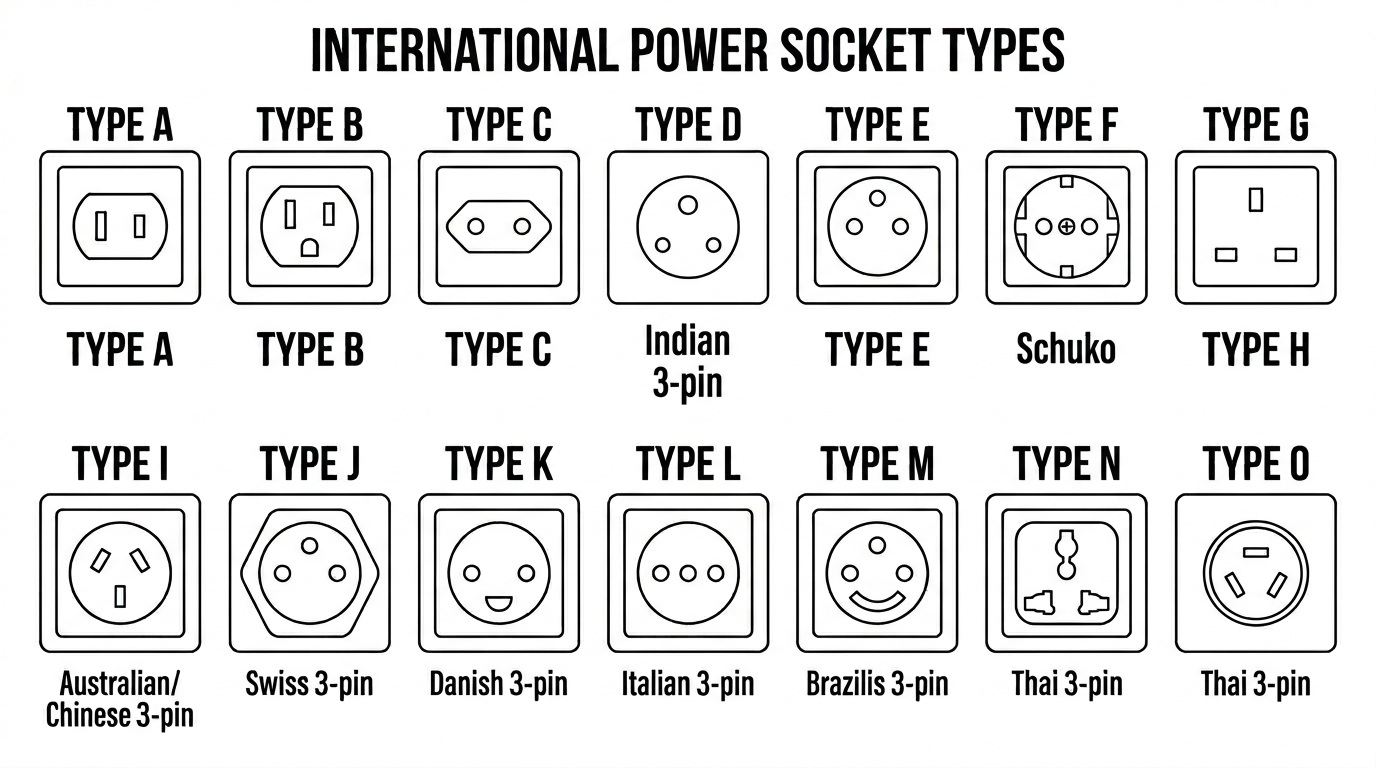
Type C, E, and F
Plug types C, E, F, and L; 220 V, 50 Hz. Sockets are inconsistent, so bring a universal adapter. Power cuts are frequent — a power bank and a flashlight or headlamp are very useful.
See the sockets
Tipping
Tipping is customary and appreciated but modest. Round up or leave about 10% in restaurants that don't add a service charge; tip guides and drivers on multi-day trips (a few hundred birr per day is reasonable), hotel porters a small amount, and parking/luggage helpers a few birr. Tips are a meaningful supplement to low wages, so small gratuities go a long way.
SIM / Data
Ethio Telecom is the long-dominant operator, and Safaricom Ethiopia has entered as a competitor, improving choice. Buy a SIM at the airport or an official shop and bring your passport to register it (registration is mandatory). Coverage and data are good in Addis Ababa and major towns but patchy in rural and highland areas. Note that the government has at times restricted or shut down internet and mobile data during periods of unrest, so do not rely on connectivity in conflict-affected regions.
Visa
Most visitors need a visa. Ethiopia operates a convenient e-Visa system (apply online in advance at the official Ethiopian e-Visa portal) and citizens of many countries can also obtain a visa on arrival at Addis Ababa Bole International Airport — though applying for the e-Visa beforehand is strongly recommended to avoid airport queues and changing rules. A passport valid for at least six months and proof of onward travel are required; yellow fever vaccination may be checked, especially if arriving from an endemic country. Always confirm requirements with an Ethiopian embassy before travel, as policies change.
Driving Side
Right
How do you get around Ethiopia?
Public Transport
Within Addis Ababa, shared blue-and-white minibuses are the cheap workhorses of the city — a conductor (weyala) calls out destinations and you pay a few birr. The Addis Ababa Light Rail (two lines) is the first metro in sub-Saharan Africa and offers a cheap, traffic-free ride. Larger city buses (Anbessa, Sheger) also run set routes. Three-wheeled Bajaj auto-rickshaws are ubiquitous in smaller towns. Always agree a price or confirm the meter before riding informal taxis.
Ride-hailing
- Ride
- Feres
- ZayRide
- Seregela
Intercity
Ethiopia is large and travel is slow. Ethiopian Airlines runs an extensive and reliable domestic network linking Addis Ababa to Bahir Dar, Gondar, Lalibela, Axum, Mekele, Dire Dawa, and more — by far the fastest way to cover the 'historic north,' and booking an international Ethiopian ticket can earn discounted domestic fares. Long-distance buses (Selam Bus, Sky Bus, Golden Bus) connect major cities on paved but mountainous roads; journeys are long and start at dawn. The modern Addis Ababa–Djibouti electric railway carries passengers eastward. Self-driving is not recommended for visitors; hiring a car with a local driver is the norm for overland touring. Check current security advisories before overland travel, as some regions (Tigray, Amhara, parts of Oromia) have been affected by conflict.
Culture and customs
Customs
- Coffee is sacred in Ethiopia, its birthplace. The traditional coffee ceremony — roasting green beans over coals, grinding by hand, and brewing in a clay jebena — is a gesture of friendship and respect performed in three rounds (abol, tona, baraka). Accepting all three rounds is polite; the third round is believed to bestow a blessing.
- Eating is communal and almost always done with the right hand from a shared platter of injera (sourdough flatbread) topped with stews. Tearing injera with your left hand is taboo. A cherished gesture of intimacy and respect is 'gursha' — feeding a morsel directly into a companion's mouth.
- Greetings are warm and unhurried. Men often shake hands, sometimes touching shoulders or leaning in for a light cheek-to-cheek; the lighter grip and a slight bow show respect to elders. Asking after someone's health and family before getting to business is expected.
- Ethiopia follows its own calendar (the Ge'ez/Coptic calendar), which runs roughly seven to eight years behind the Gregorian calendar and has 13 months. Ethiopia also keeps a 12-hour clock that starts counting at dawn (6 a.m. = 0 o'clock), so always confirm whether a time is 'Ethiopian' or 'European/ferenj' time.
- Modesty and reverence at religious sites are essential. Remove your shoes before entering churches and mosques, cover shoulders and knees, and never point your feet or finger at people or holy icons. At many Ethiopian Orthodox churches the innermost sanctuary is off-limits to all but priests.
- Hospitality is a point of pride: hosts will press food and coffee on guests, and a polite initial refusal followed by gracious acceptance is part of the ritual. Showing the soles of your feet, blowing your nose loudly at the table, or eating before elders are considered rude.
Dress Code
Ethiopians dress conservatively and neatly. Both men and women should cover shoulders and knees, especially in rural areas, churches, and mosques; a scarf to cover the head and shoulders is useful for women visiting religious sites. Lightweight layers suit the warm lowlands and the cool highland evenings (Addis Ababa sits above 2,300 m and gets chilly at night). Beachwear and revealing clothing are out of place almost everywhere outside private resort grounds.
Religious Etiquette
Ethiopia is deeply religious and home to one of the world's oldest Christian traditions; roughly two-thirds of the population is Christian (mostly Ethiopian Orthodox Tewahedo) and about a third Muslim, with the two coexisting closely. Dress modestly and remove your shoes at churches and mosques. Orthodox Ethiopians observe frequent fasting periods (notably Wednesdays, Fridays, and Lent) when only vegan 'fasting food' is eaten — these are easy times for vegetarians. Respect the separation of men and women in worship spaces, ask before photographing priests, monks, or worshippers, and never touch or step over religious icons, crosses, or sacred ground. In Muslim areas such as the walled city of Harar, observe Ramadan sensitivities and women should cover their hair.
Common Phrases
- Selam / Tena yistilignHello / May God give you health (formal greeting)
- AmeseginalehuThank you
- Awo / Aysepe/ AydelemYes / No
- Endnaye?How are you?
- Sint new?How much is it?
- Ayzon / Dehna hunDon't worry, take heart / Goodbye (stay well)
Highlights
Sports & Recreation
Long-distance running
Ethiopia is a global distance-running powerhouse, and athletics is a genuine source of national pride. Legends like Abebe Bikila (who won the 1960 Olympic marathon running barefoot), Haile Gebrselassie, Kenenisa Bekele, Derartu Tulu, Tirunesh Dibaba, and Letesenbet Gidey are household heroes, and the high-altitude training trails around Addis Ababa, Bekoji, and the Entoto hills produce world champions year after year. The Great Ethiopian Run, a 10 km mass race through Addis Ababa each November, is one of Africa's largest road races and a riot of color and music. Football is the other great passion — Ethiopians follow the national team (the Walyas) and European leagues fervently, packing cafes and bars to watch matches.
National Festivals
- January 7
Genna (Ethiopian Christmas)
Ethiopian Orthodox Christmas, celebrated on Tahsas 29 in the Ge'ez calendar (Jan 7 Gregorian). The faithful keep an overnight vigil, dress in white shemma robes, and attend dawn liturgies; in Lalibela tens of thousands of pilgrims gather among the rock-hewn churches. Men traditionally play a field-hockey-like game called genna.
- January 19
Timkat (Epiphany)
Ethiopia's most spectacular festival, celebrating the baptism of Christ. Replicas of the Ark of the Covenant (tabots) are carried in colorful processions to a body of water, where crowds keep vigil and are sprinkled or immersed at dawn. Gondar's pool of Fasilides is the most famous setting. It is recognized by UNESCO as intangible cultural heritage.
- September 11
Enkutatash (Ethiopian New Year)
New Year's Day on the Ethiopian calendar, marking the end of the long rains as yellow Meskel daisies bloom across the highlands. Children sing door to door and present bouquets and small painted pictures; families share feasts and coffee.
- September 27
Meskel (Finding of the True Cross)
Commemorates the discovery of the True Cross by Empress Helena. The eve centers on the lighting of a giant bonfire called the 'Demera,' topped with daisies, around which priests chant and crowds process with torches. The celebration on Addis Ababa's Meskel Square is UNESCO-listed.
Planning Ethiopia?
Try a ready-made trip first.
Open the demo trip with no sign-up: Barcelona on your own, or Rome, Florence and Venice as a group. Then plan Ethiopia your way.