
Ecuador Travel Guide. Essential travel information — emergency numbers, safety, currency, visas, customs and getting around.
Emergency Numbers
How safe is Ecuador?
- Very Safe
- Generally Safe
- Exercise Caution
- High Risk
- Dangerous
Ecuador's safety situation has deteriorated significantly since 2023-2024 due to cartel-related violence and organized crime, particularly in coastal provinces. The country declared internal armed conflict in January 2024. That said, the main tourist circuits — Quito's historic center, Cuenca, the Andean highlands, the Galapagos Islands, and the Amazon eco-lodges — remain commonly visited with sensible precautions. Petty crime (pickpocketing, bag snatching) is common in cities and on buses. Violence is concentrated in specific high-risk areas, mostly away from typical tourist routes.
Advisories (8)
Scams
- Taxi scams: unmarked or unofficial taxis may overcharge, take long routes, or in rare cases be involved in 'express kidnappings' where victims are forced to withdraw money from ATMs. Use registered taxis with a number and red plates, or ride-hailing apps.
- The 'spilled substance' distraction: someone spills sauce, mustard, or a liquid on you, then a helpful accomplice cleans you up while a third person steals your wallet or bag. Politely decline help and keep moving.
- Drink spiking and drugging: scopolamine (burundanga) and spiked drinks have been used to incapacitate and rob tourists, especially around nightlife in Quito's Mariscal area. Never leave drinks unattended or accept drinks/food from strangers.
- ATM and money scams: card skimming at standalone ATMs and fake currency. Since Ecuador uses US dollars, watch for worn or counterfeit small bills passed as change; use ATMs inside banks or malls.
Warnings
- Coastal provinces of Guayas (including parts of Guayaquil), Esmeraldas, Manabi, Los Rios, Santa Elena, and El Oro have elevated levels of violent crime and gang activity; check current government advisories before travel.
- The northern border region with Colombia (within 20 km), particularly Sucumbios, Carchi, and northern Esmeraldas, is high-risk due to armed groups, drug trafficking, and kidnapping; most governments advise against travel there.
- Ecuador declared an 'internal armed conflict' and periodic states of emergency since January 2024; curfews and security operations can occur with little notice, especially in coastal cities.
- Altitude sickness is a genuine health risk: Quito sits at about 2,850 m (9,350 ft) and many Andean sites are higher; acclimatize gradually.
Practical Info
Currency
United States Dollar (USD)
Power Plug
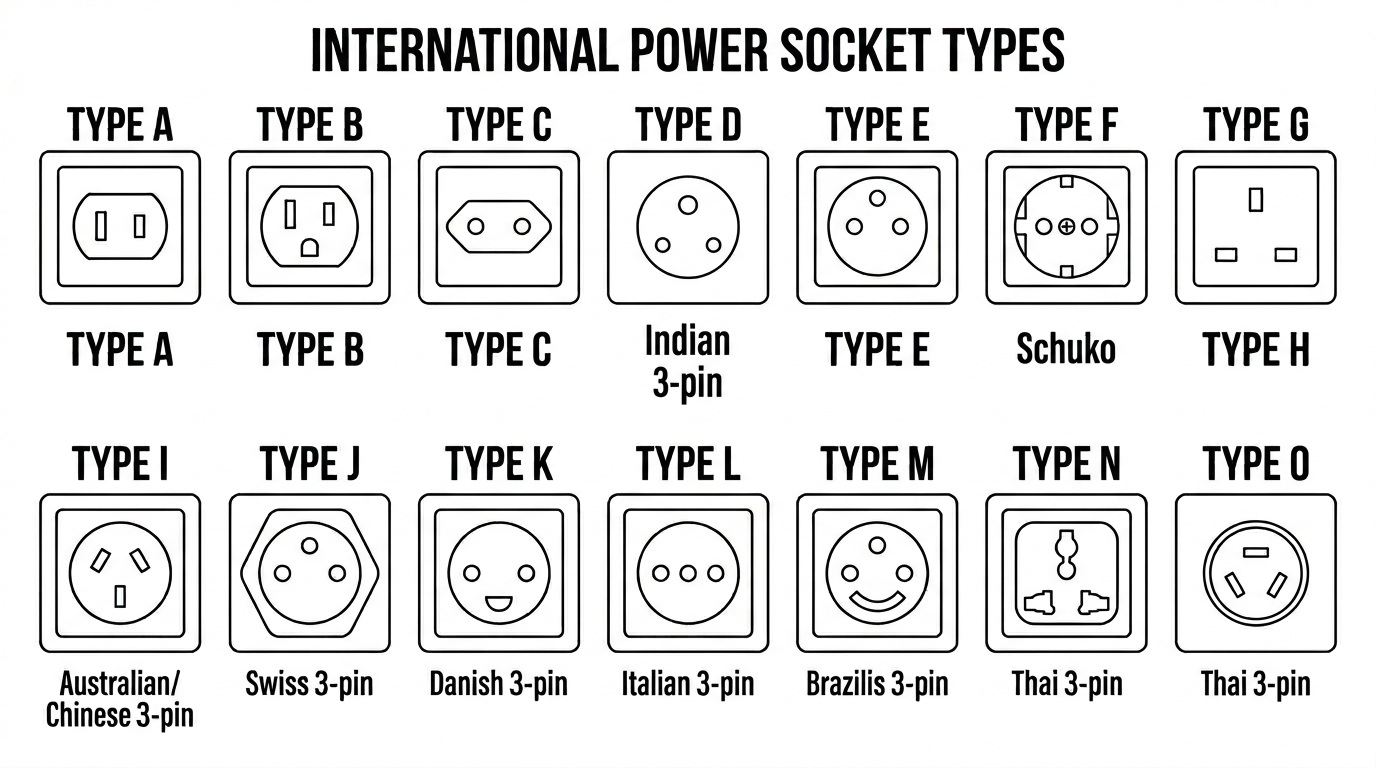
Type A and B
Types A and B; 120 V, 60 Hz (the same standard as the United States)
See the sockets
Tipping
Tipping is appreciated but modest. Upscale restaurants often add a 10% service charge to the bill; if so, an extra small tip is optional. Where no service charge applies, leaving around 10% is generous. Round up for taxis (though tipping is not expected), tip guides and porters a few dollars, and tip Galapagos cruise crew/guides more substantially per the cruise's suggested guidelines.
SIM / Data
The main mobile operators are Claro, Movistar, and CNT. Prepaid SIM cards are inexpensive and sold at operator stores, airports, and many shops; you'll typically need your passport to register. Claro generally has the widest coverage including more remote and Amazon areas. eSIMs (via providers like Airalalo or your operator) are a convenient alternative. Coverage is good in cities and the highlands but patchy in the deep Amazon and parts of the Galapagos.
Visa
Most travelers (including citizens of the US, EU, UK, Canada, Australia, and many others) can enter Ecuador visa-free as tourists for up to 90 days within a 12-month period; extensions or a second 90-day period may be requested for a fee. A passport valid for at least 6 months is required. The Galapagos Islands require a separate Transit Control Card (TCT) and an Ingala migration registration, plus payment of a national park entrance fee on arrival. Always confirm current requirements with an official Ecuadorian consulate before travel.
Driving Side
Right
How do you get around Ecuador?
Public Transport
Cities have extensive, inexpensive bus networks. Quito has the Trolebus and Ecovia bus rapid transit lines plus the modern Quito Metro; Guayaquil has the Metrovia BRT system. Buses are cheap (often around USD 0.30-0.35) but can be crowded and are a hotspot for pickpockets, so keep bags in front of you and avoid displaying valuables.
Ride-hailing
- Uber
- Cabify
- InDriveinDriver
Intercity
Long-distance buses are the backbone of intercity travel — frequent, very cheap, and reaching nearly every town, departing from each city's terminal terrestre. Comfort and safety vary, so choose reputable companies, travel by day on key routes where possible, and watch your belongings. Domestic flights (LATAM, Avianca, and others) connect Quito, Guayaquil, Cuenca, and other cities quickly and are the way to reach the Galapagos (via Baltra or San Cristobal). Ecuador's small size means many highland destinations are only a few hours apart by road.
Culture and customs
Customs
- Greetings matter: a handshake is standard for first meetings, while friends and women often greet with a single kiss on the right cheek. Use titles like Señor, Señora, and Don/Doña with older people to show respect.
- Ecuadorians often run on a relaxed sense of time socially ('la hora ecuatoriana'), so don't be surprised if social events start late; business meetings, however, are expected to be punctual.
- Indigenous culture is a living part of daily life, especially in the highlands. Always ask permission before photographing Indigenous people, their children, or markets, and expect some to decline or request a small payment.
- Family and community are central. Sharing food is an important gesture; if invited to a home, accepting offered food and drink is polite, and bringing a small gift (sweets, flowers, or something from your country) is appreciated.
- Dress and behave modestly in churches and rural villages; Ecuador is largely Catholic and conservative outside cosmopolitan zones. Cover shoulders and knees when entering churches.
- Bargaining is expected at artisan and produce markets (such as Otavalo), but do it good-naturedly; haggling is not appropriate in established shops, restaurants, or supermarkets.
Dress Code
Dress is generally casual but neat. In the Andean highlands (Quito, Cuenca, Otavalo), pack layers — days can be mild and nights cold, and weather shifts fast. On the coast and in the Amazon, light, breathable clothing plus rain gear and insect repellent are essential. Smart-casual is expected in upscale restaurants and business settings. Modest clothing is appropriate when visiting churches and rural Indigenous communities.
Religious Etiquette
Ecuador is predominantly Roman Catholic, with growing Protestant/evangelical communities and Indigenous spiritual traditions often blended with Catholic practice. Dress modestly in churches (cover shoulders and knees), remove hats, keep your voice low, and avoid walking in front of people praying or taking flash photos during Mass. Religious festivals and processions are taken seriously; observe respectfully rather than treating them as mere spectacle.
Common Phrases
- Hola, ¿cómo está?Hello, how are you? (polite form)
- Por favor / GraciasPlease / Thank you
- ¿Cuánto cuesta?How much does it cost?
- ¿Dónde está el baño?Where is the bathroom?
- No entiendo, hable más despacio por favorI don't understand, please speak more slowly
- La cuenta, por favorThe bill, please
Highlights
Sports & Recreation
Football (soccer)
Football is by far the national passion. The men's national team (La Tri) qualifying for the World Cup brings the country to a standstill, and club rivalries — especially Barcelona SC and Emelec from Guayaquil, and LDU Quito (Liga de Quito) — are fierce. Beyond football, Ecuador punches above its weight in cycling: Richard Carapaz became a national hero by winning the 2019 Giro d'Italia and Olympic road race gold in 2021, sparking a cycling boom. Ecuavoley, a uniquely Ecuadorian three-a-side version of volleyball with a high net, is played in parks and streets across the country. The Andes and coast also draw climbers, trekkers, surfers, and white-water rafters.
National Festivals
- Late February / early March (movable, before Lent)
Carnaval
A boisterous nationwide pre-Lenten celebration famous for water and foam fights — expect to get soaked with water balloons and spray foam (carioca). The town of Guaranda holds one of the country's most celebrated Carnaval parades, and Ambato hosts its Fiesta de las Flores y las Frutas (Festival of Flowers and Fruits) around the same time.
- First week of December
Fiestas de Quito (Foundation of Quito)
Quito celebrates the Spanish founding of the city (December 6) with weeks of festivities: bullfight-season concerts, open-air parties, traditional chiva party buses, music, and the crowning of the Reina de Quito. The city is at its most festive and crowded.
- June 24 and surrounding days (June solstice)
Inti Raymi
The Indigenous Festival of the Sun marking the solstice and harvest, celebrated across the Andean highlands — especially vibrant in and around Otavalo, Cotacachi, and Cayambe — with traditional music, dancing, ritual bathing, and elaborate costumes rooted in Kichwa heritage.
- November 2
Día de los Difuntos (Day of the Dead)
Families honor deceased loved ones by visiting cemeteries with flowers and food. It is traditional to share colada morada (a warm spiced purple-corn and berry drink) and guaguas de pan (sweet bread shaped like babies), a deeply rooted custom blending Indigenous and Catholic traditions.
Planning Ecuador?
Try a ready-made trip first.
Open the demo trip with no sign-up: Barcelona on your own, or Rome, Florence and Venice as a group. Then plan Ecuador your way.