
Dominica Travel Guide. Essential travel information — emergency numbers, safety, currency, visas, customs and getting around.
Emergency Numbers
How safe is Dominica?
- Very Safe
- Generally Safe
- Exercise Caution
- High Risk
- Dangerous
Dominica is one of the safer Caribbean destinations, with low rates of violent crime against tourists and a generally welcoming, community-oriented atmosphere. The main risks are petty theft (opportunistic pickpocketing and theft from unattended cars or bags, especially around the cruise port on busy days) and natural hazards rather than crime. The terrain is the real danger: steep, slippery rainforest trails, strong river currents and flash floods after rain, powerful ocean swells, and the volcanic Boiling Lake hike all demand caution. Use standard precautions, don't leave valuables unattended, and respect weather and trail conditions.
Advisories (8)
Scams
- Cruise-ship-day overcharging: on days when ships dock in Roseau, some vendors and unofficial "guides" inflate prices for tours, taxis, and souvenirs; agree on a price in advance and use licensed operators.
- Unlicensed taxi and tour touts at the cruise port or ferry terminal may quote vague fares and add charges later; confirm the total and currency (EC vs US dollars) before getting in.
- Currency confusion: prices may be quoted in either East Caribbean or US dollars, and the gap is large; always clarify which currency, and check change carefully.
- Occasional overpriced or low-quality "guided" hikes sold informally near trailheads; for serious hikes like Boiling Lake, book a reputable, insured guide rather than someone approaching you on the street.
Warnings
- Atlantic hurricane season runs June through November; Dominica was devastated by Hurricane Maria in 2017, so monitor forecasts and have a plan during this period.
- Flash flooding and landslides can occur rapidly during heavy rain, cutting roads and making river crossings and trails dangerous.
- Several hikes (notably the Boiling Lake / Valley of Desolation) cross active geothermal terrain with scalding water, steam vents, and unstable ground; go only with a licensed guide.
- Strong rip currents and rough surf affect some Atlantic-side beaches; swim only where conditions are safe and heed local advice.
Practical Info
Currency
East Caribbean dollar (XCD)
Power Plug
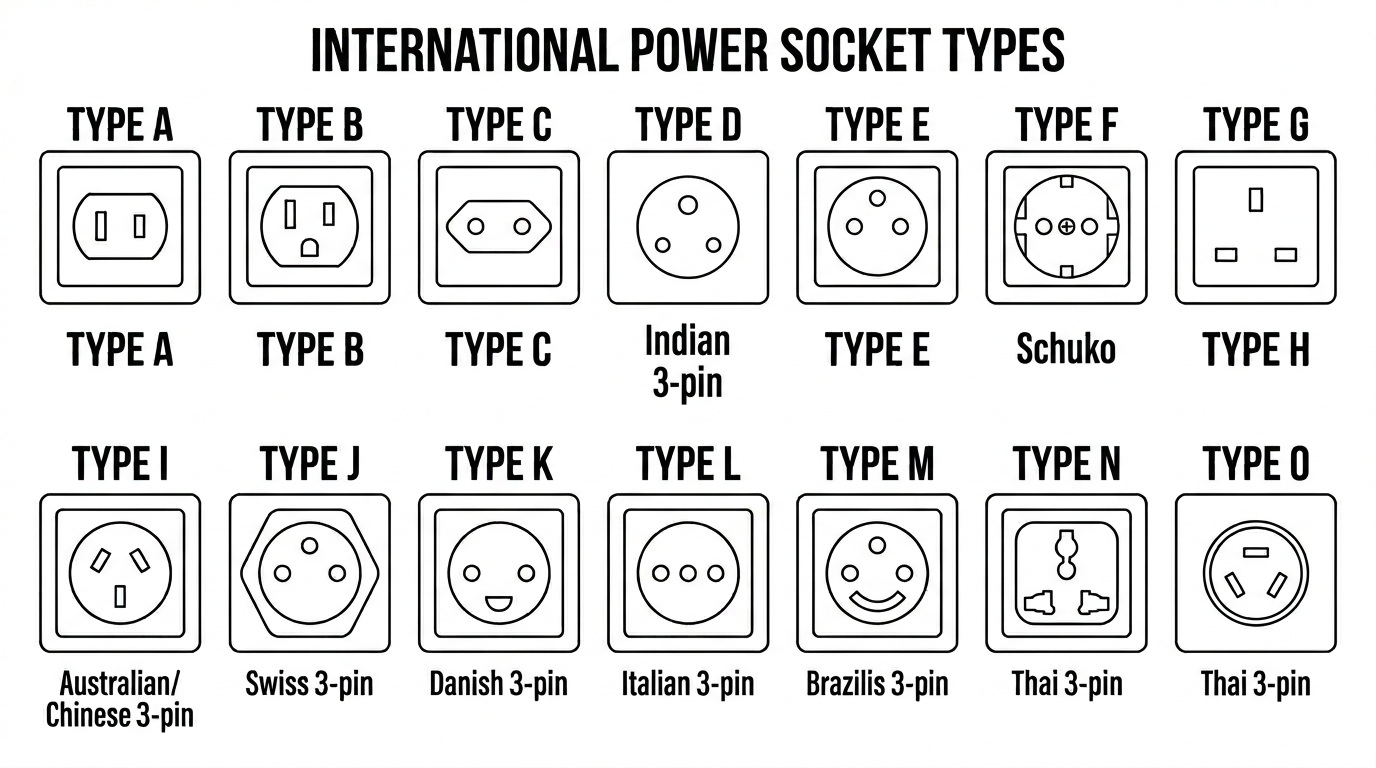
Type A, B, and D
Types A, B, D, and G are found (US-style A/B and UK-style G are common); voltage is 230V at 50Hz, so US 110V devices need a converter unless dual-voltage. Bring a universal adapter.
See the sockets
Tipping
Tipping is appreciated but not as ingrained as in North America. A service charge of around 10% is often already added to hotel and restaurant bills; if not, 10-15% is a generous tip. Rounding up for taxi drivers and tipping guides a few dollars is customary.
SIM / Data
Local providers Digicel and Flow offer prepaid SIMs and tourist data plans; buy at the airport, in Roseau, or at provider shops (bring your passport for registration). Coverage is good in towns and along the coast but can drop out in the mountainous interior and deep rainforest valleys. An eSIM bought before arrival is a convenient alternative.
Visa
Many nationalities, including citizens of the US, Canada, UK, EU, and most Commonwealth countries, can enter Dominica visa-free for tourism, typically for stays of up to 21 days (often extendable up to 6 months at the discretion of immigration). A passport valid for the duration of stay, proof of onward or return travel, and proof of sufficient funds are generally required. Always confirm current requirements with an official Dominican source before travel.
Driving Side
Left
How do you get around Dominica?
Public Transport
Public transport is provided by privately operated shared minibuses (vans marked with an 'H' or 'HA' on the license plate) that run fixed routes for set fares, mainly radiating out from Roseau. There are no trains. Buses fill up before departing and run far less frequently in the evenings, on Sundays, and on public holidays, so plan around them.
Ride-hailing
- No major international ride-hailing app (Uber/Lyft/Bolt) operates in Dominica; use licensed taxis or pre-arranged hotel/tour transport instead
Intercity
Shared minibuses run between the main towns (Roseau, Portsmouth, Marigot, etc.) and are the cheapest option, but schedules are informal and service thins out in the late afternoon and on Sundays. Renting a car gives the most freedom to reach waterfalls, hot springs, and trailheads, though roads are narrow, steep, and winding; a visitor's driving permit is required (purchasable on arrival or at car-rental offices). For inter-island travel, the ferry connects Dominica with Guadeloupe, Martinique, and St. Lucia.
Culture and customs
Customs
- Greetings matter: a friendly "good morning" or "good afternoon" before asking a question is expected, and skipping straight to business can come across as rude.
- Dominica is one of the few Caribbean islands with a surviving Indigenous community, the Kalinago, who live in the Kalinago Territory on the east coast; visit respectfully, ask before photographing people, and consider a guided tour that supports the community.
- Dress modestly away from the beach and pool; swimwear is for the water's edge only, and covering up is appreciated in villages, shops, and especially places of worship.
- Bush medicine, herbal remedies, and local home cooking are a point of pride; accept offered food or a fresh fruit graciously, as refusing can seem dismissive.
- Life runs on "island time": buses, tours, and appointments may start late, so build in slack and stay relaxed about scheduling.
- Photographing the rainforest, waterfalls, and Boiling Lake hikes is welcome, but always ask permission before pointing a camera at people or private homes.
Dress Code
Lightweight, breathable clothing for a hot, humid tropical climate, plus sturdy hiking shoes and a rain jacket for the rainforest and waterfall trails. Swimwear is fine at beaches, rivers, and resorts but should be covered up in town. Modest, neat attire is expected for churches and village settings.
Religious Etiquette
Dominica is predominantly Christian, mostly Roman Catholic with a strong Protestant and evangelical presence. Sundays are widely observed; many shops close and church attendance is high. Dress modestly and cover shoulders and knees when entering a church, remove hats, keep your voice low, and ask before photographing services or congregants.
Common Phrases
- Good morning / Good afternoonStandard polite greeting (English is the official language)
- BonjouHello / Good day (in Kwéyòl, the local French-based Creole)
- Sa ka fèt?How are you? / What's happening? (Kwéyòl)
- MèsiThank you (Kwéyòl)
- SoupléPlease (Kwéyòl)
- Sa byenIt's good / That's fine (Kwéyòl)
Highlights
Sports & Recreation
Cricket
Cricket is the national passion, shared across the English-speaking Caribbean, and Dominicans follow the West Indies team fervently; the island has produced internationally capped players and Windsor Park in Roseau is a key venue. Football (soccer) and basketball are also popular, but for most visitors Dominica's real recreation is the outdoors: hiking the 184 km Waitukubuli National Trail (the Caribbean's first long-distance trail), canyoning, river tubing, snorkeling and world-class scuba diving around Champagne Reef, whale-watching for resident sperm whales, and soaking in volcanic hot springs.
National Festivals
- February to March (before Lent)
Carnival (Mas Domnik / "The Real Mas")
Dominica's most exuberant festival, featuring calypso and bouyon music, colorful costumes, "jump-up" street parades, and Lapo Kabwit (skin-drum) bands. Known for its spontaneous, traditional character compared with more commercial Caribbean carnivals.
- Late October to early November
World Creole Music Festival
A three-night music festival in Roseau celebrating Creole genres from across the world, including bouyon, zouk, cadence-lypso, soca, and kompa, drawing regional and international artists.
- Late October (around the festival)
Creole in the Park / Independence celebrations
Dominica marks its independence (November 3, 1978) with weeks of Creole heritage events, including National Day, Creole Day (Jounen Kwéyòl) when people wear the traditional madras dress and speak Kwéyòl, plus cultural displays and local food.
- First Monday in August
Emancipation / August Monday
A public holiday commemorating the abolition of slavery, observed with cultural events, drumming, and reflection on the island's Afro-Caribbean heritage.
Planning Dominica?
Try a ready-made trip first.
Open the demo trip with no sign-up: Barcelona on your own, or Rome, Florence and Venice as a group. Then plan Dominica your way.