
Laos uses the Lao kip, type A, B, C, E, and F plugs and 1191 for emergencies. Laos is generally one of Southeast Asia's safer and more relaxed destinations, with low rates of violent crime against tourists.
Emergency Numbers
How safe is Laos?
- Very Safe
- Generally Safe
- Exercise Caution
- High Risk
- Dangerous
Laos is generally one of Southeast Asia's safer and more relaxed destinations, with low rates of violent crime against tourists. The main risks are petty theft (bag-snatching from motorbikes, hotel-room theft), traffic accidents (poor roads, reckless driving, motorbike crashes are the leading cause of tourist injury), and adventure-activity mishaps in places like Vang Vieng. The single greatest physical danger in rural areas is unexploded ordnance (UXO) left from the Vietnam War; stay on marked paths and never touch unknown metal objects. Petty drug-related entrapment and harsh local drug laws are also real risks.
Advisories (8)
Scams
- Tubing and party scams in Vang Vieng: drink spiking, overpriced 'free shot' deals, and bars that encourage dangerous river jumping. Accidents and drug-laced 'happy' shakes/menus have caused tourist deaths; treat the river and any offered drugs with extreme caution.
- Tuk-tuk and taxi overcharging: drivers, especially at airports, borders and bus stations, quote inflated fixed fares. Agree the price clearly before getting in, and consider the loose group-taxi rates locals use.
- Bus 'breakdown' and onward-ticket scams: tourist minibuses sometimes drop you far from your stated destination forcing a paid transfer, or 'VIP' buses are far less luxurious than advertised. Book through reputable operators and confirm exactly where you'll be dropped.
- Border and visa-on-arrival surcharges: officials at some land crossings demand extra 'stamping', 'overtime' or weekend fees in cash. Carry small USD notes and a passport photo, know the official visa fee, and politely question undocumented charges.
Warnings
- Unexploded ordnance (UXO/bombies) contaminates large parts of eastern and northern Laos, especially Xieng Khouang (Plain of Jars), and areas near the former Ho Chi Minh Trail. Never leave marked paths, dig, or touch unidentified metal; use only cleared, signposted sites.
- Road safety is poor: mountainous roads, overloaded vehicles, night driving and frequent motorbike crashes. Avoid road travel after dark, wear a helmet, and check that travel insurance covers motorbike use.
- Drug laws are extremely harsh and enforcement can involve entrapment; possession of even small amounts can lead to large fines, imprisonment or deportation. 'Happy' menus in Vang Vieng are illegal and dangerous.
- Occasional sporadic security incidents and banditry have been reported in remote areas (historically along some northern highways); check current government travel advice before overland trips into isolated regions.
Practical Info
Currency
Lao kip (LAK)
Power Plug
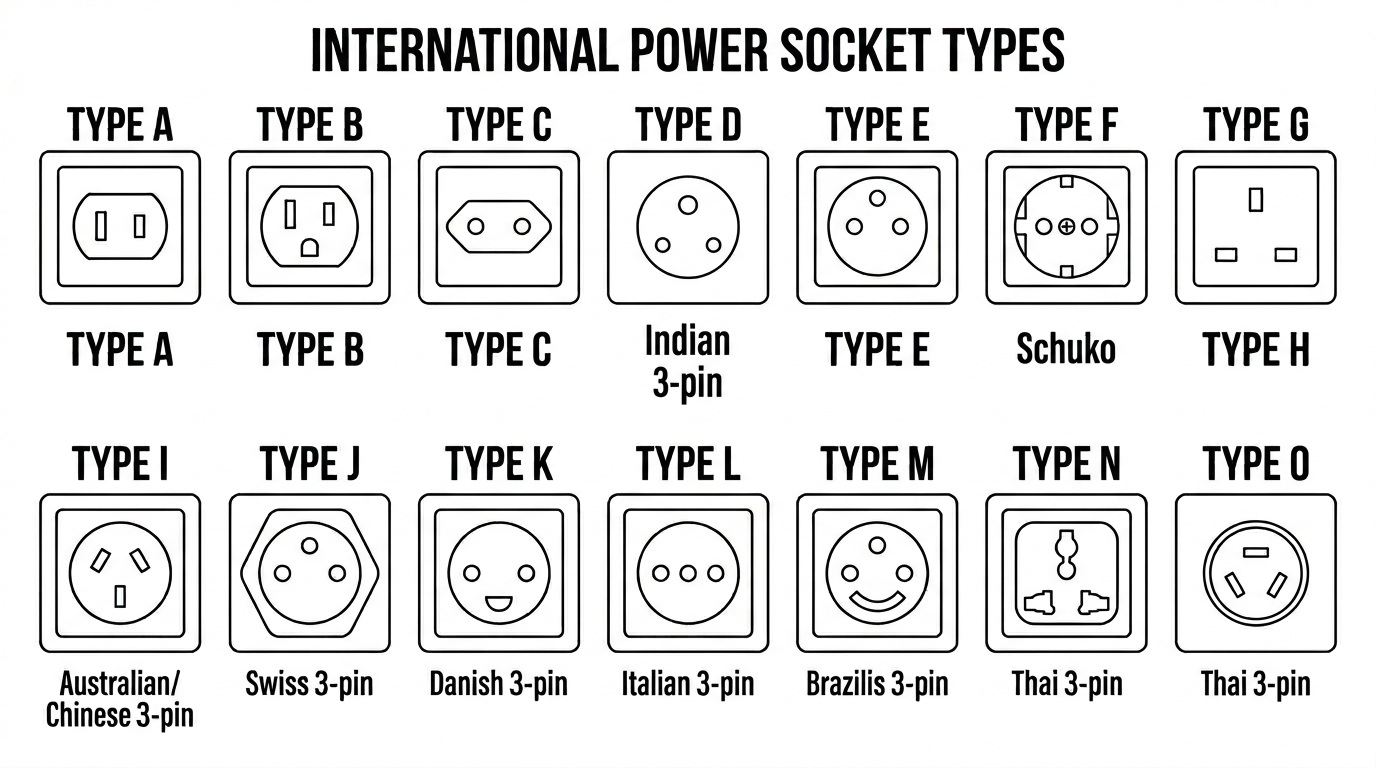
Type A, B, C, E, and F
Types A, B, C, E and F; 230V, 50Hz. Sockets are often unearthed and frequently accept multiple plug shapes (flat US-style and round European-style pins). A universal adapter is recommended.
See the sockets
Tipping
Tipping is not traditionally expected, but it is increasingly appreciated in tourist areas. Rounding up taxi/tuk-tuk fares, leaving small change at restaurants, and tipping guides and drivers (a few dollars per day) for good service is welcomed. Upmarket restaurants and hotels may add a service charge. Keep small-denomination kip handy.
SIM / Data
Buy a local SIM for cheap, reliable data. Unitel and Lao Telecom (LaoTel) have the widest coverage; Unitel is generally rated best for rural/mountain areas. SIMs are sold at airports, phone shops and markets, are inexpensive, and usually require your passport to register. Coverage is good in towns and along main routes but patchy in remote highlands. Buy from an official shop to get help with activation.
Visa
Most visitors need a visa, but Laos offers a visa on arrival at major international airports and many land borders for most nationalities (typically 30 days, fee varies roughly USD 30-45 depending on nationality, payable in cash USD; bring one passport photo). An eVisa is also available online in advance. Some ASEAN nationals enter visa-free. Passport must be valid at least six months. Always confirm current rules and eligible entry points before travel, as not every land crossing issues visas on arrival.
Driving Side
Right
How do you get around Laos?
Public Transport
There is no metro or large-scale urban transit. Within towns, get around by tuk-tuk, songthaew (shared pickup trucks with bench seating that run set routes), jumbo three-wheelers, or rented bicycle/motorbike. Towns like Luang Prabang and Vientiane are compact enough to walk. Always agree fares before riding shared or hired vehicles.
Ride-hailing
- LOCALao ride-hailing app
- Indrive
Intercity
Buses (standard, 'VIP' and sleeper) are the traditional backbone of intercity travel and reach most towns, though mountain roads make journeys slow. The game-changer is the Laos-China Railway (opened 2021), a fast, modern, air-conditioned line linking Vientiane, Vang Vieng, Luang Prabang and Boten on the Chinese border in a few hours; book tickets a day or more ahead as they sell out. Domestic flights (Lao Airlines) connect Vientiane, Luang Prabang, Pakse and other hubs, useful given long road times. On rivers, slow boats (notably the two-day Huay Xai-Luang Prabang Mekong route) remain a scenic option.
Culture and customs
Customs
- Greet people with the 'nop' (also called 'wai'): press your palms together at chest level with a slight bow. The higher the hands and lower the bow, the more respect shown, but never raise your hands above eye level except when paying respect to monks or the Buddha.
- Take off your shoes before entering homes, temples and many guesthouses and shops. Look for a pile of footwear at the door as your cue.
- The head is considered sacred and the feet impure. Never touch anyone's head (including a child's), and never point your feet at people, sacred images or food. Tuck your feet behind you when sitting on temple floors.
- Dress modestly at temples: cover shoulders and knees. Women should not touch monks or hand objects directly to them; place items down for the monk to pick up, or pass them via a man.
- Keep your composure. Losing your temper, raising your voice or showing visible frustration causes loss of face and is seen as deeply rude. A smile and calm patience accomplish far more.
- Use your right hand (or both hands) for giving and receiving, especially money and gifts. The left hand alone is considered unclean. When passing an item to an elder, support your right forearm with your left hand as a sign of respect.
Dress Code
Casual and lightweight for the tropical climate, but Laos is conservative and modesty is valued. Cover shoulders and knees at temples and government offices; carry a scarf or sarong to drape over bare skin. Beachwear and skimpy clothing are inappropriate in towns and villages. The Lao themselves dress neatly, and travelers who do the same are treated with more respect.
Religious Etiquette
Laos is overwhelmingly Theravada Buddhist, and monks are highly respected. Dress modestly and remove your shoes and hat before entering temple buildings; sit with your feet pointed away from Buddha images. Women must never touch a monk or hand anything to one directly. Do not climb on, sit on or pose disrespectfully with Buddha statues, and never point your feet at them. If you watch the dawn alms-giving (tak bat) in Luang Prabang, keep a respectful distance, stay quiet, do not use flash, and do not participate unless you genuinely intend to and know the etiquette. Hill-tribe animist beliefs are also widespread; ask before photographing rituals, shrines or spirit gates, and never touch village spirit poles or gates.
Common Phrases
- SabaideeHello / Greetings (all-purpose, said with a nop)
- Khop chai (lai lai)Thank you (very much)
- Bo pen nyangYou're welcome / It's no problem / Never mind
- Thao dai?How much (does it cost)?
- Bo aoI don't want it / No thanks (useful for declining vendors)
- Aahaan saep laiThe food is very delicious
Highlights
Sports & Recreation
Football (soccer)
Football is the most popular spectator sport, with the national team and English Premier League matches widely followed in cafes and bars. The distinctive Lao sport is kataw (sepak takraw), a fast, acrobatic kick-volleyball played with a woven rattan ball, seen in villages and on streets across the country. Pétanque, a legacy of French colonial rule, is hugely popular and played seriously everywhere, even in small villages. Traditional Lao boxing (muay Lao) and boat racing during festivals are also part of the sporting culture, and the mountains and rivers fuel a growing adventure-tourism scene of trekking, kayaking, caving and zip-lining.
National Festivals
- April 14-16
Pi Mai Lao (Lao New Year)
The biggest celebration of the year, marking the traditional New Year with three-plus days of water-throwing to cleanse and bless, temple visits, Buddha-image bathing, sand stupas and street parties. Luang Prabang's version is especially famous.
- November (full moon of the 12th lunar month)
That Luang Festival (Boun That Luang)
Laos's most important religious festival, centered on the golden Pha That Luang stupa in Vientiane. Thousands of monks receive alms, there are candlelit processions, a wax-castle offering, fireworks and a large fair.
- October (end of Buddhist Lent)
Boun Ok Phansa & Boat Racing Festival
Marks the end of the three-month Buddhist Lent with candlelit processions, the floating of small banana-leaf boats bearing candles and flowers on the Mekong, and lively dragon-boat races, especially in Vientiane and Luang Prabang.
- Full moon of the third lunar month (Feb/Mar)
Boun Makha Bousa (Magha Puja)
A Buddhist holy day commemorating a spontaneous gathering of monks before the Buddha, observed with candlelit processions around temples; the celebration at the Wat Phou Khmer ruins near Champasak is the most spectacular.
Planning Laos?
Try a ready-made trip first.
Open the demo trip with no sign-up: Barcelona on your own, or Rome, Florence and Venice as a group. Then plan Laos your way.