
Liberia uses the Liberian dollar, type A, B, C, E, and F plugs and 911 for emergencies. Liberia is a low-income West African nation that emerged from back-to-back civil wars (1989-2003) and the 2014-2016 Ebola epidemic.
Emergency Numbers
How safe is Liberia?
- Very Safe
- Generally Safe
- Exercise Caution
- High Risk
- Dangerous
Liberia is a low-income West African nation that emerged from back-to-back civil wars (1989-2003) and the 2014-2016 Ebola epidemic. It is now stable and peaceful, but petty and opportunistic crime is common, infrastructure is weak, and medical facilities are extremely limited. Most governments advise normal-to-increased caution; travelers should avoid isolated beaches, walking alone after dark, and displays of wealth. Roads outside Monrovia are often poor and become impassable in the rainy season (May-October).
Advisories (8)
Scams
- Advance-fee and romance/inheritance scams: Liberia is a notorious origin of online 'next-of-kin', charity, gold-dealing and dating scams that ask victims to wire money or pay fees to release nonexistent funds or shipments.
- Fake charities and orphanage 'voluntourism': solicitations to fund orphanages or NGOs that do not exist, sometimes using photos of real children to pull at sympathies.
- Airport and immigration hassles: at Roberts International (RIA) and on city streets, self-appointed 'helpers', porters and officials may demand tips or invent fees; carry small bills and only deal with clearly identified, uniformed staff.
- Taxi and money-changing overcharging: unmetered shared taxis quote inflated fares to foreigners, and street money changers shortchange on rates; agree the price first and change money at banks or reputable forex bureaus.
Warnings
- Petty street crime (pickpocketing, bag-snatching, phone theft) and occasional armed robbery occur, especially in Monrovia areas like Waterside, Red Light market and on beaches; avoid walking alone after dark.
- Rip currents and strong undertows make many Atlantic beaches dangerous; there are few or no lifeguards and drownings happen.
- Healthcare is very limited; serious illness or injury usually requires medical evacuation, so comprehensive insurance covering evacuation is essential. Malaria is endemic year-round and a yellow fever vaccination certificate is required for entry.
- Road travel is hazardous: poor road conditions, unlit vehicles, and washed-out roads in the rainy season (May-October); avoid driving outside cities at night.
Practical Info
Currency
Liberian dollar (LRD)
Power Plug
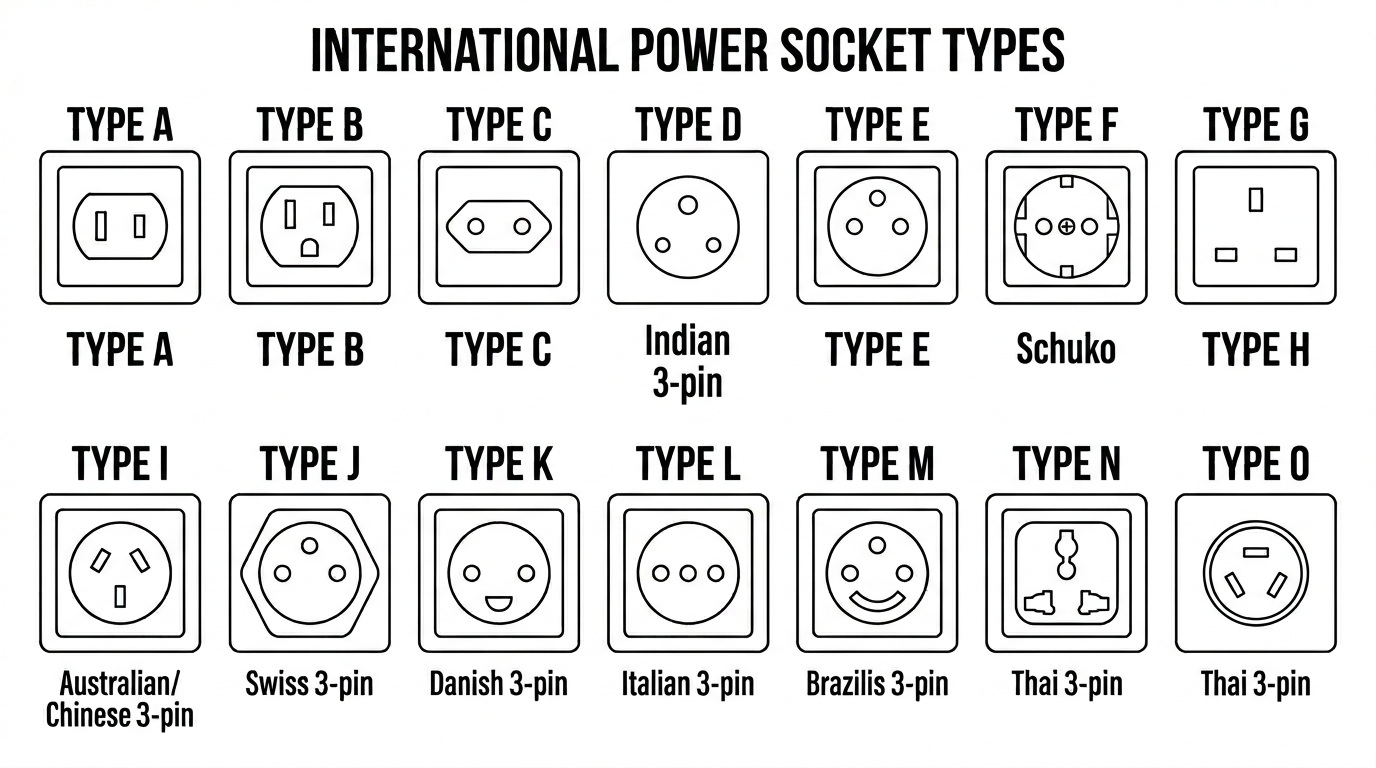
Type A, B, C, E, and F
Liberia uses plug types A, B, C, E and F. Mains voltage is 120 V at 60 Hz in Monrovia (US-style), though supply is inconsistent and many places rely on generators; bring a universal adapter and a surge protector.
See the sockets
Tipping
Tipping is not deeply ingrained but is appreciated. In Monrovia restaurants catering to expats, a 10% tip is welcome if no service charge is added; round up taxi fares and tip hotel porters and guides a small amount in Liberian or US dollars. US dollars circulate widely alongside Liberian dollars.
SIM / Data
The main mobile operators are Orange Liberia and Lonestar Cell MTN. Local SIM cards are cheap and sold at operator shops and kiosks; bring your passport to register the SIM. Coverage and mobile data are decent in Monrovia and larger towns but patchy or absent in rural areas. Buy data bundles ('scratch cards' or via the operator app) as pay-as-you-go data is expensive without a bundle.
Visa
Most visitors need a visa to enter Liberia, obtained in advance from a Liberian embassy or consulate, or in some cases a visa on arrival arranged through a local sponsor/invitation. A passport valid for at least six months and a valid yellow fever vaccination certificate are required for entry. Check current rules with a Liberian mission before travel, as visa-on-arrival availability changes.
Driving Side
Right
How do you get around Liberia?
Public Transport
Within Monrovia, transport is dominated by shared taxis (typically painted yellow), minibuses and motorcycle taxis known as 'pen-pen', plus three-wheeled 'keke' tuk-tuks. Shared taxis follow set routes and you pay per seat; pen-pens are fast but risky (helmets are rare). There is no formal metro or rail passenger network. Negotiate or confirm fares before riding.
Ride-hailing
- No widely established international ride-hailing app (no Uber/Bolt); arrange private taxis through your hotel, hire a trusted driver, or use shared taxis and pen-pen motorcycle taxis
Intercity
Intercity travel is mostly by shared taxi, minibus or larger 'money bus', plus 4x4 vehicles on rougher routes. Roads to major towns like Gbarnga, Buchanan and Ganta are partly paved but conditions vary; routes to the southeast (e.g. Harper) can be very rough and impassable in the rainy season. Domestic flights are extremely limited. Allow extra time, travel by day, and consider hiring a private driver with a sturdy vehicle for longer trips.
Culture and customs
Customs
- Greetings matter: take time to shake hands and ask after someone's health and family before getting to business; the Liberian 'finger-snap' handshake (a handshake that ends with a mutual snap of the fingers) is a friendly local custom.
- English is the official language and most Liberians speak Liberian English (Kolokwa), a distinctive creole; clear, slower speech and a smile go a long way.
- Respect for elders is strong; use titles, let elders speak first, and offer and receive items (especially food or money) with the right hand or both hands rather than the left alone.
- Hospitality is generous despite poverty; if offered food or drink, accepting at least a little is polite, and small gifts or sharing are appreciated.
- Ask before photographing people, markets, government buildings, the airport, bridges or police/military; many people dislike being photographed and officials can react badly.
- Dress modestly and conservatively, particularly outside the capital and at religious sites; Liberia is a deeply Christian-majority society and Sundays are widely observed.
Dress Code
Casual but modest. The climate is hot and humid, so lightweight, breathable clothing is ideal, but revealing outfits draw unwanted attention outside resort and beach areas. Cover shoulders and knees for churches, mosques, rural villages and any government office. Beachwear should stay at the beach. Smart-casual is expected for business and nicer restaurants in Monrovia.
Religious Etiquette
Liberia is about 85% Christian with a Muslim minority (roughly 12%) and traditional indigenous beliefs woven throughout. Christianity is highly visible; Sunday church is a major social event and shops may close. Dress modestly at churches and mosques, remove shoes before entering a mosque, and women may be asked to cover their heads. Avoid scheduling business or travel that conflicts with Sunday services or Friday Muslim prayers, and treat traditional/secret-society practices and sacred sites with respect and distance.
Common Phrases
- How da body?How are you? (a standard Liberian English greeting)
- I da hiaI'm fine / I'm here (a common reply to 'How da body?')
- Tank youThank you
- Small smallA little bit / slowly / gradually
- Wetin da happen?What's happening? / What's going on?
- Da how much?How much is it? (when bargaining or shopping)
Highlights
Sports & Recreation
Football (soccer)
Football is the national passion, and Liberia produced its greatest sporting icon in George Weah, the only African to win the FIFA World Player of the Year and Ballon d'Or (1995), who later became President of Liberia. The national team, nicknamed the Lone Star, draws huge support, and matches at the Samuel Kanyon Doe Sports Complex in Monrovia are major events. Pickup games are played on streets and beaches everywhere. Beyond football, basketball has a following, and the Atlantic coast offers surfing (notably at Robertsport) and beach recreation.
National Festivals
- July 26
Independence Day
Liberia's biggest national holiday, marking independence in 1847 as Africa's first republic, founded by freed African American settlers. Celebrated with parades, speeches, church services, music and street festivities, especially in Monrovia.
- First Thursday of November
National Thanksgiving Day
A uniquely Liberian holiday reflecting the country's American-influenced heritage, observed with church services, feasting and giving thanks; harvest produce and prayers feature prominently.
- Second Friday of March
Decoration Day
A day set aside to clean, decorate and honor the graves of departed relatives, blending remembrance with community gatherings across the country.
- December 25
Christmas
Widely and joyfully celebrated in this Christian-majority nation with church services, music, masquerade-style 'Old Man Beggar' (Santa Claus) street performers, feasting and family gatherings.
Planning Liberia?
Try a ready-made trip first.
Open the demo trip with no sign-up: Barcelona on your own, or Rome, Florence and Venice as a group. Then plan Liberia your way.