
Mozambique Travel Guide. Essential travel information — emergency numbers, safety, currency, visas, customs and getting around.
Emergency Numbers
How safe is Mozambique?
- Very Safe
- Generally Safe
- Exercise Caution
- High Risk
- Dangerous
Mozambique is welcoming and most tourist areas — Maputo, the southern beaches (Tofo, Vilankulo), the Bazaruto and Quirimbas archipelagos and major dive sites — are generally safe with normal precautions. However, petty crime (bagsnatching, pickpocketing, car break-ins) is common in cities, and corruption at checkpoints is a real nuisance. The critical concern is the violent Islamist insurgency in the far-northern province of Cabo Delgado, which has caused thousands of deaths and mass displacement; most governments advise against all or all-but-essential travel there. There is also unexploded ordnance risk in some remote areas and seasonal cyclones and flooding (roughly November–April).
Advisories (8)
Scams
- Police and traffic officers may stop tourists, especially drivers, and demand on-the-spot 'fines' for invented infractions; ask for an official written ticket (auto) payable at a police station, stay calm and never hand over your original passport — carry a certified copy.
- Fake or unofficial taxis and people offering to 'help' at airports and bus terminals may overcharge or steal luggage; use registered taxis, agree the fare before getting in, or use a hotel transfer.
- Border crossings (notably Ressano Garcia from South Africa) attract touts and 'fixers' who offer to speed up paperwork for a fee — handle visa and immigration formalities yourself at the official windows.
- ATM and card skimming occurs; use machines inside banks or hotels, shield your PIN, and watch for distraction theft when withdrawing cash.
Warnings
- Cabo Delgado province: ongoing Islamist insurgency with attacks, kidnappings and killings — most governments advise against all travel to northern and central Cabo Delgado and against all but essential travel to the rest of the province; check current advisories before any travel to the far north.
- Cyclone and flooding season (November to April) can cause severe storms, road washouts and flooding, especially in central and northern provinces (the region hit by Cyclone Idai in 2019); monitor weather and travel updates.
- Landmines have largely been cleared (Mozambique was declared mine-free in 2015) but unexploded ordnance can remain in remote former conflict areas — stick to established roads and paths.
- Avoid road travel after dark due to poor road conditions, unlit vehicles, livestock and higher crime and accident risk.
Practical Info
Currency
Mozambican metical (MZN)
Power Plug
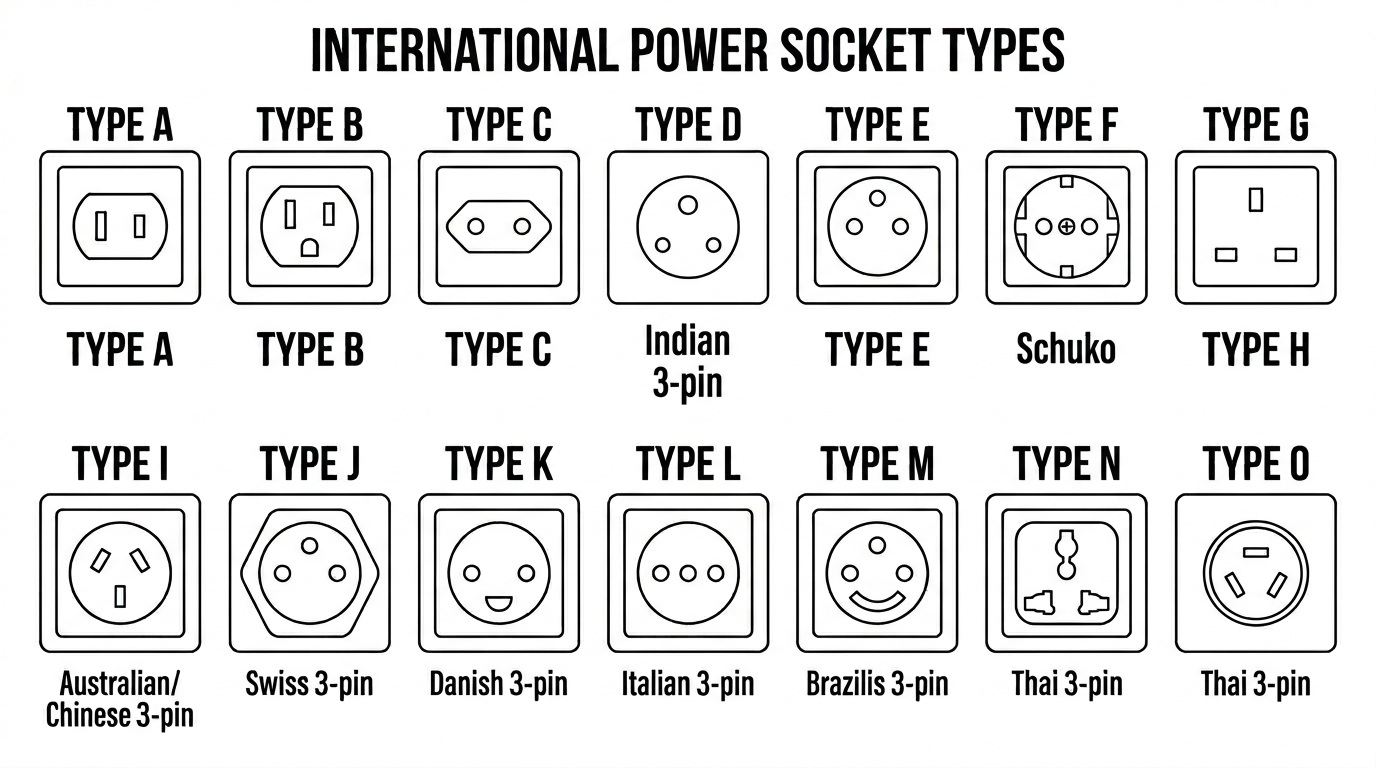
Type C, F, and M
Plug types C, F and M; 220 V, 50 Hz. Type M (the large three-pin South African plug) is very common, so a South-Africa-compatible adapter is essential alongside a standard European (C/F) one.
See the sockets
Tipping
Tipping is appreciated but not heavily expected. In restaurants leave around 10% if service isn't already included; round up taxi fares; tip hotel porters and housekeeping a small amount in meticais. On safaris and dive trips, tipping guides, trackers and dive masters is customary — budget a few USD per day per guest.
SIM / Data
Buy a local prepaid SIM from Vodacom, Movitel or Tmcel for cheap data; Vodacom and Movitel have the widest coverage, with Movitel often strongest in rural areas. SIM registration is mandatory, so bring your passport. Buy and register at official branded shops or the airport rather than street vendors. Coverage is good in cities and along the main coast but patchy in remote interior and conservation areas.
Visa
Most visitors need a visa. Mozambique offers a visa on arrival at major airports and land borders for many nationalities for tourism (typically up to 30 days, single entry, payable in USD), and has rolled out an eVisa system — check current eligibility before travel as policies change. Some Southern African (SADC) nationals enter visa-free. A passport valid at least six months with blank pages is required, and proof of yellow fever vaccination is required if arriving from a country with risk of yellow fever transmission.
Driving Side
Left
How do you get around Mozambique?
Public Transport
Within cities, the main public transport is the 'chapa' — privately run minibuses and converted trucks that follow set routes, are very cheap, but are crowded and often overloaded. Shared and metered taxis operate in Maputo and larger towns; agree the fare in advance as meters are rarely used. Maputo also has tuk-tuks (motorized rickshaws, called txopela) in some areas. Walking is fine in central Maputo by day but keep valuables hidden.
Ride-hailing
- Yango
- Bolt
- Txopelalocal ride app where available
Intercity
Distances are vast. Domestic flights (LAM – Linhas Aéreas de Moçambique, and other carriers) connect Maputo with Beira, Nampula, Pemba, Vilankulo and Tete, saving days of driving — though schedules and reliability can be inconsistent. Long-distance 'chapas' (minibuses) and larger inter-city buses run between towns but are crowded and depart early; companies like Nagi Investimentos and others run coaches on main routes. The single tarred north–south road (EN1) is long and in variable condition. Self-driving (4x4 recommended for the interior) gives the most freedom; fuel up whenever you can and avoid night driving.
Culture and customs
Customs
- Greetings are important and not rushed — a handshake and inquiring about someone's health and family before getting to business is expected; abruptness is considered rude.
- Portuguese is the official language and the lingua franca, but most Mozambicans speak a Bantu mother tongue at home (Makhuwa, Tsonga, Sena, Lomwe and others), so a few words of Portuguese go a long way.
- Use your right hand, or both hands, for giving and receiving items and money; the left hand alone is considered impolite, especially in the Muslim-influenced north.
- Ask permission before photographing people, and never photograph government buildings, the airport, police, bridges or military sites — doing so can lead to detention or demands for bribes.
- Respect is shown to elders; address older people deferentially and let them be served first at meals. In rural areas a slight bow or lowered eyes when greeting an elder is appreciated.
- Dress and behave modestly in the predominantly Muslim northern coastal areas such as Ilha de Moçambique and Pemba, where conservative norms are stronger than in cosmopolitan Maputo.
Dress Code
Casual and lightweight clothing suits the tropical climate, but Mozambicans dress neatly and value tidy appearance. On beaches and at resorts swimwear is fine, but cover up when walking through towns and villages. In the Muslim-majority north (Ilha de Moçambique, Pemba, Nampula, Cabo Delgado), women should keep shoulders and knees covered and a light scarf is useful; topless sunbathing is unacceptable away from private resorts. For business and government offices, smart-casual to formal attire is expected.
Religious Etiquette
Mozambique is religiously mixed: roughly Christian (Catholic and Protestant), with a large Muslim minority concentrated along the northern coast, plus widespread traditional African beliefs. Respect Ramadan fasting hours in the north, dress modestly near mosques and remove shoes before entering, and avoid loud or disruptive behavior near places of worship. Ancestral and spiritual beliefs remain influential in rural areas; treat sacred sites, ceremonies and local healers (curandeiros) with respect and do not photograph rituals without permission.
Common Phrases
- Bom diaGood morning / Good day
- Como está?How are you?
- Obrigado / ObrigadaThank you (said by a man / by a woman)
- Por favorPlease
- Quanto custa?How much does it cost?
- Não falo portuguêsI don't speak Portuguese
Highlights
Sports & Recreation
Football (soccer)
Football is by far the most popular sport; Mozambicans follow the national team, the Mambas, and matches of the Mozambican Moçambola league, as well as European leagues, with great passion in bars and on the street. Beach football and pick-up games are everywhere along the coast. The country's most celebrated sporting figure is Maria Mutola, the 800m runner and 2000 Olympic gold medalist, a national hero who also boosted athletics. Basketball has a following too, and the long warm coastline makes water sports — scuba diving, snorkeling, ocean kayaking, kitesurfing and deep-sea fishing — central to the tourism and recreation scene, especially around Tofo, Bazaruto and the Quirimbas.
National Festivals
- June 25
Independence Day (Dia da Independência)
Marks Mozambique's independence from Portugal in 1975, celebrated nationwide with parades, music, speeches and public festivities — the country's most important national holiday.
- February 3
Heroes' Day (Dia dos Heróis Moçambicanos)
Honors the national heroes of the liberation struggle, especially FRELIMO founder Eduardo Mondlane, killed on this date in 1969; marked by official ceremonies at Heroes' Square in Maputo.
- Late August / early September (varies)
AZGO Festival
Maputo's major multidisciplinary arts and music festival, showcasing Mozambican and international musicians, dance, film and visual arts — one of the country's flagship cultural events.
- October 4
Peace and Reconciliation Day (Dia da Paz)
Commemorates the 1992 Rome General Peace Accords that ended the country's long civil war, observed as a national holiday reflecting on reconciliation.
Planning Mozambique?
Try a ready-made trip first.
Open the demo trip with no sign-up: Barcelona on your own, or Rome, Florence and Venice as a group. Then plan Mozambique your way.