
Nigeria uses the Nigerian naira, type D and G plugs and 112 for emergencies. Nigeria presents significant safety challenges and most Western governments advise against all but essential travel to large parts of the country, with some areas off-limits entirely.
Emergency Numbers
How safe is Nigeria?
- Very Safe
- Generally Safe
- Exercise Caution
- High Risk
- Dangerous
Nigeria presents significant safety challenges and most Western governments advise against all but essential travel to large parts of the country, with some areas off-limits entirely. Lagos, Abuja, and the southwest are the most frequented by visitors and are manageable with sensible precautions, but petty and violent crime, kidnapping for ransom, and the risk of terrorism are real concerns nationwide. The northeast (Borno, Yobe, Adamawa) faces an active Boko Haram/ISWAP insurgency, and the Niger Delta and parts of the north-central and northwest have serious banditry and kidnapping problems. Travelers should arrange trusted local contacts, avoid travel after dark, and stay constantly aware of the current security situation.
Advisories (9)
Scams
- Advance-fee fraud, the notorious '419' scam named after a section of the Nigerian criminal code, originated here; be skeptical of any unsolicited business deal, romance approach, or inheritance/oil-contract offer promising large returns.
- Fake or 'fixer' police and immigration checkpoints where officials demand on-the-spot 'fines' or bribes; ask for ID, stay polite, keep documents in order, and avoid handing over your passport unless necessary.
- Taxi and airport touts at Lagos (Murtala Muhammed) airport who overcharge, claim your booked ride cancelled, or steer you to unofficial cars; pre-arrange airport pickup through your hotel and confirm the driver's name.
- ATM card skimming and 'helpful stranger' distractions at machines; use ATMs inside bank branches during daytime and shield your PIN.
Warnings
- The northeast states of Borno, Yobe and Adamawa have an active Boko Haram/ISWAP insurgency; most governments advise against all travel there.
- Kidnapping for ransom targeting locals and foreigners occurs across many states, including the northwest, north-central belt and parts of the Niger Delta.
- Niger Delta states (e.g. Bayelsa, Delta, Rivers outside central Port Harcourt) carry elevated risk of armed crime, militancy and kidnapping.
- Inter-communal, banditry and farmer-herder violence flares periodically in the Middle Belt and northwest; avoid political rallies and large gatherings, which can turn violent.
- Road travel after dark is dangerous nationwide due to crime, checkpoints and poor road conditions; fly between major cities where possible.
Practical Info
Currency
Nigerian naira (NGN)
Power Plug
Type D and G
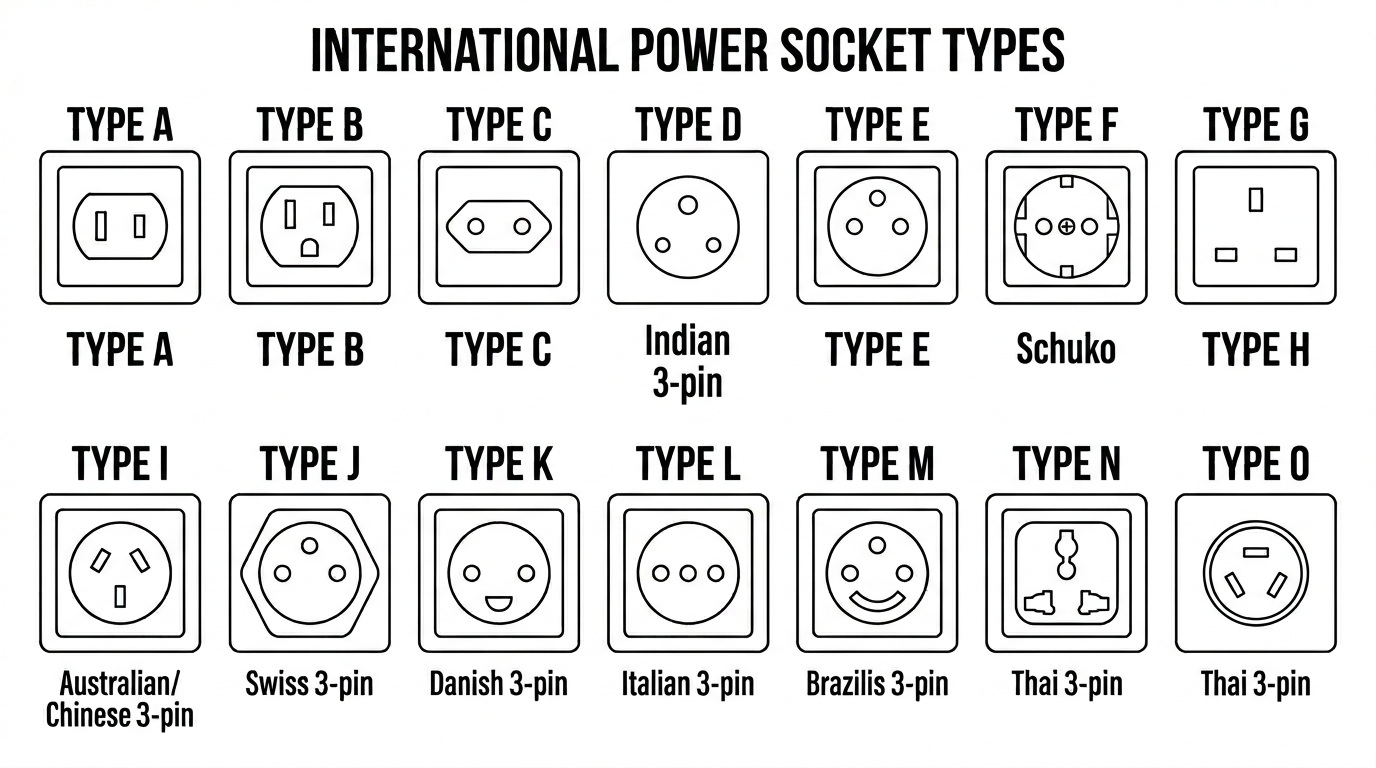
Type D and Type G plugs; mains voltage is 230V at 50Hz. Type G (the UK-style three-pin) is most common in hotels and newer buildings. Bring a universal adapter and note that power outages are frequent, so a power bank is useful.
See the sockets
Tipping
Tipping is appreciated but not strictly obligatory. Many upscale restaurants and hotels add a 5-10% service charge; if not, leaving around 10% for good service is customary. Small tips ('dash') to porters, security guards, parking attendants and helpful drivers are common and well received. Round up fares for taxis and ride-hailing drivers.
SIM / Data
Local SIM cards are cheap and widely available; major networks are MTN, Airtel, Glo and 9mobile, with MTN and Airtel offering the broadest coverage. Registration (SIM/NIN linkage) is required, so bring your passport and expect to provide biometric/ID details; buy from official branded stores rather than street vendors to ensure proper registration. 4G is good in cities and patchy in rural areas; data is affordable. eSIM and travel data plans are an increasingly easy alternative.
Visa
Most foreign visitors, including citizens of the US, UK, EU and many other countries, require a visa to enter Nigeria. Apply in advance; Nigeria offers an e-Visa / Visa on Arrival pre-approval scheme for many nationalities (you obtain approval online before travel and collect the visa at the airport), but processes change, so confirm with the Nigeria Immigration Service or your nearest embassy. Proof of a yellow fever vaccination is mandatory for entry. Ensure your passport has at least six months' validity.
Driving Side
Right
How do you get around Nigeria?
Public Transport
City transport is dominated by informal options: shared yellow minibuses (danfo) and larger buses in Lagos, plus motorcycle taxis (okada) and three-wheeled tricycles (keke napep/keke marwa) for short hops, though okadas are banned or restricted in parts of Lagos. Lagos has a Bus Rapid Transit (BRT) network and recently launched Blue and Red rail lines. Public transport is cheap but crowded, can be chaotic, and pickpocketing occurs, so guard your belongings. Ride-hailing apps are the safest and most convenient option for visitors.
Ride-hailing
- Bolt
- Uber
- inDrive
- Rida
- LagRide
Intercity
For long distances, domestic flights are strongly recommended over road travel for both time and safety; airlines such as Air Peace, Arik Air, United Nigeria and Ibom Air connect Lagos, Abuja, Port Harcourt, Kano and other cities. Intercity buses run with established 'luxury' coach companies (e.g. GUO, ABC Transport, God is Good Motors) which are more reliable and safer than informal vehicles; book reputable operators and travel by day only. Rail service is limited but the Lagos-Ibadan and Abuja-Kaduna standard-gauge lines operate. Avoid driving yourself between cities; hire a trusted driver if you must go by road.
Culture and customs
Customs
- Greetings are essential and unhurried; take time to say hello and ask after someone's health and family before getting to business. Rushing straight to the point can be seen as rude.
- Respect for elders is paramount. Among the Yoruba, younger people may prostrate (men) or kneel/curtsy (women) when greeting elders; everywhere, defer to and address older people with titles like 'Sir', 'Ma', 'Mama' or 'Baba'.
- Use your right hand for giving, receiving, eating and greeting; the left hand is considered unclean. Receiving a gift or handshake with two hands shows extra respect.
- Nigeria is split roughly between a Muslim-majority north and a Christian-majority south, with traditional beliefs throughout; religion is taken seriously and openly discussed, so be respectful of both faiths.
- Hospitality is generous; if you visit a home you may be offered food or drink, and declining outright can offend. Bringing a small gift is appreciated.
- Dress and public conduct lean conservative, especially in the north; modesty and politeness go a long way, and public displays of anger or confrontation are frowned upon.
Dress Code
Dress neatly and modestly; appearance signals respect and status in Nigeria. In the predominantly Muslim north, women should cover shoulders, chest and knees and consider carrying a headscarf for mosques and rural areas; men should avoid shorts in conservative settings. In Lagos and the south dress is more relaxed and stylish, but beachwear stays at the beach. Colorful traditional attire (such as Ankara prints, agbada and gele head-ties) is widely worn and admired, and dressing up for events is the norm.
Religious Etiquette
Nigeria is deeply religious, roughly divided between Islam (concentrated in the north) and Christianity (concentrated in the south), alongside indigenous beliefs. In the Muslim north, dress modestly, remove shoes before entering mosques, avoid eating, drinking or smoking in public during daylight in Ramadan, and note that twelve northern states apply Sharia law (alcohol may be restricted or banned). When visiting churches in the south, dress neatly; services are vibrant and lengthy. Always ask before photographing people, religious sites or ceremonies, and avoid criticizing or joking about either faith.
Common Phrases
- How far?Hi / What's up? (Nigerian Pidgin greeting)
- How you dey?How are you? (Nigerian Pidgin)
- I dey fineI'm fine / I'm doing well (Nigerian Pidgin)
- AbegPlease / I beg you (Nigerian Pidgin)
- Thank you / E se (Yoruba) · Na gode (Hausa) · Daalu (Igbo)Thank you, in the three main indigenous languages
- Wetin be the price?What is the price? (Nigerian Pidgin, useful for markets)
Highlights
Sports & Recreation
Football (soccer)
Football is a national obsession. The men's national team, the Super Eagles, command passionate support, and Nigeria has a proud record at the Africa Cup of Nations and World Cup, while the women's Super Falcons dominate African women's football. Fans follow the English Premier League fervently, and viewing centers fill with supporters of clubs like Chelsea, Arsenal, Manchester United and Liverpool on match days. Street and 'gala' football is played everywhere. Beyond football, Nigeria excels at athletics and boxing, basketball is rising (the men's national team, D'Tigers, draws on NBA talent), and traditional wrestling (such as Dambe boxing in the north) retains a strong cultural following.
National Festivals
- January 1
New Year's Day
A public holiday celebrated nationwide, often following lively Christmas-season festivities, church crossover services on New Year's Eve, and family gatherings.
- Variable (March/April, Christian calendar)
Easter (Good Friday and Easter Monday)
Major public holidays in the Christian-majority south, marked by church services, processions and family celebrations; Good Friday and Easter Monday are both observed.
- Variable (Islamic lunar calendar)
Eid al-Fitr and Eid al-Adha (Sallah)
The two great Muslim festivals, widely celebrated especially in the north. In cities like Kano and Katsina, the colorful Durbar processions feature richly dressed horsemen paying homage to the traditional emir, one of West Africa's most spectacular cultural displays.
- August/September (annual, dates vary)
Osun-Osogbo Festival
A two-week traditional festival in Osun State honoring the river goddess Osun, centered on the UNESCO-listed Osun Sacred Grove; it draws devotees and visitors for processions, drumming and the rites of the Arugba (votary maiden).
Cities in Nigeria
Planning Nigeria?
Try a ready-made trip first.
Open the demo trip with no sign-up: Barcelona on your own, or Rome, Florence and Venice as a group. Then plan Nigeria your way.