
India Travel Guide. Essential travel information — emergency numbers, safety, currency, visas, customs and getting around.
Emergency Numbers
How safe is India?
- Very Safe
- Generally Safe
- Exercise Caution
- High Risk
- Dangerous
India is generally safe for travelers, but it's important to exercise caution, especially in crowded areas and at night. Petty crime like pickpocketing can occur. Solo female travelers should be particularly vigilant and avoid isolated areas after dark.
Advisories (8)
Scams
- Taxi/auto-rickshaw drivers overcharging or claiming meters are broken. Insist on using the meter or agree on a price beforehand.
- Fake tourist guides offering services at inflated prices near major attractions.
- Touts trying to sell overpriced goods or services, especially around tourist sites and train stations.
- Gem/carpet scams where travelers are pressured into buying fake or overpriced items.
Warnings
- Be aware of your surroundings in crowded markets and public transport to avoid pickpocketing.
- Avoid walking alone at night in poorly lit areas.
- Stay updated on local news regarding political demonstrations or civil unrest, which can occur periodically.
- Be cautious when accepting food or drinks from strangers.
Practical Info
Currency
Indian Rupee (INR)
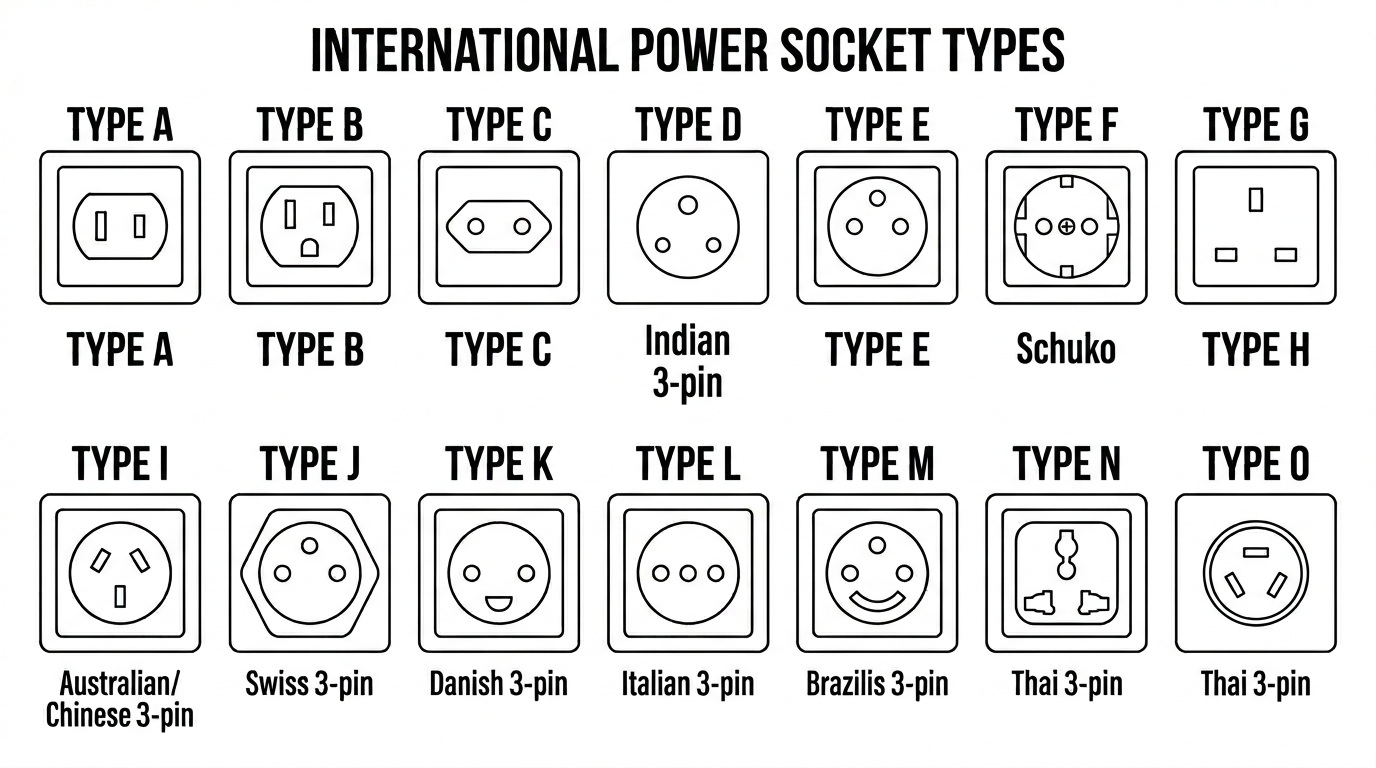
Power Plug
C, D, M
See the sockets
Tipping
Tipping is common in India, especially in the service industry. In restaurants, 5-10% is appreciated if a service charge isn't included. For porters, drivers, and hotel staff, small amounts (20-100 INR) are customary depending on the service.
SIM / Data
Local SIM cards are readily available from providers like Jio, Airtel, and Vodafone Idea. You'll need your passport, visa copy, and a passport-sized photo for activation. It may take a few hours to a day for activation.
Visa
Most foreign nationals require a visa to enter India. An e-Visa facility is available for citizens of many countries, allowing for online application and approval before travel. Check the official Indian government visa website for specific requirements based on your nationality.
Driving Side
Left
How do you get around India?
Public Transport
India has an extensive public transport network. Indian Railways offers a vast network for intercity travel, ranging from budget-friendly to luxury options. Major cities have efficient metro systems (e.g., Delhi, Mumbai, Kolkata). Buses, both state-run and private, connect cities and towns. Auto-rickshaws and cycle-rickshaws are common for shorter distances within cities.
Ride-hailing
- Ola
- Uber
Intercity
For intercity travel, trains are a popular and often scenic option. Domestic flights connect major cities quickly. Long-distance buses are also available, offering both basic and air-conditioned options. Renting a car with a driver is a common and convenient way to explore regions.
Culture and customs
Customs
- Greet people with 'Namaste' (palms together, fingers pointing upwards, thumbs close to the chest) or a slight head nod.
- Remove your shoes before entering homes, places of worship, and sometimes even smaller shops.
- Always use your right hand when giving or receiving items, especially food or money, as the left hand is considered unclean.
- Dress modestly, especially when visiting religious sites.
- Do not point your feet at people or religious idols.
Dress Code
Modest dress is generally recommended, particularly for women. Shoulders and knees should be covered, especially when visiting religious sites or conservative areas. Loose-fitting, breathable fabrics are practical due to the climate.
Religious Etiquette
India is a diverse country with many religions. Show respect to all faiths and their practices. When visiting temples, mosques, or gurdwaras, remove your shoes. Cover your head in Sikh gurdwaras and sometimes in mosques or Hindu temples. Do not point at deities or people with your feet. Ask for permission before taking photos inside religious sites.
Common Phrases
- NamasteHello/Greetings
- DhanyawadThank you
- Kitna hai?How much is this?
- Maaf kijiyeExcuse me/Sorry
- PaaniWater
Highlights
Sports & Recreation
Cricket
Cricket is by far the most popular sport in India, often considered a religion. Major tournaments like the Indian Premier League (IPL) and international matches draw massive viewership and fervent support. Field hockey, badminton, and football also have significant followings.
National Festivals
- January 26
Republic Day
Commemorates the date on which the Constitution of India came into effect. Celebrated with grand parades in New Delhi.
- March (Phalgun Purnima)
Holi
The 'Festival of Colors,' celebrating spring, love, and the triumph of good over evil. People throw colored powders and water at each other.
- October/November (Kartik Amavasya)
Diwali
The 'Festival of Lights,' one of India's biggest and most important holidays. Celebrated with lights, lamps, fireworks, sweets, and family gatherings.
- Varies (Islamic calendar)
Eid al-Fitr
Marks the end of Ramadan, the Islamic holy month of fasting. Celebrated with prayers, feasts, and charity.
- August/September (Bhadrapada Shukla Chaturthi)
Ganesh Chaturthi
A 10-day Hindu festival celebrating the birth of Lord Ganesha, especially prominent in Maharashtra. Features elaborate idols and processions.
Cities in India
Planning India?
Try a ready-made trip first.
Open the demo trip with no sign-up: Barcelona on your own, or Rome, Florence and Venice as a group. Then plan India your way.